Previously, MMO broke down the different strategies the Mets could utilize in the draft as they got creative with their limited signing bonus pool. They could have gone heavy into prep players as the Braves did; they could have gone under slot early and signed a single player to a higher slot like the Red Sox did with Martin Shelar; and they could have focused on floating down pitchers who recently had surgery as they did in 2025.
So now that the Mets have signed the majority of their players, what was their strategy?
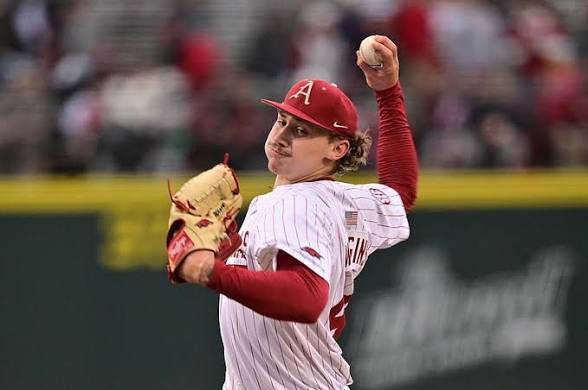
Carson Wiggins.
The 2026 Mets Draft Strategy
This year the Mets largely stuck to slot value for their picks and spread the money across the draft roughly in line with slot. None of their picks signed significantly over or under slot. Aiden Robbins was their biggest over-slot signing at $997,500, coming in $137,600 above slot value, while Nate Isler was their most under-slot signing at $46,700 below slot value.
This is not usually a strategy you see teams with such a limited bonus pool take. Typically, that requires you to either play it very safe with your picks, or go with more risk than teams typically take in the draft. The Mets seemed to lean into the risk early on this year.
Their first pick, Carson Wiggins, was a surprise signing roughly at slot value. He has only pitched 14 innings since high school because he underwent Tommy John surgery his freshman year of college. At the combine, he was not throwing nearly as hard as he was before surgery. Wiggins did throw multiple side sessions, and Kris Gross, the Mets VP, Amateur Scouting, said that Wiggins’ velocity was present there and his changeup had taken a step forward. On its face, this pick, especially at its price, seems like a true head scratcher, especially when players like Tegan Kuhns were taken later for less slot money. This says the Mets must be incredibly high on Wiggins and must have significantly more information from the side sessions than what is available publicly.
Robbins at roughly third-round slot, meanwhile, makes sense at face value. He has a lot of upside, though he likely will need a complete swing overhaul, something the Mets have yet to really show a capability of implementing. They have helped players like Carson Benge make swing adjustments, but their last true large overhaul project, Kevin Parada, is as far from a success story as you can find. Maybe the new hitting lab the Mets are completing will help them accomplish these adjustments.
What makes less sense is pairing him with Carson Wiggins to take up the vast majority of the draft pool money. Both are very risky picks, and while they have clear upside, the floor is very low for both players. And with the Mets combining them at roughly slot value, they did not have the money to go after any of the day two prep signings like Martin Shelar. Would they have been better off pairing Kuhns and Shelar for roughly the same cost? Time will tell, but in the end this is a situation where you have to imagine the Mets have more information.
The Mets’ day two picks seemed to follow the typical playbook of archetypes. Luke McNeillie profiles very similarly to Christian Scott, Shane Sdao profiles similarly to Zach Thornton, Alex Petrovic profiles similarly to Jack Wenninger. The Mets have their type, and their day two picks reflected that. They grabbed a lot of interesting arms and seemed to prioritize guys that can move quickly through the system. That makes sense after they used their 2025 draft to grab high-upside players further away from the majors, whether due to age or injury. This seemed like it may have been a clear organizational strategy this year.
Why Did the Mets Draft Like This?
The short of it is likely what they have told us—they really liked Carson Wiggins and Aiden Robbins. When it was clear they could draft both those players where they did, they adjusted the entire draft around them. The entire draft hinges on the success of those two players, as they left many higher-ranked options on the board, some of which signed for less than Wiggins and Robbins. When future evaluations of this draft are made, it will all rest on what those two do. The Mets chased upside with those two picks and time will tell how well they evaluated them. With Wiggins, it seems we will see him pitching in Florida soon and could see what the Mets saw in their side sessions.
Many of the college arms the Mets drafted could also be in the majors within the next two years. The Mets’ upper minors do not have a ton of clear options to supplement the major league staff in the coming years, so this draft could potentially solve that issue. It will be interesting to see what level all these arms start at and who they decide to utilize as starters vs relievers.
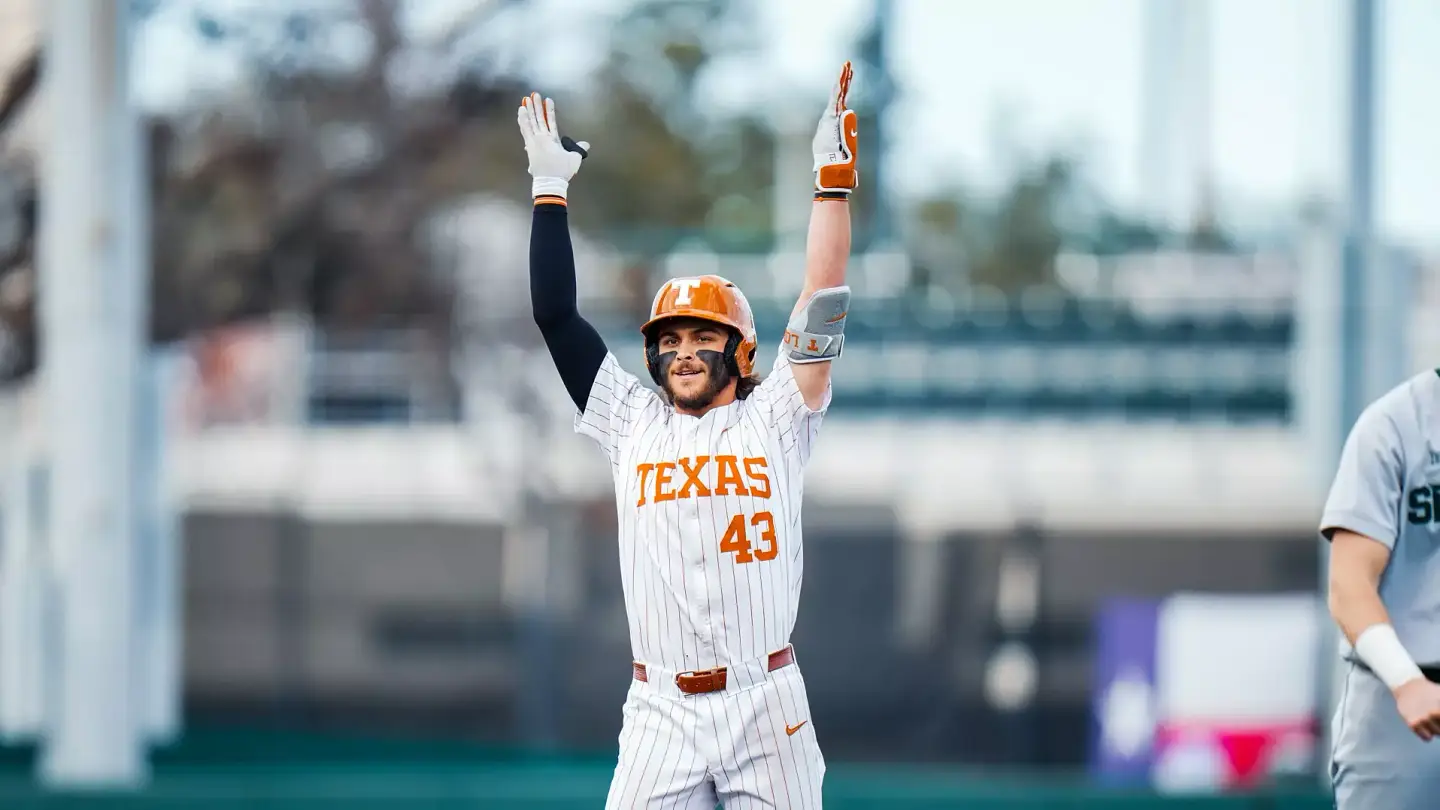
Aiden Robbins. Photo credit: University of Texas
Was This The Right Strategy?
That is hard to answer right now. Barring a very short minor league stint from either Wiggins or Robbins this will be hard to answer next year either. We may not really know the answer for a few years. What we can say is that this draft took on a lot of risk to chase ceiling and left multiple players who were universally ranked higher (and as mentioned some who signed for less money) on the board to go after the guys they wanted.
This draft will be a true test of the Mets’ scouting and development. This has the potential for the Mets to add a frontline starter and middle of the order bat into their lineup as early as 2028. It also has the potential to be viewed like the 2021 draft, where you pray the Mets hit on some of their upside day two guys.
At the same time, this is the same team that drafted Carson Benge and overhauled A.J. Ewing and Nolan McLean. They arguably have earned some leeway and built up goodwill wigh drafting and development over the last few years. At the very least, this will be a very interesting draft retrospective in a few years.