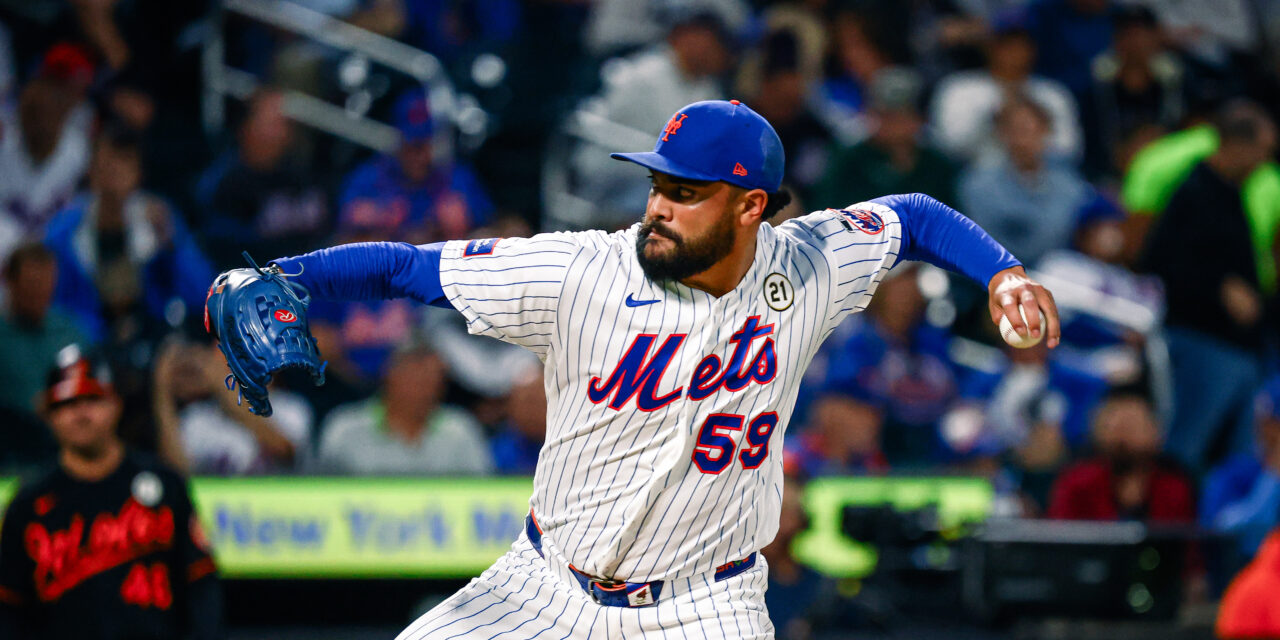
Sean Manaea, SP/RP
Player Data: Age: 34 (02/01/1992) B/T: R/L
2026 Traditional Stats: 6-8, 4.78 ERA, 1.30 WHIP, 144 SO, 44 BB, 150.2 IP, 33 G (19 GS)
2026 Advanced Stats: 85 ERA+, 22.1 K%, 6.7 BB%, 4.73 xERA, 4.54 FIP, 4.26 xFIP, 1.0 fWAR, -0.2 bWAR
2026 salary: $25 million ($6,975,000 deferred – $22,009,731 NPV)
GRADE: C-
2026 REVIEW
How in the world do we review Sean Manaea‘s 2026 season? In terms of results, it was mixed at best. He is not a big reason the Mets lost many of their games, though he did not provide a huge benefit to the club. He did split time between the bullpen and the rotation, and in the rotation he completed six innings in half of his starts, going seven in two of them, meaning he did provide some length. We should probably look at his season in three parts.
The first part begins in spring training, where he struggled to hit 90 miles per hour on his fastball. He did not have a normal offseason and that seemed to affect him negatively. He also did not seem to know he was competing for a rotation spot and was clearly shocked when he learned he did not make the Opening Day rotation. It’s worth wondering if he would have gone about spring training and his ramp up differently had he been aware. He likely would have gone through the offseason differently. This is an area in which the organization may have failed Manaea, and only so much blame can be put on him. Through May 6, Manaea averaged 89 miles per hour on his fastball and had a 6.85 ERA and 1.75 WHIP. He had yet to even touch 92 miles per hour. If that was the full season, it would be a clear F.
Then, he worked with assistant pitching coach Dan McKinney and they figured out what was affecting his velocity. Across the remainder of the season, he averaged 91.7 miles per hour on his fastball, maxing out at 95.4 miles per hour. He threw 122 1/3 innings to a 4.27 ERA and 1.22 WHIP. If you start the season there, it is a pretty solid showing! Probably at least a B/B+ grade.
The best stretch of his season came from May 10 through August 9, where he threw 82 1/3 innings to a 3.39 ERA and 1.20 WHIP. By that point in the season, Manaea had thrown roughly double the number of innings he had thrown the year before. Across his last seven starts, he pitched to a 6.08 ERA and 1.25 WHIP. He looked like he was going to end strong with two starts where he threw 11 1/3 innings with four earned runs and fifteen strikeouts, but then he struggled heavily in his final outing of the season.
So, how do we review Manaea’s season? How much do we knock him for the first month of the season where he was forced into the bullpen, a role he was not at all prepared to pitch in? It cannot be completely ignored – context does matter – but also it cannot excuse everything. Did the Mets also push him to the point he was gassed down the stretch to get his inning count up so he would be better prepared for 2027? Maybe? If so, hopefully it works.
Recognizing this, and if the bulk of his season after he got his velocity back is a B/B+, it probably is fair to say he should be in the C- range. Manaea is a fan favorite and he did a lot to work with the young starters in Nolan McLean, Christian Scott, Zac Thornton, and Jonah Tong. Some Mets fans would have liked to see him earn a better grade with a better season. Unfortunately, he did not, and thus we land where we did.
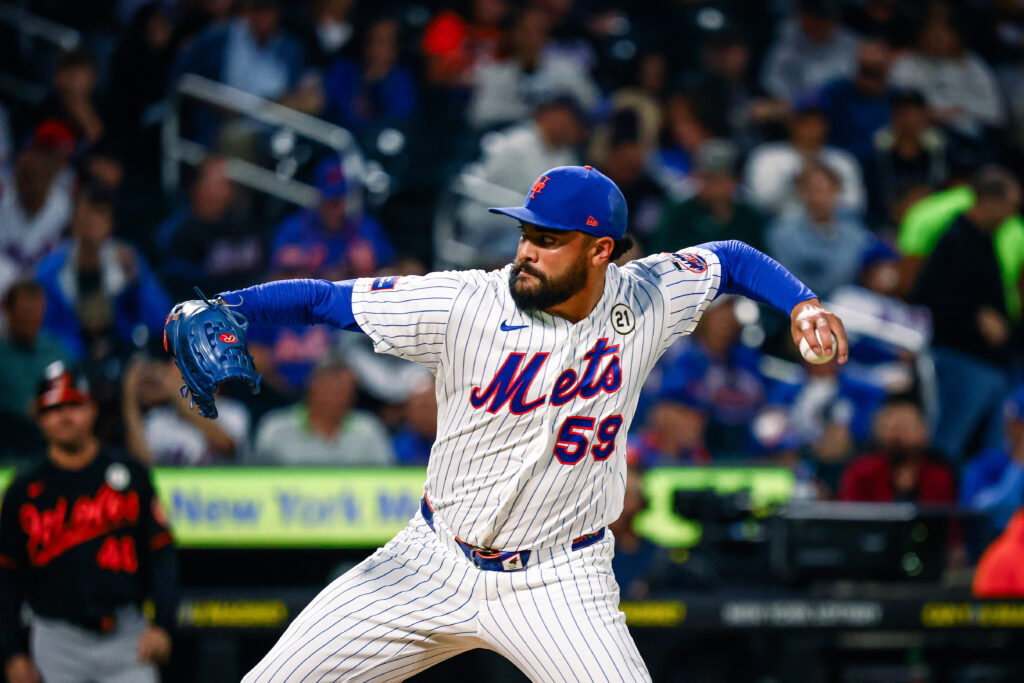
Sean Manaea by Roberto Carlo
2027 PREVIEW
Ideally, Manaea will have an offseason designed around maintaining his velocity for the start of next season. The Mets need to have a plan in place if it is an issue, and they need to ensure he is made aware from the beginning if he is competing for a rotation spot or not so he can plan accordingly.
Ideally, the above happens and he shows up to spring training healthy and able to give 150+ innings to around a 4.25 ERA and 1.25 WHIP. If the Mets are not confident he can do that as the fifth starter in the rotation, they should trade him and acquire someone who can. If they are not confident he can do that, he should spend the offseason learning how to become a leverage reliever juicing that fastball to 96 miles per hour, adding some more horizontal break on the sweeper, and being a two-pitch reliever who mixes in the changeup/sinker combo when needed.
What the Mets cannot afford to do is dedicate two months of starts with a 5.00-6.00 or worse ERA as they did with David Peterson and Kodai Senga this year.