The Mets’ 2026 season had an inauspicious start.
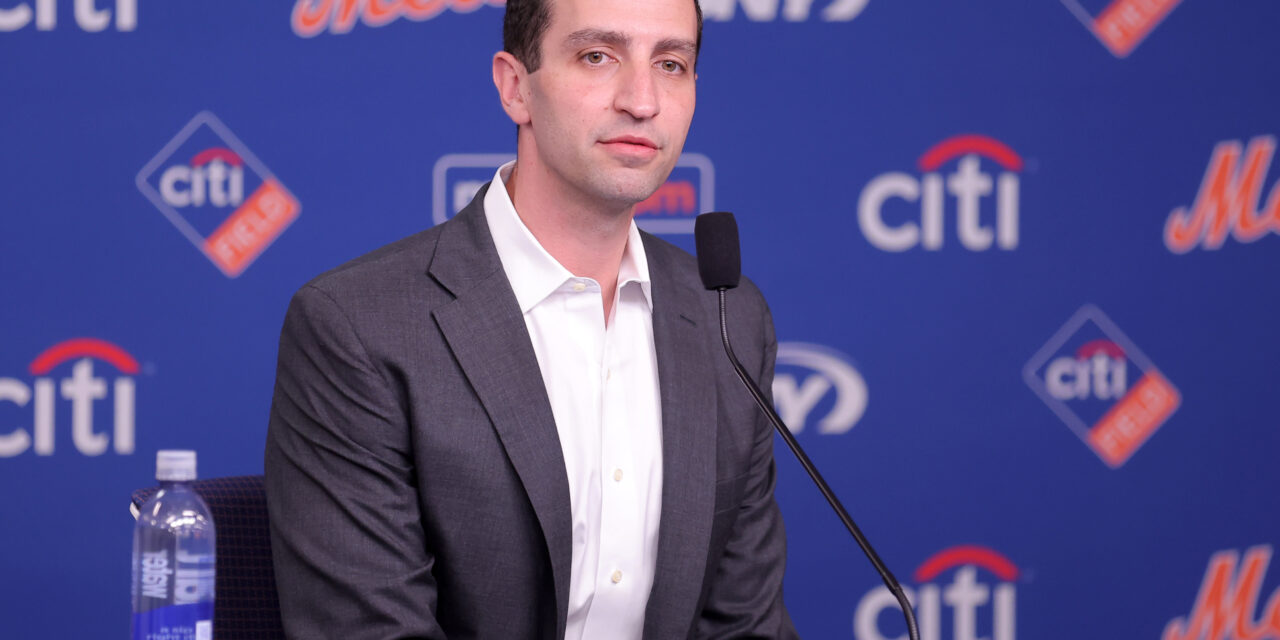
On February 10, David Stearns gave his first press conference of the young season, a campaign still full of hope and naive optimism.
At the start, Stearns seemed terse and hesitant in front of the media scrum. By setting the tone with a grim “so, a couple pieces of news,” it was clear something was amiss.
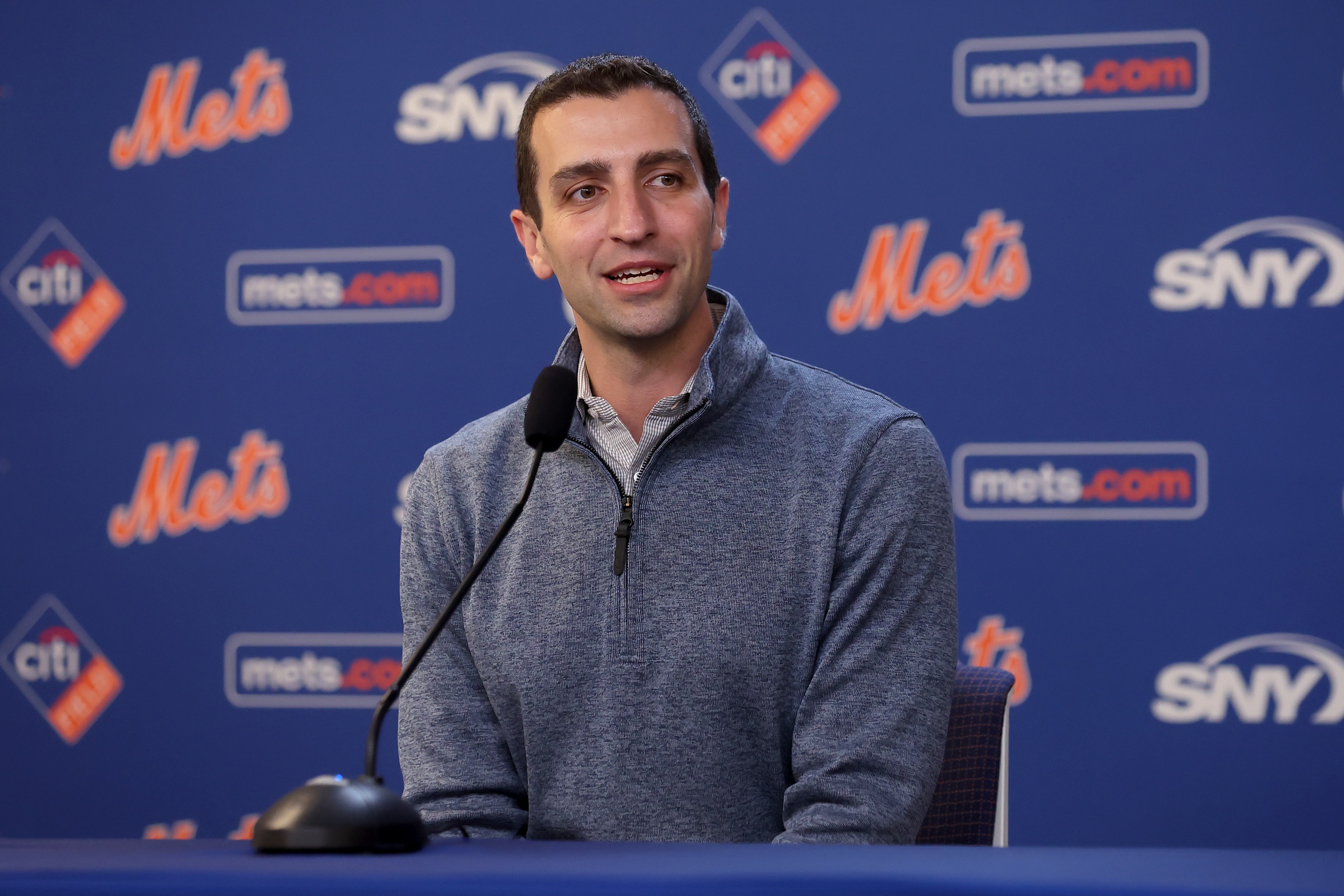
Photo by Brad Penner-USA TODAY Sports
The unwelcome surprise was unveiled very quickly: Francisco Lindor would miss weeks after suffering a broken left hamate bone.
As he delivered the news that the Mets’ superstar would miss significant time and need surgery, news that Mets fans had seemingly become too accustomed to hearing, the hope of an uncomplicated 2026 season quickly evaporated.
Stearns’s opening salvo defined the 2026 Mets. This wouldn’t be the team of ’86, the club of a stress-free 108 wins and a World Championship. Or even the magical squad of ’24, relying on a purple talisman to push them to the postseason. Rather, injuries to its core members and a drastic level of roster turnover would write its story.
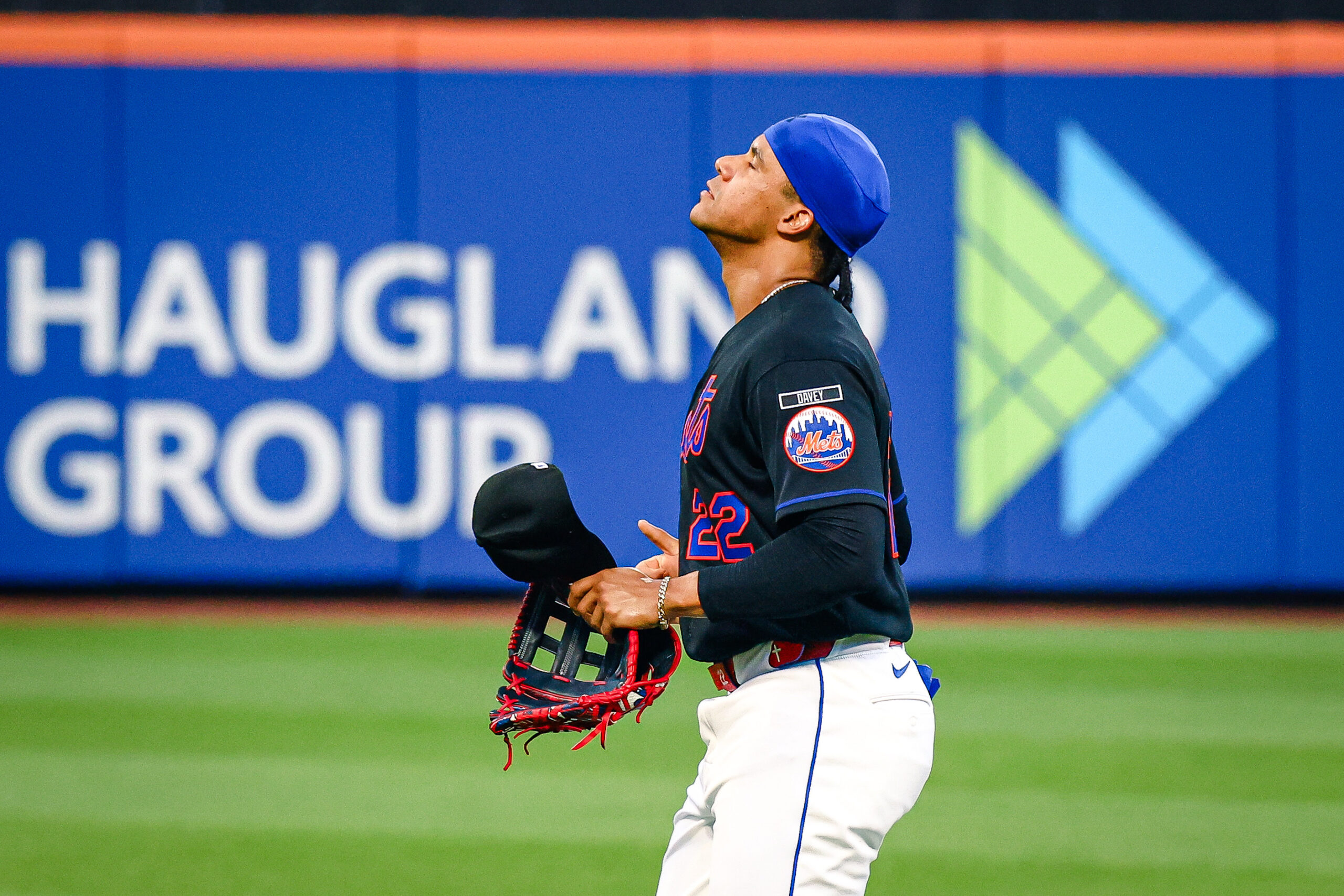
Lindor’s break was just the start. Ailments would continue to batter the team throughout the All-Star Break, condemning it to the National League East doldrums. Juan Soto, Jorge Polanco, Luis Robert Jr, Francisco Alvarez, and Ronny Mauricio joined Lindor in stumbling to the sidelines.
Juan Soto by Berto Carlo
In Lindor’s absence, the Mets staggered to a 26-30 record. In the 16 games that New York played without Soto, the Mets came up eight games short of .500.
A roster built on two superstars collapsed under the weight of their absence. The house couldn’t survive the loss of its foundation.
In a room still stunned by the imminent loss of Lindor, Stearns’s second piece of news served as a reminder of the roster churn that dominated headlines throughout the offseason. Just like Thanos, change was not only coming, it had arrived.
Juan Soto would chase his Gold Glove aspirations in a new defensive home. Two years in right field would give way for another in left, marking his return to his 2019 and 2023 position.
On paper, it seemed fine. It was just one raindrop in the hurricane of change. Although unintentional, this hurricane evolved into the storm that torpedoed the Mets’ campaign.
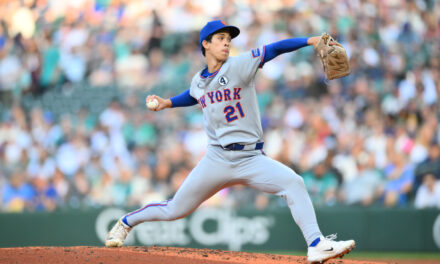
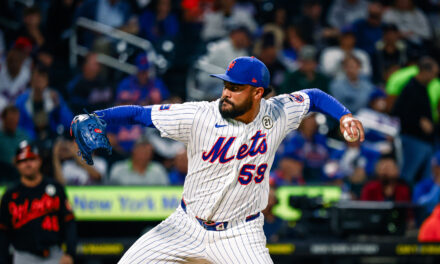
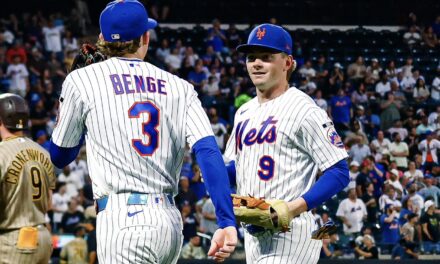
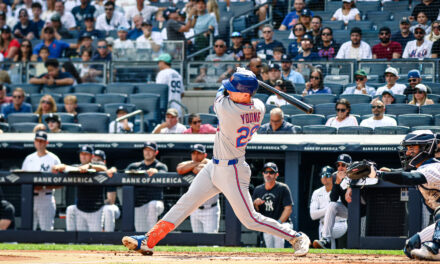
Stearns constructed his roster with change in mind. Out went fan favorites and stalwarts of the club’s memorable 2024 postseason run. In came a mishmash of high-upside and talented players. In the end, the club exchanged 58% of its 2025 Opening Day roster.
It just hasn’t worked out.
- Devin Williams‘s 4.83 ERA represents a career high
- Freddy Peralta‘s 4.66 ERA is the fifth-worst in the Majors
- Bo Bichette has been toying with a .600 OPS for the majority of the year.
The club has fallen significantly short of expectations, currently sitting 17 games under .500.
It’s easy to pan Stearns’ offseason decisions in hindsight. Re-run this season using a Monte Carlo simulation, and the likelihood of this level of both injured list placements and underperformance remains low.
There are valid concerns about Stearns’s approach to roster construction. Signing oft-injured players requires quality depth to mitigate risk, and the front office made little investment to buttress their left-tail outcomes.
And still, a changing of the guard was necessary. Intelligent front offices don’t bet on the same core year after year. Instead, the best gamble on sustainable improvements in a player’s underlying metrics, which have been proven to deliver wins and garner pennants.
At the end of the day, baseball is unpredictable. It’s random. Just ask Jon Sterling.
As fans, we’re conflicted about that dynamic. Anything can happen. The Mets rode the mythical power of Grimace to a Wild Card berth in 2024, a black cat marked the beginning of the end for the 1969 Cubs, and lest I forget, a little roller up along first snuck through Buckner’s legs in 1986.
But, at the same time, anything can happen. A team projected for 90 wins at the start of the campaign is on pace for 67. Twelve-game losing streaks are not likely to be repeated.
Baseball needs to be played over 162 games, but sometimes a preseason press conference serves as a hint to the season’s direction.