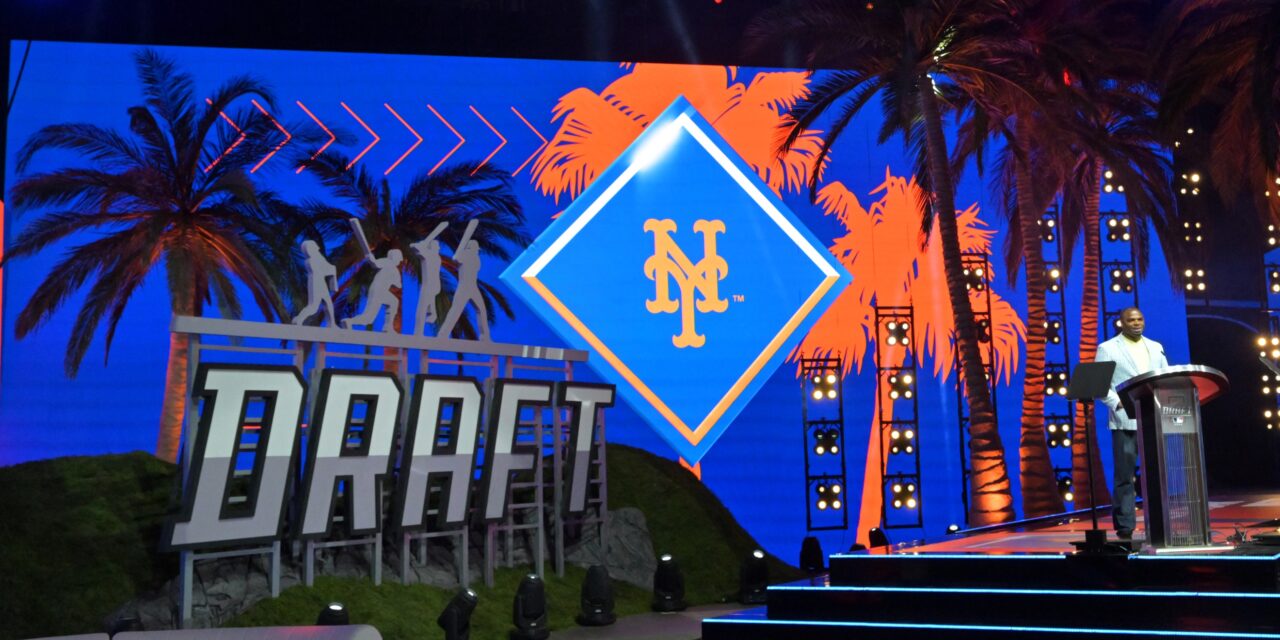
The 2026 MLB Draft is less than a week away, and the New York Mets have their work cut out for them with the draft this year. Their first pick was pushed back ten spots to 27th overall for going over the competitive balance tax. In the last five years, the players drafted 27th overall were:
- Jace LaViolette (CLE, 2025)
- Dante Nori (PHI, 2024)
- Aidan Miller (PHI, 2023)
- Eric Brown (MIL, 2022)
- Jackson Merrill (SDP, 2021)
Jackson Merrill placed second in the rookie of the year race in 2024 at just 21 years old, and while he has struggled with injuries, he has been an impact player at the majors. Aiden Miller peaked as the number 13 overall prospect per Baseball Prospectus, but major injuries have seen his stock plummet as he nears the majors.
There is value to be drafted at this pick, but far more players here do not pan out than do.
The Mets also have no second or fourth round picks because they signed Bo Bichette who has the qualifying offer attached to him. It really sounds like the odds are stacked against them, doesn’t it?
This is why you have Kris Gross in charge of the draft. He oversaw the Houston Astros drafts that did not have a first or second round pick finding value throughout the draft including Spencer Arrighetti (sixth-round), Joey Loperfido (seventh-round) and Will Wagner (18th round). He also drafted Ryan Clifford (11th round), Zach Dezenzo (12th round), AJ Blubaugh (seventh-round), and Jake Bloss (third-round) outside of the first round. All of these players have either made top 100 lists or made it to the majors.
What seems clear is that the Mets will need to be creative and strategic in their draft. So, what are their options?
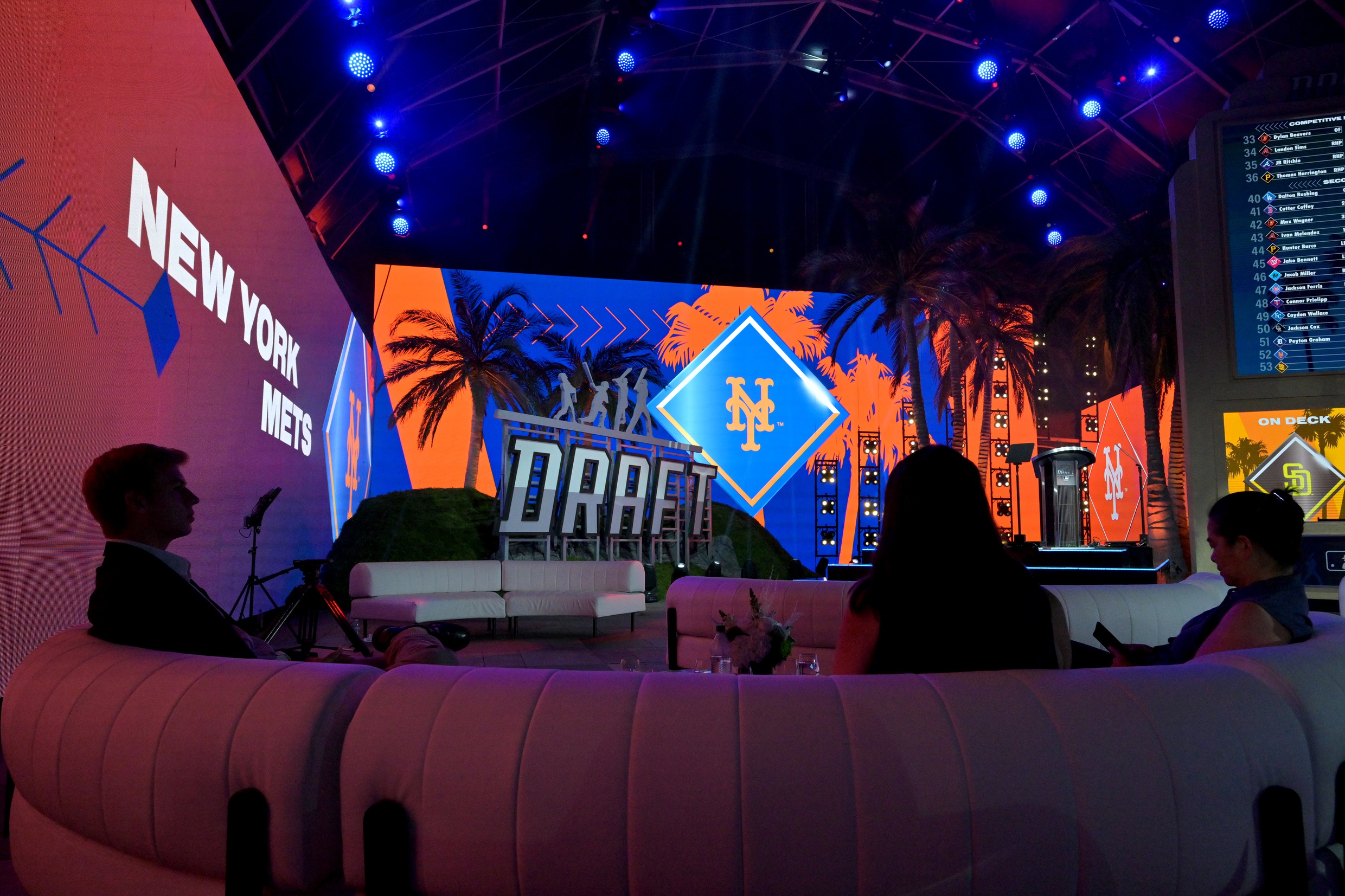
Jayne Kamin-Oncea-USA TODAY Sports
Go Based off Slot Value
This is probably the most boring option but the simplest. Each pick has an associated slot value, and in this scenario, each pick you select a player that falls into that range. This requires trusting the draft model, as there will be multiple players in each pool that will accept the slot value, but this lets the Mets prorate their budget throughout the draft without it being overly heavy in one portion.
The last time the Mets came close to this was in 2015 when they drafted Desmond Lindsay with their first pick.
This is not a strategy teams typically follow, as there is not much room to take a high-ceiling player who may have fallen in the draft, and the floor is lower by sticking rigidly to slot value early in the draft.
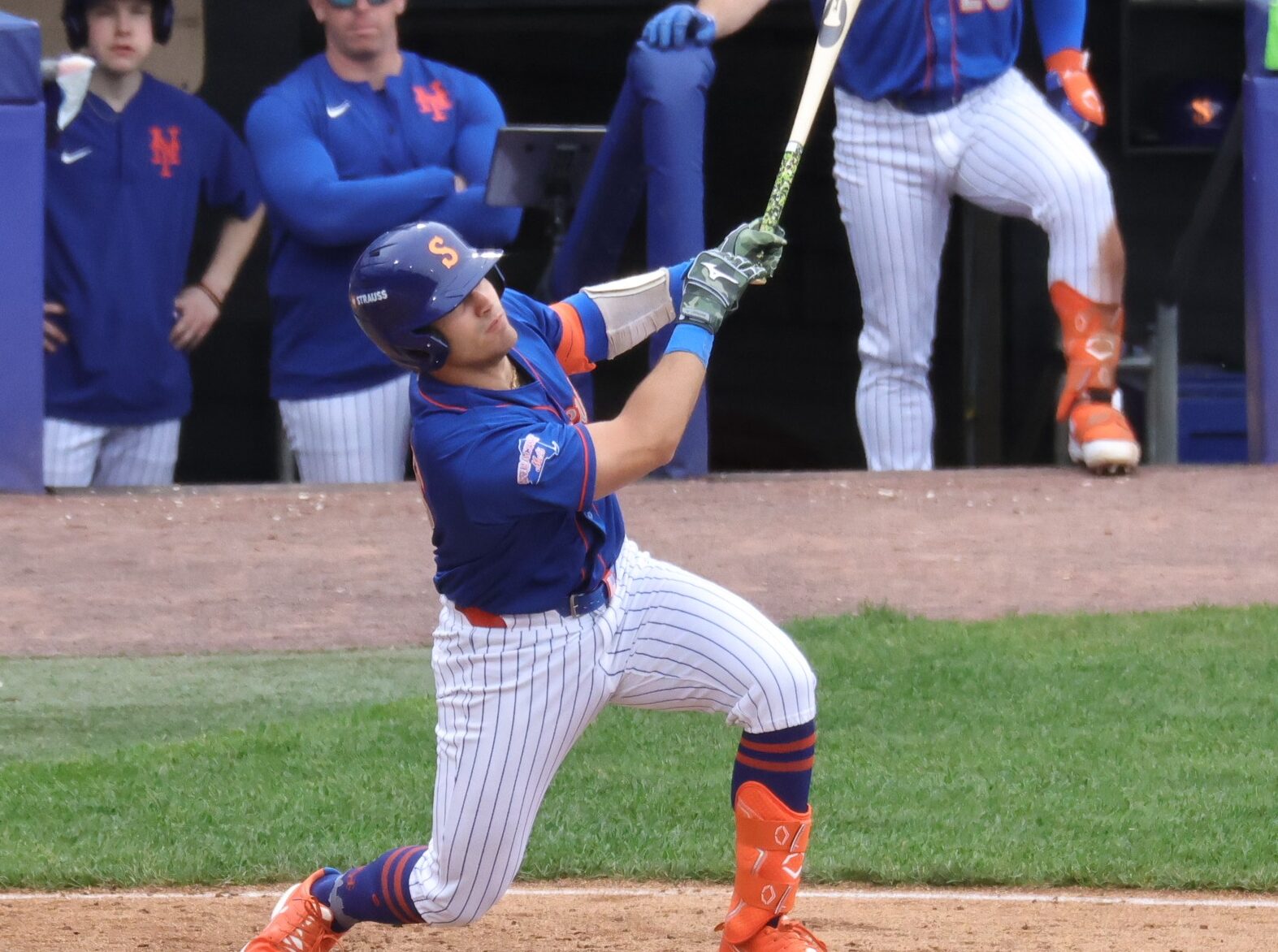
Kevin Parada. Photo Credit: Herm Card
Go All in Early in the Draft
There is always a chance a player falls to the Mets in the first round when they were projected to be taken higher. Two of the most recent examples of this were Kevin Parada and Colin Houck, and while those two specific picks did not work out, for many teams they have. Recent success stories of this strategy include: Wyatt Langford, Konnor Griffin, Jordan Lawlar, Matt McLain, Tyler Soderstrom, and Jared Jones.
This is risky because you are putting a large amount of capital in one player. This also means that you need to go under slot in other areas of the draft or risk not signing some of the players you draft. If the player you went over slot early for does not pan out, you may have tanked your draft for no reward.
When it does work, you end up with Brandon Nimmo, who was roughly half a million over the recommended slot, though this was before the hard slot system.
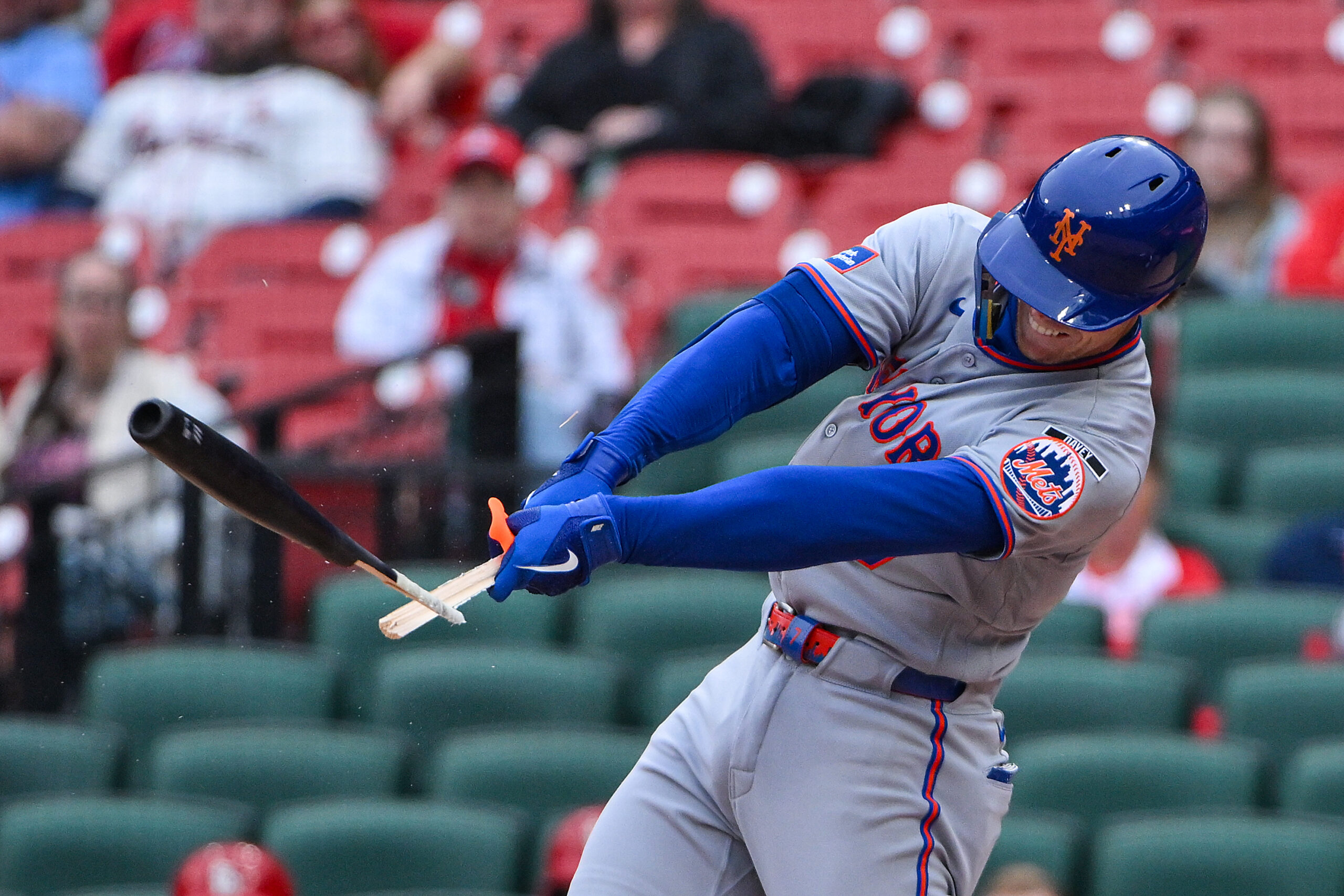
Brett Baty. Jeff Curry-Imagn Images
Go Under Slot with the First Pick
Why would the Mets not want to maximize the first pick they have? Potentially, the organization may feel there is more value throughout the draft worth saving money. The Mets did this in 2019 when they went under slot on Brett Baty to draft Matt Allan. They also did this in 2025, and spread the money more evenly throughout the draft.
Luis Guillorme was a player taken over slot in the 10th round of the 2013 draft who made it to the majors and had a successful major league career as a utility player. Simeon Woods Richardson, who was traded away in the Marcus Stroman trade, was taken well over slot thanks to the savings on Jarred Kelenic.
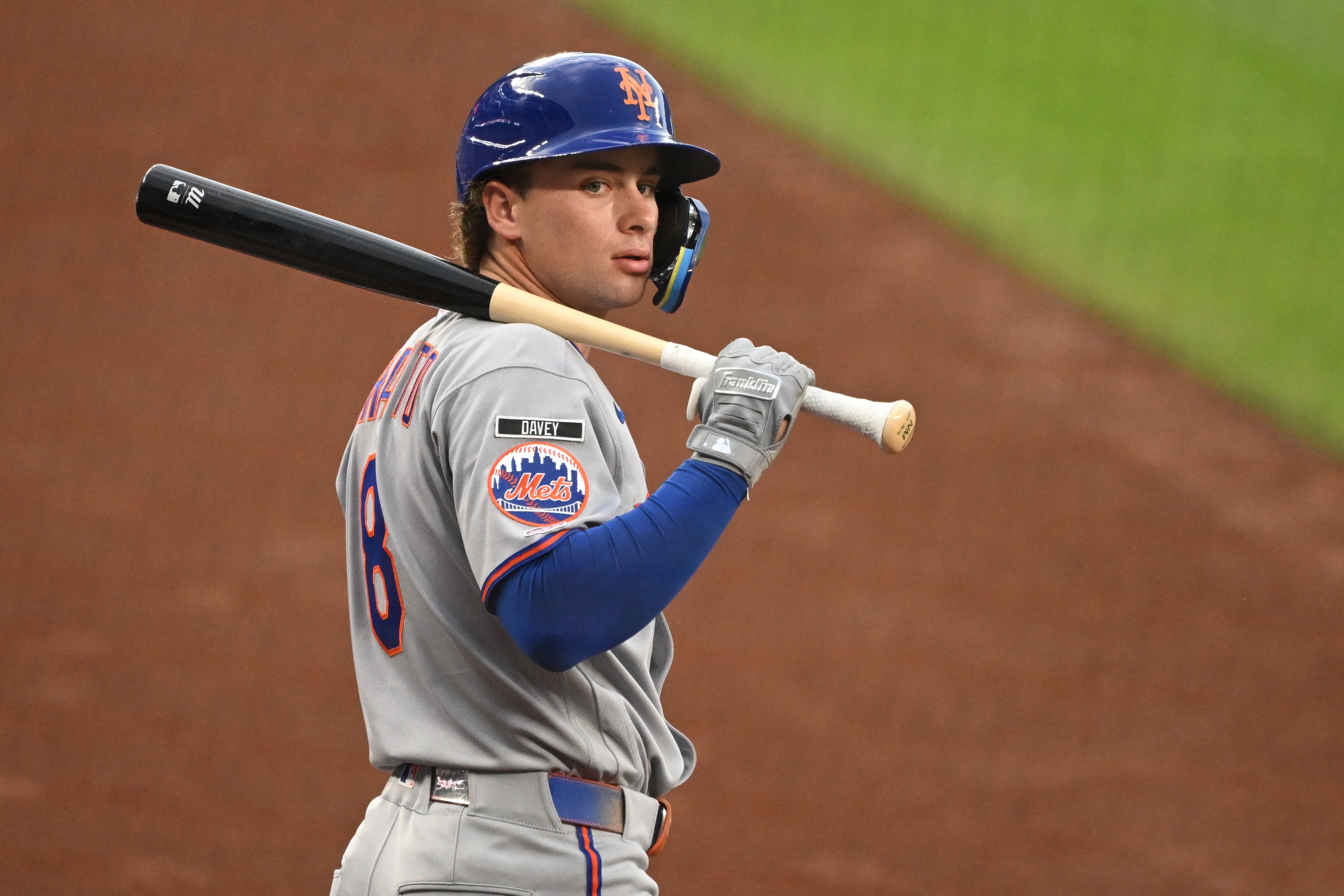
Nick Morabito. Photo Credit: Rafael Suanes-Imagn Images
The High School Strategy
High School players not taken with the first few picks that have commitments to good colleges typically require going over slot to convince them not to go to college. That is why the Mets had to go over slot value to sign Colin Houck in the first round.
Other examples of the Mets going over slot to sign a player in high school at different parts of the draft include:
- 2019, Josh Wolf, Round 2, $779,600 over slot
- 2022, Nick Morabito, Round 2, $126,300 over slot
- 2022, Jacob Reimer, Round 4, $267,300 over slot
- 2023, A.J. Ewing, Round 4, $192,000 over slot
- 2023, Boston Baro, Round 8, $507,100 over slot
- 2024, Trey Snyder, Round 5, $846,300 over slot
- 2025, Peter Kussow, Round 4, $341,700 over slot
Out of those names, two have made the majors, and two of them have made top 100 prospect lists. It is not uncommon for high school players with upside to fall further in the draft than initially projected because teams do not want to go over slot to sign them.
This is one area upside can be chased.
Vincent Carchietta-Imagn Images
Draft Injured Players
Players with real upside tend to fall in the draft if they get injured leading up to the draft. This was a strategy of the 2025 draft where the Mets took two players who had elbow surgery heading into the draft: Nathan Hall and Peyton Prescott. Hall was taken in the sixth round six, and Prescott was taken in the fifth round, but both were viewed as guys who would have gone earlier in the draft had they not gotten hurt. Hall even had first-round buzz before his injury. So taking the gamble on a player who recently had surgery is a high-risk, high-reward strategy to get value later in the draft above the typical value of the round.
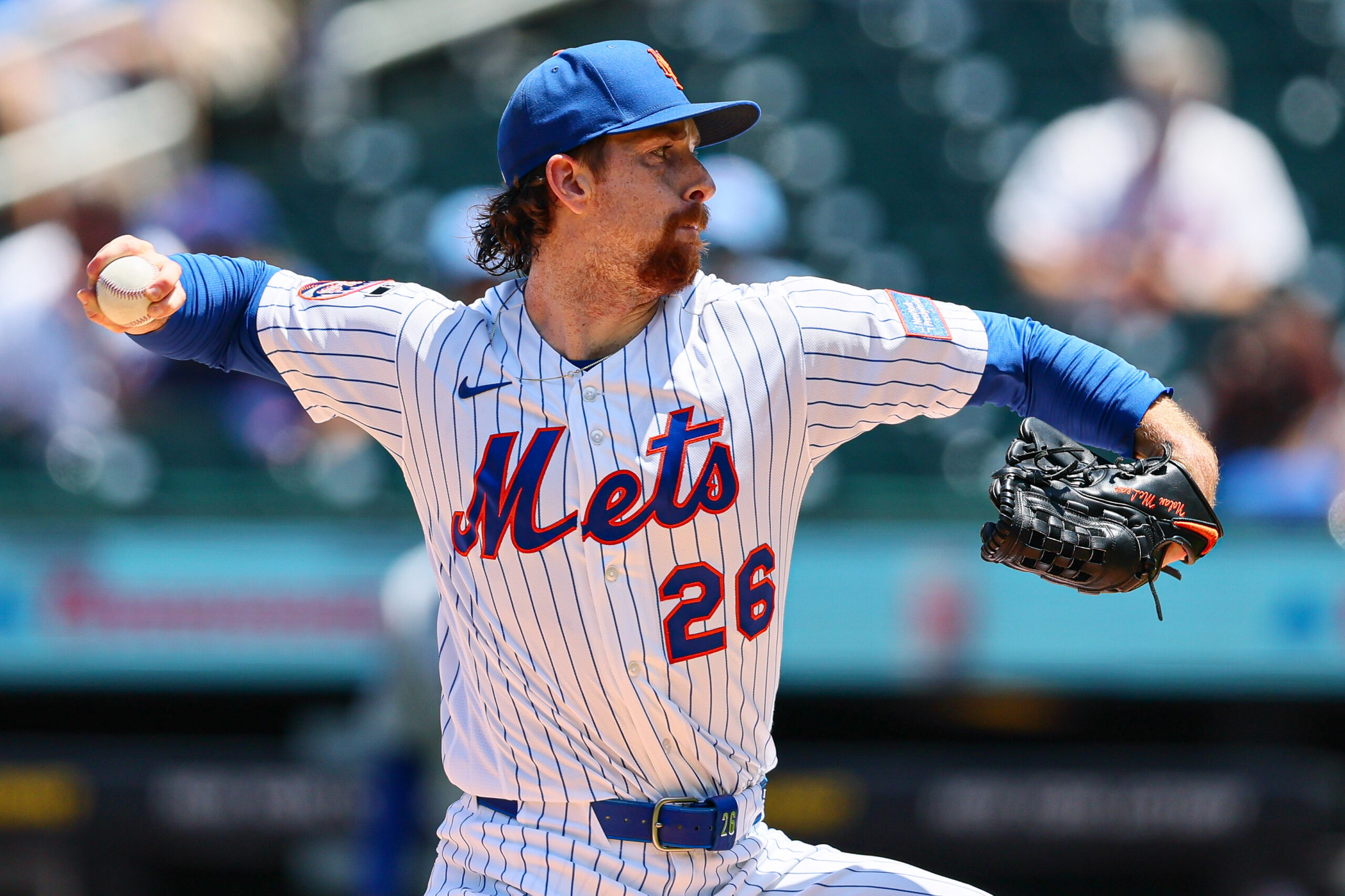
JT Ginn, who the Mets drafted in the second round and then traded for Chris Bassitt, is a prime example of this. He was a clear first-round talent who had Tommy John surgery and is now producing well in the majors. Nolan McLean had injury concerns that caused the Orioles to not sign him the year before the Mets did and allowed him to fall into their laps in the third round. Blade Tidwell had shoulder injuries that caused him to fall to the second round.
Conclusion
The Mets will need to get creative with their draft strategy and picks. They could go with high-upside, recently injured players like in 2025, but that is very risky to do two years in a row. They could also buck their trend of drafting college players early and go with high-upside high school players. However, they could choose to focus more on floor overall than chasing upside.
In about a week, we will see their strategy and who they pick.