Last night concluded quite a unique series in Mets history. All-time franchise home-run leader Pete Alonso came back to Queens for the first time as a visiting player, but the story quickly evolved into one involving the fans as much as their fan-favorite former Met.
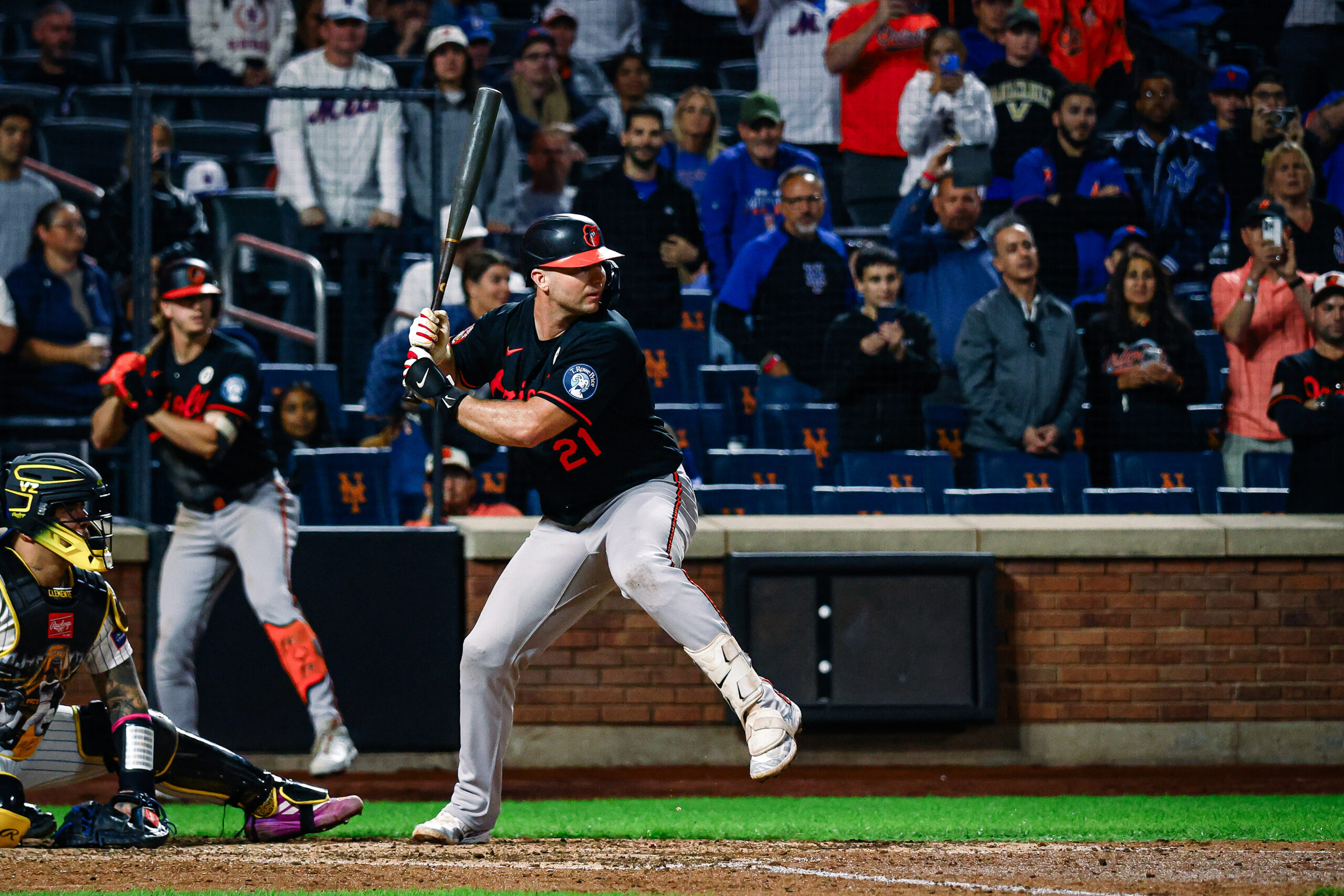
Pete Alonso by Roberto Carlo
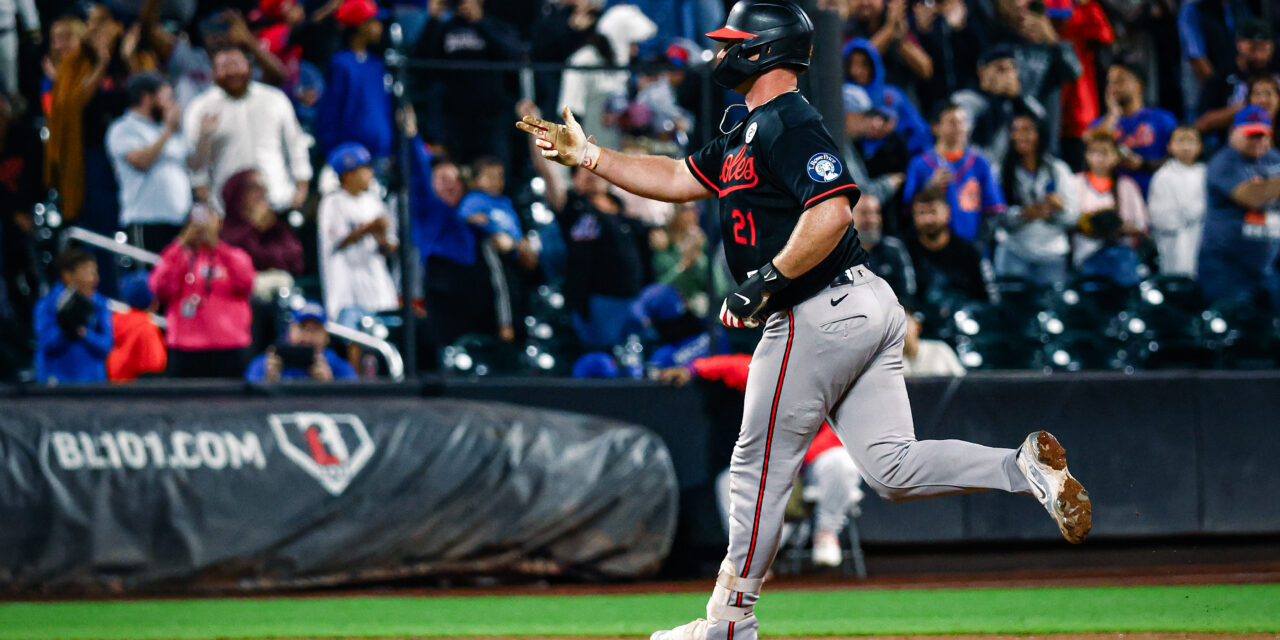
Alonso picked perhaps the most dramatic time to hit the 300th home run of his career. He blasted the patented ghost fork of Kodai Senga into the left field seats to tie Tuesday night’s contest, a game in which the Orioles would go on to win in extras.
Alonso didn’t merely flip his bat. He spiked it towards his dugout, screaming “LET’S F***ING GO,” a declaration that read as much of an expletive towards David Stearns as it did to his teammates looking to attempt to come back in the AL Wild Card race.
The slugger then put the cherry on top with an even more prestigious blast last night, setting the tone for what would be a 7-1 Baltimore victory and a series sweep.
“I am beyond thankful for all the support and it was really fun to play. I feel like New York will always be a place where it feels like homecoming,” Alonso said, “It doesn’t matter whether it’s here or at Yankee Stadium. The whole city of New York is meaningful to us.”
This wasn’t the first time a player of Alonso’s ilk made his return to Flushing. Just last year Jacob deGrom pitched at Citi Field, three years after he chose the Rangers in free agency. José Reyes, Carlos Beltrán and Mike Piazza also made their returns in a seven-year span. And for older generations, Darryl Strawberry and Tom Seaver made highly publicized comebacks to Shea Stadium.
deGrom’s return was probably the most peculiar. Jonah Tong gave up six runs in the top of the first, causing a Mets fanbase in the midst of a September collapse to be shell-shocked before they could even decide how to respond to their former ace.
Reyes and Beltran both came back to Citi Field in 2012, and if you’ve watched SNY’s replay on Johan Santana‘s no-hitter enough, you’ve been reminded often of the conversation between Gary Cohen, Ron Darling and Keith Hernandez, during which they contrasted the warm reception of Beltran, who left via trade, to the harsh reaction to Reyes, who left via free agency (despite not receiving an offer from the Mets).
The response to Strawberry was similar to Reyes. The fanbase looked at a superstar who spurned them, choosing the almighty dollar over the loyalty of a fanbase of their homegrown team.
Seaver’s day back on the mound was the most similar to Alonso. Sure, Mets fans cheered for an opponent, but it was more than that. They were angry. They showed vitriol towards a front office that dared to get rid of their favorite player.
The key difference that makes this week more interesting is that Alonso’s bona fides as a Met mirror the five other players mentioned in this piece much more than they do for Seaver.
Alonso never played in a World Series, never had close to an MVP season, and was often jeered by the fans (who, post his signature moment in the 2024 playoffs, cheered for Vladimir Guerrero Jr. as his possible replacement). Seaver was a shoo-in for the Hall of Fame when he was dealt, the face of a World Series-winning team, and is literally known as The Franchise.
It is perhaps more apt to compare Alonso to Reyes, Strawberry and Piazza, three players who all left in free agency. Piazza and the Mets left on much better terms. The legendary catcher exited his final game as a Met to a standing ovation from the fans, who knew deep down, along with the franchise, that Piazza’s days as an everyday catcher were probably over (he went on to have a solid season the following year as a Padre before finishing with the A’s as a DH).
So when Piazza returned, it was a much more jovial occasion. The Mets gave the future Hall of Famer two curtain calls after hitting two solo home runs down 4-0 and 4-1 in a game the Mets would win. Fans loved the 2006 team and the feeling in Shea was much more “we’re rooting for Mike to do everything but beat the Mets” than it was for Alonso this week.
The reception to Alonso stands in strong contrast to Reyes and Strawberry, the two situations that are the closest to his. Reyes and Strawberry were seen as sellouts. Alonso, who turned down multiple chances to extend his time as a Met and opted out mere minutes after the 2025 finale to sign for the highest bidder, was greeted as the one that got away. A crowd looked at the affable star who chose elsewhere and said to David Stearns and Mets brass that this was the bridge too far: how dare you wrong us and let him go over money; it’s you that needs to pay the ultimate price of losing your job.
The ultimate goal of all parties involved, of course, and the reason behind Stearns’s decision is long-term winning. And it cannot be left unsaid just how much the Mets’ placement at the bottom of the NL East factors into this rage. Unlike Reyes’ situation, the Mets have all the money to spend on a proper replacement, are in theory a win-now team, and while Stearns has made it clear that this offseason cannot correctly be adjudicated after one year, the results of this first season have been disastrous.
Jorge Polanco is seen as the face of the Alonso replacement plan gone wrong, along with the other first base fill-ins, but perhaps more aptly it’s Bo Bichette who deserves more ire. The money that would’ve gone to Alonso went to the Mets’ newest third baseman, who simply has not been close to good enough, and yet surprisingly receives less criticism from fans, at least compared to his other ten-figure counterparts.
A lot has been made about the lessons Stearns must learn before this offseason. Whether it’s spending more (dollars and years) on top-level starting pitchers or realizing the value of previous success in New York, perhaps the takeaway really is this:
When you replace a beloved superstar, you have to swing big for a clear replacement. The Braves let Freddie Freeman go and replaced him with Matt Olson.
But maybe a better comparison is a former Met farmhand (but not major league baseball player). Tim Tebow had a similarly parasocial relationship with Denver Broncos fans that Alonso has garnered with Mets fans. It took an indisputable legend in Peyton Manning for even the most cynical Broncos fan to accept that this change was a good one.
Another lesson in all of this madness this week is the relationship between the current Mets players and fans.
Sean Manaea called the reaction by those in the stands as ‘crazy’, all while wearing an expression that suggested he was really holding back some harsher feelings towards the fans that booed Tong after a walk to Alonso on Monday.
The lesson that has been taught to Met players, it seems, over the past 25 years is that if the fans hate you, you’re not allowed to hate them back (see the thumbs down controversy of 2021). But at the same time, if the fans love you, you have to love them back (see the Beltrán curtain call controversy of 2006).
This one-way relationship makes it more difficult to imagine why the best players would want to sign up to play for the Mets, for whom the anxiety of a disappointing season is seemingly always around the corner.
So that leaves two ways that a player can make his mark as a Met: be a homegrown talent or someone who will only sign here if paid the most money.
The un-sweet irony of it all is that Pete Alonso is paradoxically both.