The Mets’ minor league system is diverse and full of many philosophies. You have hitters who focus on pull-side power, hitters with an all-fields approach, those who prioritize contact alongside speed, and more. It makes sense; not every hitter is the same, so why would every hitter have the same approach? For good reason, teams diversify the types of hitters they draft, trade for and sign. So, what are some of these hitting archetypes, and which Mets prospects best fit the profile?
Pull Side Power
Mets prospects Jacob Reimer, Sammy Stafura, and Randy Guzman all ran pull rates over 50% and pull fly ball rates over 17% in 2026. This led to plus exit velocities and power outputs from Stafura and Guzman. Reimer has displayed plus power metrics with this approach, recently posting a career-best 17 HRs in 2025. Stafura and Guzman both project higher power numbers than Reimer, who is more balanced with a stronger hit tool.
All Fields Spray
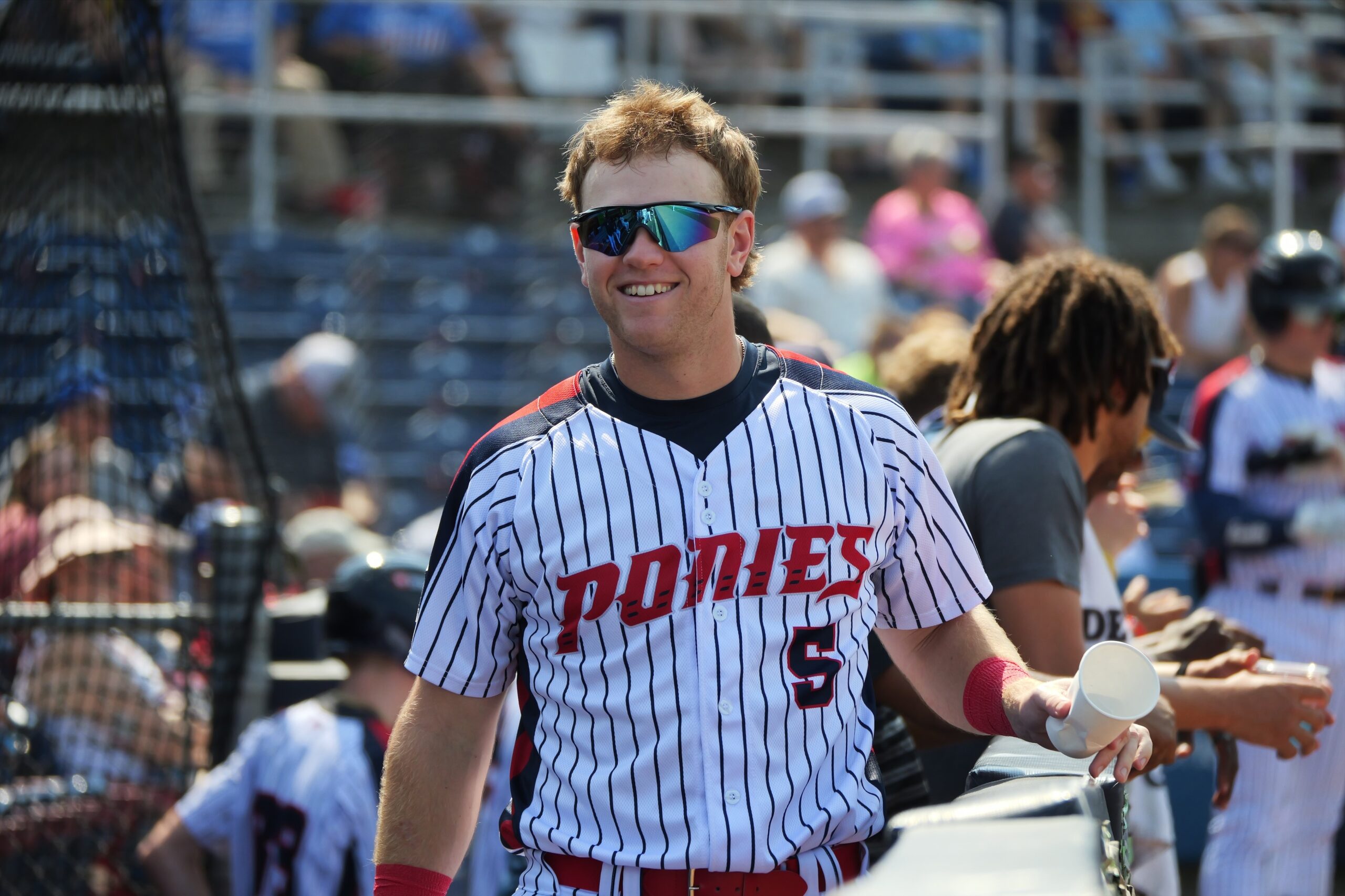
Focusing on pull-side power is not the right approach for every hitter; some do well spraying the ball around the field. Players like Émilien Pitre, Bruin Agbayani and Aidan Smith have limited to average power but spray the ball to all fields. Pitre and Agbayani both put up over 90% zone-contact rates while Smith sat in the mid-80s. They utilize their strong pitch recognition to their advantage and are an interesting archetype the Mets seem to be pushing more of in their system, acquiring these three at the 2026 Trade Deadline.
Balanced Hitters
The Mets have many hitters who can essentially do it all. Jefferson Rojas, Mitch Voit, Aiden Robbins and Cole Mathisare all examples of this. They do not necessarily have a true carrying tool but are good or better across the board. While Voit and Mathis both pull over 45% of the time, neither is in the extreme pull category. They also pull more than the previous category. Rojas has increased his power output, but it still is not a carrying tool. They all have good bat control and pitch recognition.
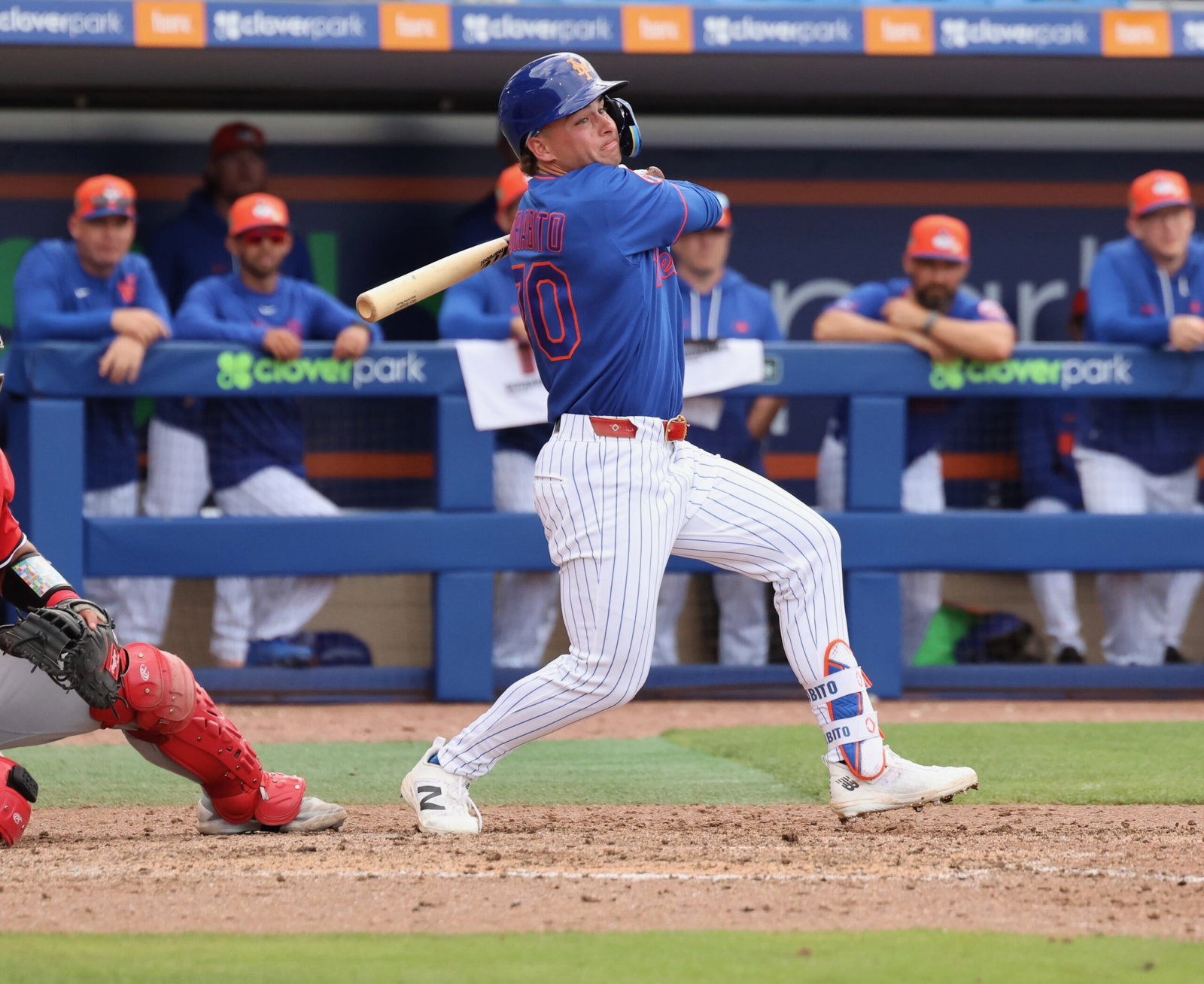
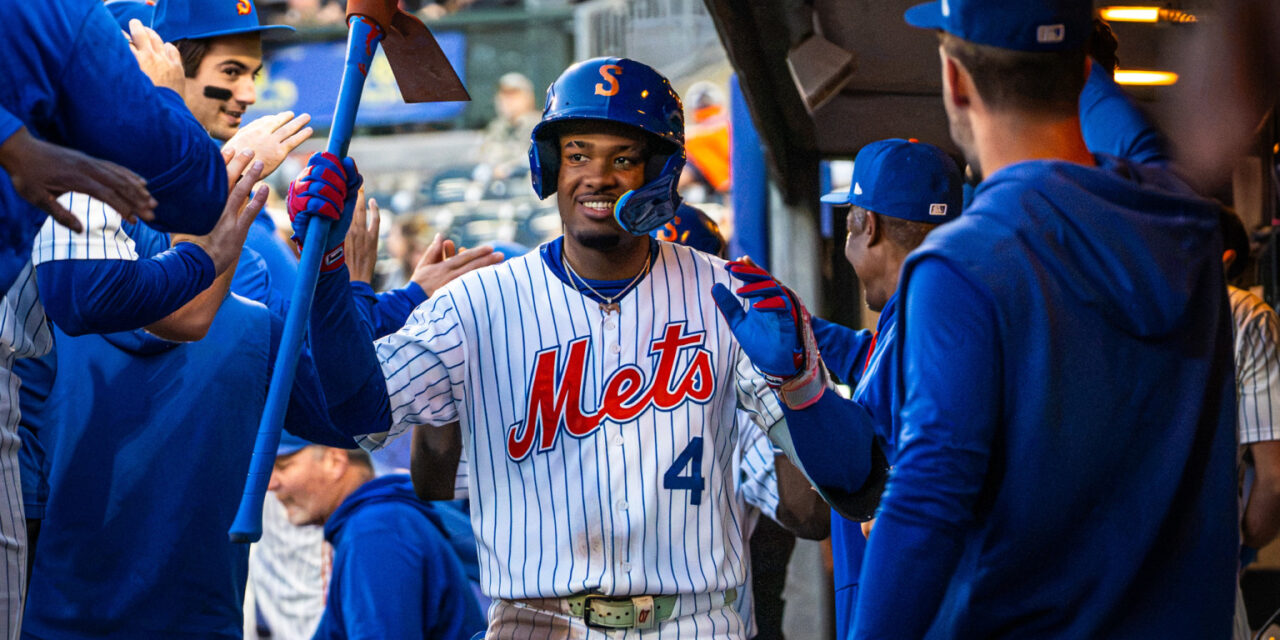
Photo by Ed Delany of Metsmerized
Speed First Contact Hitters
For some players, their carrying tool is not necessarily their bat, but their speed. They work on putting the ball in play, even if they do not have a strong hit tool, and let their speed do the rest of the work. Nick Morabito and John Spikerman fit this category, and one could argue Aidan Smith too.
Three True Outcomes
For some hitters, power truly is king, even with a poor hit tool. These are hitters who largely walk, strike out, or hit a home run. Chris Suero, Billy Amick, and Ryan Clifford are arguably the three prime examples of this player archetype. They all put up plus exit velocities with poor contact rates, significant swing-and-miss, and high walk rates.
Conclusion
It makes no sense, and is frankly irresponsible, to acquire one type of hitter in an organization and try to develop every hitter the same. The above prospects are prime examples of players who bring something different at the plate, whether that comes in the form of getting on base to eventually wreak havoc on the basepaths or swinging for the fences.
This is something seen in the best farm systems like the Brewers, who have power over hit bats like Andrew Fischer to hit tool-heavy guys like Brady Ebel. Or the Dodgers with balanced hitters like Eduardo Quintero and speedy, low-power guys like Kendall George.