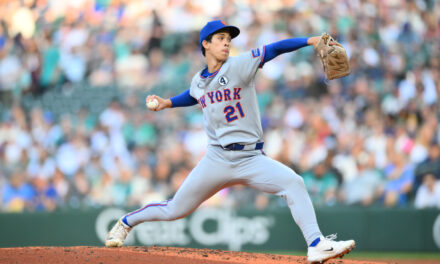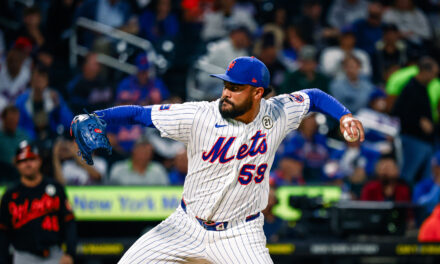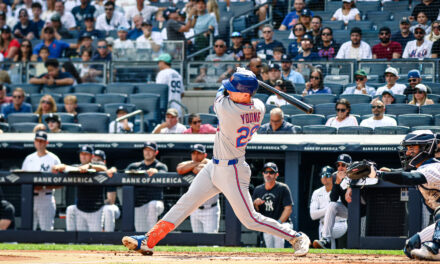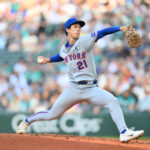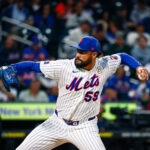
The Mets’ 2023 draft was overall successful with some big-impact names coming out of it.
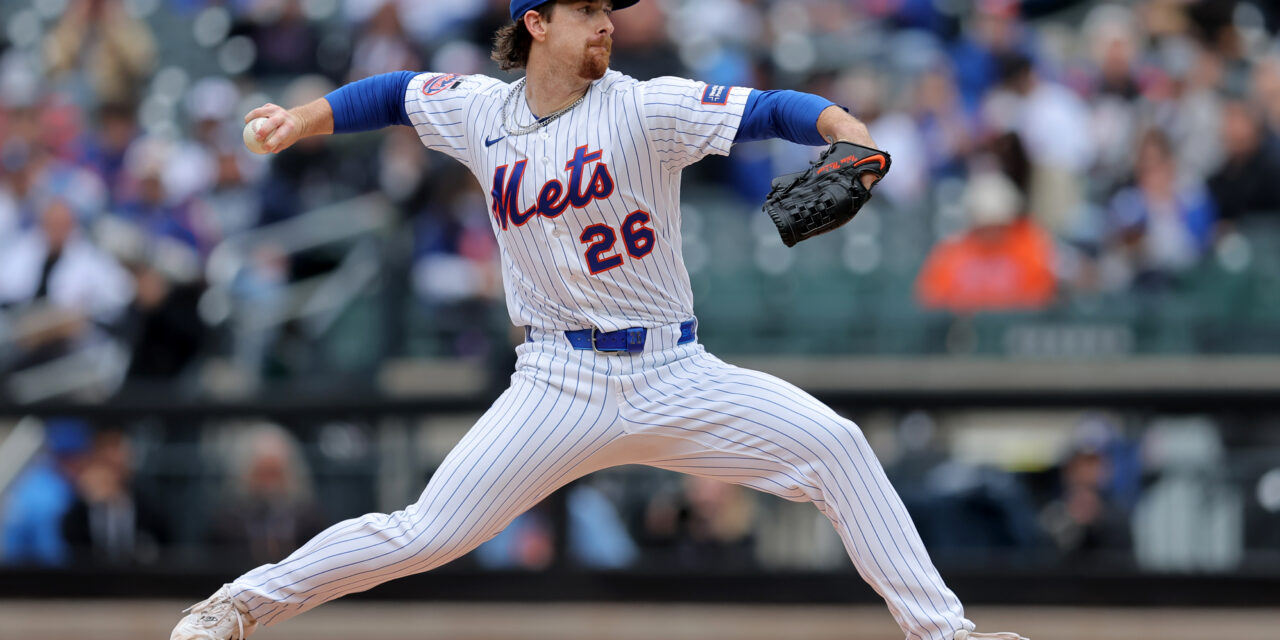
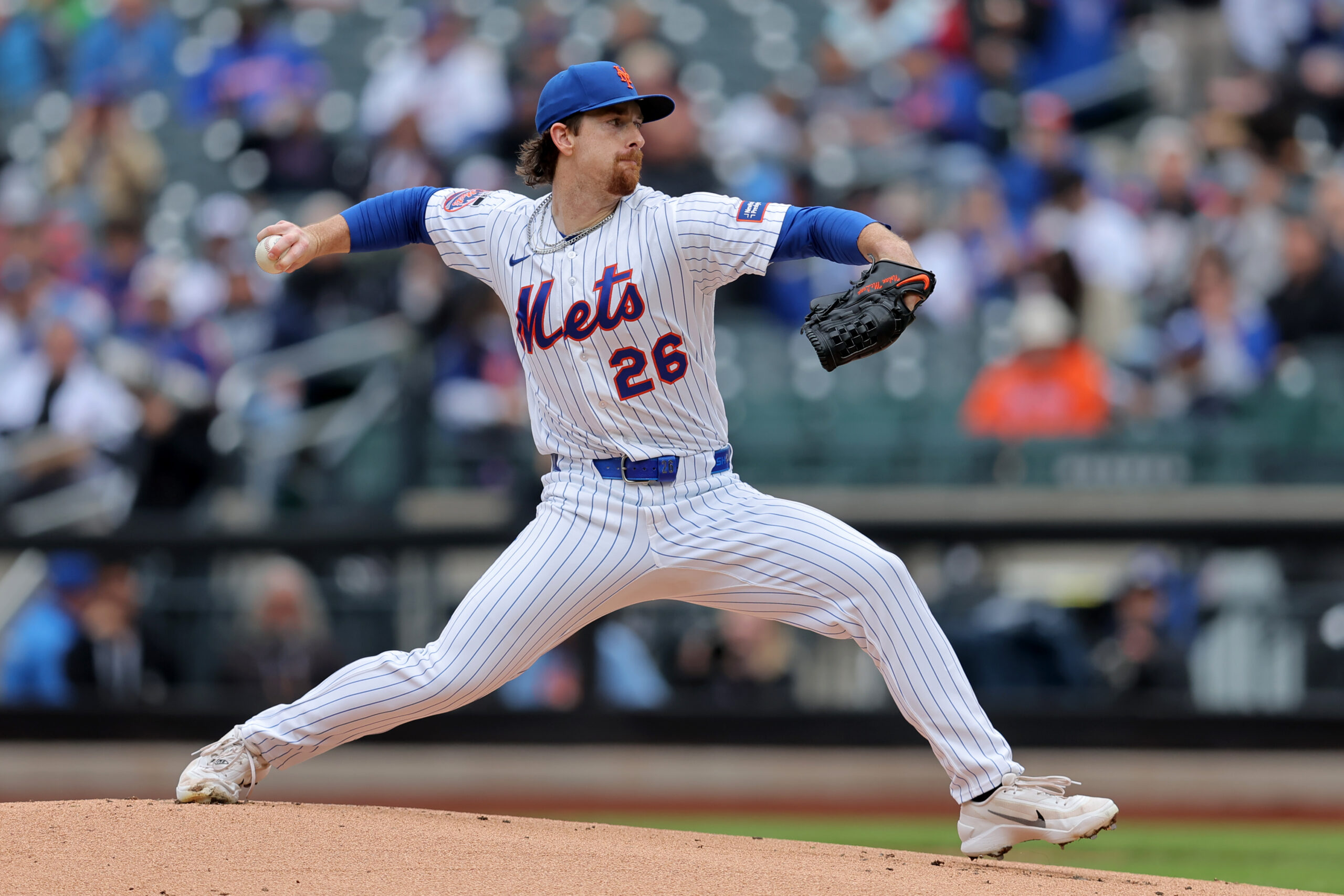
Nolan McLean, taken in the third round, may be the most impactful player taken. The Mets drafted him as a two-way player with an eye for what he could do on the pitching side. Within a year, he stopped hitting, and a year later he went through a massive overhaul in Triple-A in the summer of 2025, leading to his quick call-up. He has pitched to a 3.20 ERA and 1.10 WHIP across 143.1 innings and looks like he could be a potential frontline starter for years to come.
Brad Penner-Imagn Images
The other player who can claim the most impact is A.J. Ewing, who was taken in the fourth round. Ewing was drafted as a shortstop but quickly moved to the outfield, where he has developed into a plus defensive center fielder with flex at second base. He dominated Double-A and Triple-A, forcing his way onto the 2026 major league roster in May, and has slashed .275/.360/.412/.772. The swing change he made in the minors this year has helped him get to his power better, and his HR/162 pace currently sits at 14 while his stolen base pace sits at 28. Even if he tops out as a 15 home run player, Ewing looks like he can man center field for the long haul while also providing flexibility in the infield.
The Mets liked Brandon Sproat so much they drafted him twice, this time in the second round. He struggled heavily in 2025 to maintain velocity or command the major league baseball, which led him to change up his pitch mix and try to be a contact-suppression-based pitcher. He has had mixed success at best but has looked better in his two most recent starts. Across 95.2 innings between the Mets and Brewers, Sproat has a 5.17 ERA and 1.31 WHIP. He was part of the trade that brought Freddy Peralta and Tobias Myers to Queens.
Colin Houck, taken in the first round, has unfortunately looked like one of the worst picks the Mets have made in recent history. He has struggled heavily in High-A, slashing .105/.270/.315/.585 across 119 games, and it is hard to see him having a path to Double-A, let alone the majors. In a draft where he was drafted five picks before Kevin McGonigle, who the Mets were rumored to be linked to, this only looks worse in hindsight.
Zach Thornton, taken in the fifth round, has pitched twice in the majors and his most recent outing against the Phillies, he pitched six innings of one-run ball. He made some interesting pitch mix changes in that start that could elevate his ceiling a bit. Right now he still projects to be a backend starter, swing man, or up-and-down pitcher, but if he could ever get to some more velocity, a decent comparison might be David Peterson. But you are much happier drafting David Peterson in the fifth round than the first round.
Jack Wennigner has gotten top 100 list buzz the past few months, and while he has not made any of the major lists yet, he is very clearly on the bubble. He has struggled a bit in June but overall is having a good season. He has struggled to maintain velocity across outings, which may end up making his future as a back-end reliever, but that is a good outcome for a sixth-round pick.
Thirteenth round pick Ben Simon has looked great in both Double-A and Triple-A this year flashing multiple plus pitches and pitching to a 2.35 ERA and 1.14 WHIP. He is making a real case to force his way onto the major league roster at some point this year.
Third-rounder Kade Morris was traded to the Athletics for Paul Blackburn, who started strong for the Mets, got hurt, and then struggled heavily, leading the Mets to eventually cut him. Morris has had mixed results in Triple-A and the minors in general, pitching to a 4.41 ERA and 1.38 WHIP this year.
You can see the full draft here:
- Round 1 – Colin Houck – SS
- Round 2 – Brandon Sproat – P
- Round 3 – Nolan McLean – TWP
- Round 3 – Kade Morris – P
- Round 4 – Wyatt Hudepohl – P
- Round 4 – A.J. Ewing – SS
- Round 4 – Austin Troesser – P
- Round 5 – Zach Thornton – P
- Round 6 – Jack Wenninger – P
- Round 7 – Noah Hall – P
- Round 8 – Boston Baro – SS
- Round 9 – Nick Lorusso – 3B
- Round 10 – Christian Pregent – C
- Round 11 – Brett Banks – P
- Round 12 – Brady Kirtner – P
- Round 13 – Ben Simon – P
- Round 14 – John Valle – P
- Round 15 – Justin Lawson – P
- Round 16 – Jake Zitella – 3B
- Round 17 – Bryce Jenkins – P
- Round 18 – Gavyn Jones – P
- Round 19 – Christian Little – P
- Round 20 – Kellum Clark – OF