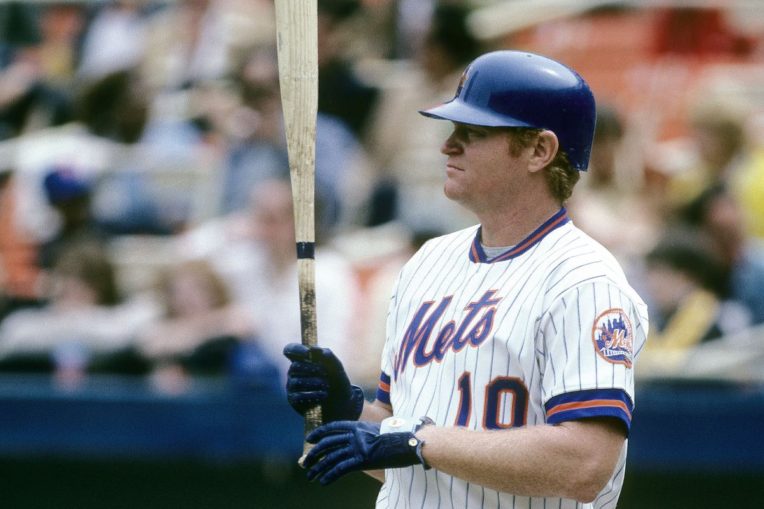
Rusty Staub’s tenure with the New York Mets was a journey filled with success and offensive destruction, combined with some horrible injury luck that stopped him from reaching his full potential with the team.
Staub was a five-time All-Star before he even put on a blue and orange uniform. He played during the Mid-Summer Classic in 1967 and 1968 for the Astros, before making the team in ‘69, ‘70, and ‘71 during his time in Montreal. By the time he generated interest from Queens, he was already quite the offensive star – and a star was exactly what the Mets needed.
After their 1969 miracle run, in which they won 100 regular season games and took down the Baltimore Orioles in five games to take their first World Series victory in franchise history, the team struggled to get back to first place.
A shakeup was necessary, and after two straight third place finishes in the National League East, the team shook things up in 1972. Just before the start of the season, the Mets made a blockbuster deal with the Montreal Expos, sending Mike Jorgensen, Tim Foli, and Ken Singleton up north for Staub.
Staub hit the ground running in his first season in the Big Apple, hitting just under .300 in the first month of the season before exploding in May, slashing .336/.415/.542 with 22 RBIs and 36 hits.
Unfortunately for Staub, the baseball gods struck down in the month of June. On the third day of the month, he was hit in the wrist by a pitch, fracturing it. Staub initially ignored the injury, but after playing through the pain with unsuccessful results, the fracture was revealed via X-Ray and he went in for surgery, missing the majority of the remainder of the season.
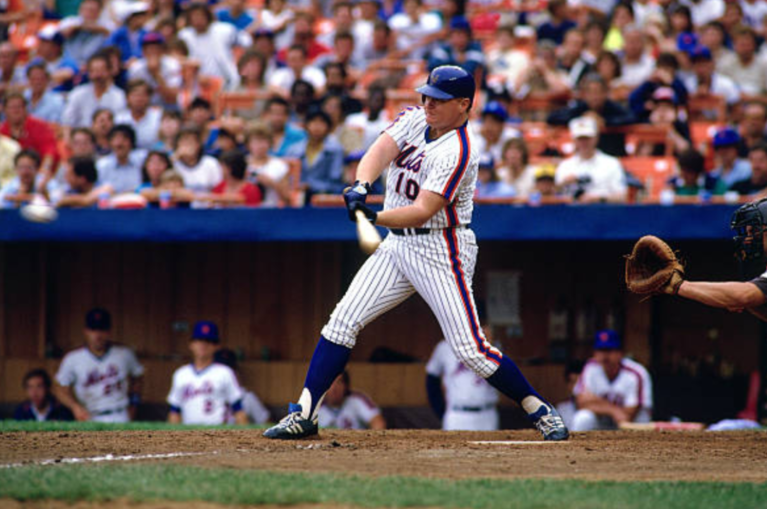
The vitality of Staub’s presence in the lineup became very apparent after he went on the disabled list. Through the month of May, with Staub in the lineup, the Mets were 29-11. From June to September, the team went 49-61, good for another third place finish in the NL East.
In 1973, Staub started off slowly, amassing only 11 hits in 81 plate appearances. However, he turned his game around in May and June, hitting for an .875 OPS in May and an .869 mark in June, including 14 doubles in the latter month. He slumped slightly in July and August, but finished strong in September, helping lead the team on a 19-8 run to finish the season, securing first place in the division by a game and a half over the St. Louis Cardinals.
Staub went on a tear in the first three games of the NLCS versus the 99-win Cincinnati Reds, hitting three home runs (including two in Game 3) and knocking in five RBIs. In Game 4, he made a spectacular catch in extra innings to rob a hit in right field, but crashed into the wall and separated his right shoulder, forcing him out of the lineup for Game 5. The Mets went on to beat the Reds in five games, catapulting themselves into their second World Series in five years.
Staub missed Game 1 of the World Series against the Oakland Athletics due to the shoulder injury, but returned in Game 2. His fielding was severely limited, but his offense was seemingly unaffected. He hit .423 across six games, including a four hit, five RBI performance in Game 4. Although the Mets dropped Games 6 and 7, losing the series, Staub was a vital part in pushing the team deep into October.
In 1974, Staub had his first injury-free season with the Mets, slashing .258/.347/.406, including a monster month of August in which he hit .340 with 32 hits, 20 RBIs, and an .887 OPS. He led the team in RBIs with 74, hits with 145, and at-bats with 561. He also finished second in the team home run race with 19.
The team unfortunately collapsed around him, only winning 71 games and finishing fifth in the NL East standings.
In 1975, Staub continued his dominance, slashing .282/.371/.448 while shattering the franchise single-season RBI record with 105, the first player in team history to surpass 100. He also led the team in walks that year, and was second in at-bats, hits, home runs, doubles, on-base percentage, and slugging.
The Mets still finished third in the NL East, and with a rebuild in sight, Staub was traded away to the Detroit Tigers for Mickey Lolich and Billy Baldwin. He did eventually return to the Mets later in his career, but took the role of a player coach off the bench.
Staub finished his postseason career for the Mets with a 1.096 OPS and more walks (5) than strikeouts (4).
He was inducted into the New York Mets Hall of Fame in 1986, cementing his role as a critical piece in the 1973 National League Pennant winning team, and as a fan favorite of the early 70’s.