The trade deadline is over, and the Mets traded away nine players and added 13 new players. (This includes David Peterson.) When looking at who was added, it is important to remember that the prospect lists will update in the coming weeks and are still displaying old information.
The Mets clearly chased upside as well as player types they have a track record of optimizing. They filled much-needed holes in their farm system and grabbed both players who can help in the near term and in the future.
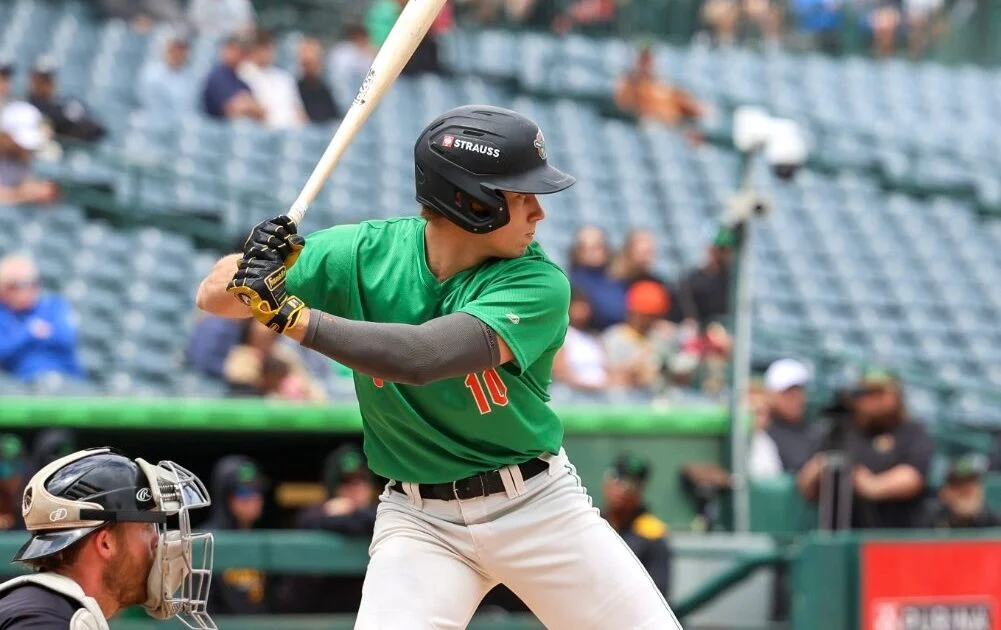
Sammy Stafura. Photo by Greensboro Grasshoppers
Future or Current Potential Top 100 Prospects
3B/SS Jefferson Rojas
Jefferson Rojas made the back half of some top 100 lists in the offseason and may even stay on some when the new lists come out in a few weeks. He gives you solid defense at third base and second base and could fill in at shortstop as needed. He is average to above average at pretty much everything and could be in the majors as soon as next year. He has an argument to be listed as the Mets’ best prospect going forward and solidifies a weak portion of the Mets farm system.
2B Émilien Pitre
Émilien Pitre is the other player that has an argument to be the Mets’ best prospect and does not profile too dissimilar to Rojas. He has a better hit tool, but Rojas has a bit more power potential. The comps I have heard for Pitre are Pedro Ramirez and Jeff McNeil. His stock has skyrocketed this year, and he is another prospect that could be in the majors as soon as next year if he continues what he is doing.
SS Sammy Stafura
It is hard to find a more boom-or-bust player traded this deadline than Sammy Stafura. He has plus power with a 107.5 miles per hour 90% exit velocity alongside his plus defense at shortstop. He underwent a swing change roughly six weeks before he was traded, and time will tell if that is sticky or not. If so, he should skyrocket up Top 100 lists and be an everyday shortstop for the Mets in the not too distant future. If the swing change does not hold, he is likely not a major leaguer.
1B/3B Cole Mathis
The only thing holding Cole Mathis (David Peterson trade) back is injury. He has had elbow issues since he underwent Tommy John surgery, which may prevent him from being able to play third base. He projects to have the bat to play first base with a solid hit tool and a solid power tool. He recently returned from his latest injured list stint, so the Mets will get a better look at him going forward.
Gabe Davis. Photo Credit: MLB Pipeline
Upside Future Starters
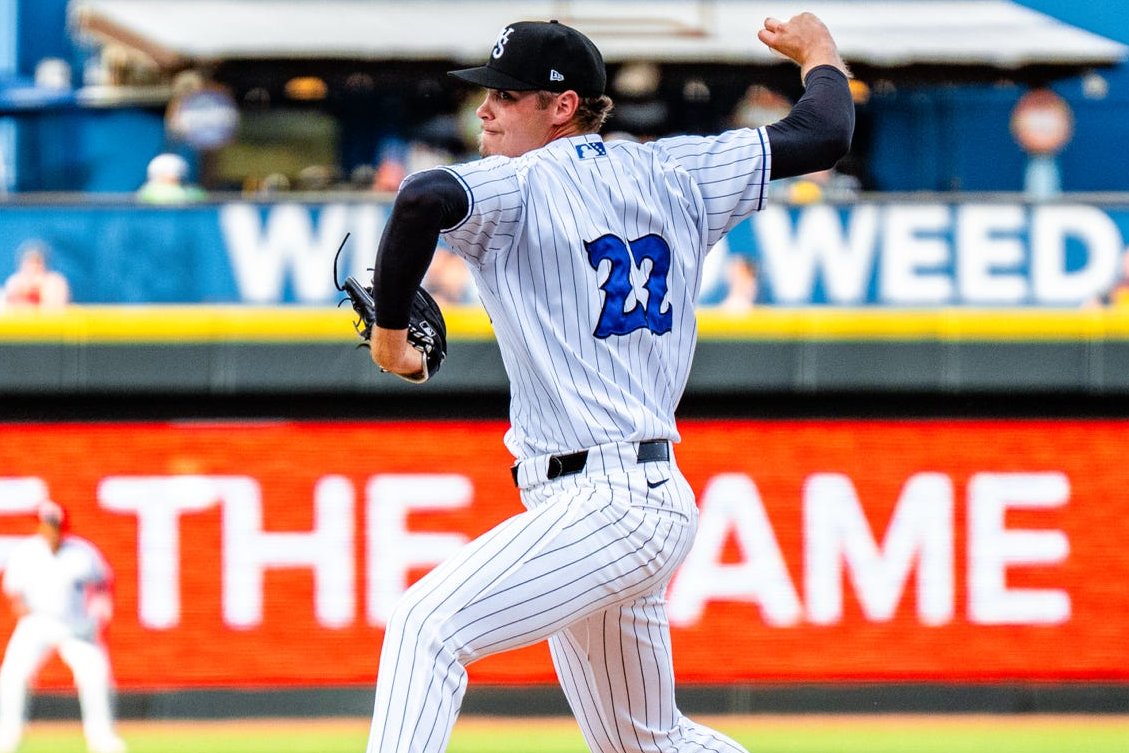
RHP Gabe Davis
A shoulder injury led to Gabe Davis getting drafted in the eighth round instead of the first or second like he was initially expected. He has struggled since he was drafted, but he throws in the high 90s. It is important to remember you should never evaluate prospects just on ERA—they have minor league defenses behind them, and they are playing in minor league ballparks. Davis has a starter’s repertoire centered around a plus fastball and a plus slider and has continually improved the further he has been away from his surgery.
RHP Gary Gill Hill
Gary Gill Hill is the type of pitcher the Mets have had success developing. He throws from a low slot with a good feel for spin. He has good east/west movement and shares some traits with Brandon Sproat. He throws multiple good breaking balls and should be a good fit to be optimized by the Mets.
RHP Luke Gabrysh
When you acquire players to optimize, it is always good to grab some pitchers from organizations that are not good at developing that archetype. Luke Gabrysh (Brooks Raley trade) is another low slot pitcher with a good feel for spin. He throws three different fastball shapes, all with good velocity and excels at generating swing and miss.
Welcome to the Bullpen
RHP Zach Franklin
There is a good chance Zach Franklin will be in the bullpen any day. He throws a good fastball and a good slider from a three-quarter slot and is great at generating swing and miss while limiting walks. It would not surprise me if he pitches similarly to Huascar Brázoban in 2027.
RHP Chayce McDermott
The Mets are now the fourth organization to take a shot on Chayce McDermott (Ben Rortvedt trade) because his stuff is amazing; he just has no idea where it is going. His breaking balls are electric, and he throws his fastballs with good velocity. He could end up just throwing a few innings and then getting cut (he’s already up with the MLB team), but you want to take flyers on interesting potential future relievers after selling at the deadline. If the Mets can be the team to finally help him figure out any level of command, that is exactly what you will get.
John Spikerman. Photo Credit: Nathan Ray/Clearwater Threshers
Swing Change Incoming
OF Aidan Smith
Aidan Smith has struggled heavily in his pro career. He looks better under the hood, but it by no means is amazing. He is one of the clearest “needs a swing change” candidates the Mets got, and ideally they have a plan to help him get to the power he was projected with when he was drafted in the fourth round and traded for Randy Arozarena. At the least, he is a plus defensive outfielder and a good runner.
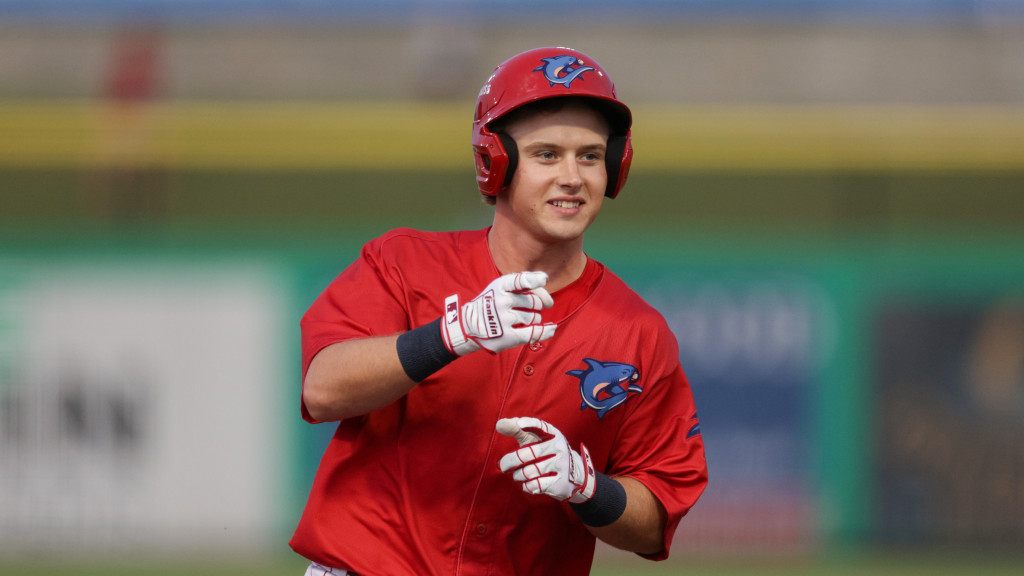
OF John Spikerman
John Spikerman is a Gold Glove level defender in the outfield and an incredible runner. He may never hit and could have a role on a major league roster as a super utility player with plus defense that can also make an impact as a pinch runner. He does have average-ish contact rates and gets walks but his power is well below average. At his best, he may end up just being a better version of Nick Morabito.
INF Bruin Agbayani
Bruin Agbayani (yes, Benny’s son) has a plus hit tool but has yet to really develop any power. If he could adjust his swing to tap into some more power, or potentially just fill out a bit more, he could develop into a potential major league infielder.
OF Billy Amick
Billy Amick is the opposite of Bruin because he gets to incredible power but struggles heavily to make consistent contact, running absolutely abysmal zone-contact rates—some of the worst in all of the minors. We have seen with Ryan Clifford that even if you hit the ball incredibly hard, it is difficult to be successful above Double-A with contact rates that poor. So, Amick will likely need to adjust his swing to make more consistent contact if he ever wants to make the majors.
Place for More Information on the Prospects Traded
- For All You Kids Out There is a free Mets-adjacent Baseball Prospectus podcast hosted by Jeffrey and Jarrett, and they broke down all of the Mets trades as well as the players traded.
- The Baseball Prospectus site has great breakdowns of the players in each farm system as well as their top 101 prospects.
- Baseball America has top 30 prospect lists for every team and should update in the coming days to include al of the prospect traded as well as in-depth analysis.
- Prospect Savant is a free website where you can view available metrics and percentile for minor league prospects.