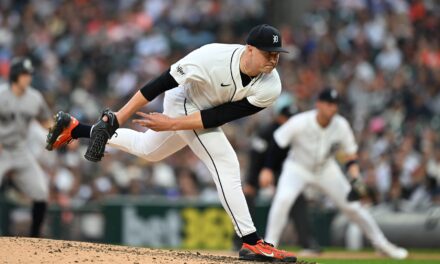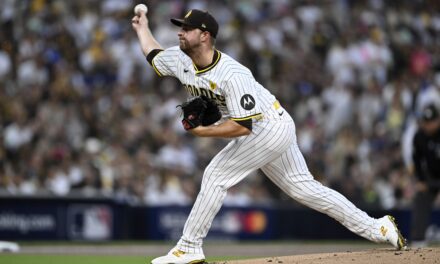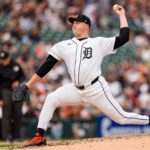
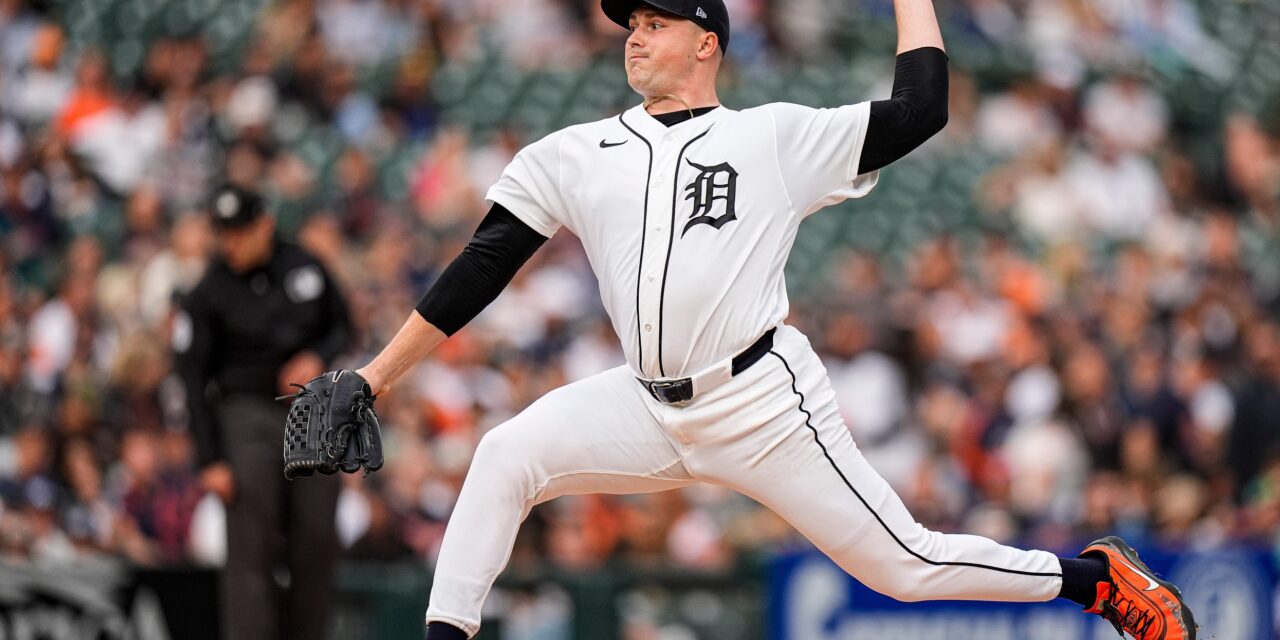
There has been much discussion about Steve Cohen going all out for Tarik Skubal, including Chelsea Janes of SNY stating, “if Cohen decides he wants Skubal, the Mets will pay whatever it takes to get him.” Alden Gonzalez of ESPN alluded to the Mets being the presumptive high bidder, writing, “It’s going to come down to price. And whether the Dodgers would be willing to match Steve Cohen’s Mets or any other suitors that materialize given the threat of a salary cap remains to be seen.”
Jorge Castillo of ESPN had a similar sentiment in that article, writing, “The Mets will be the more aggressive of the two clubs, and it starts with Tarik Skubal. They are considered the favorite to land the prize of this free agent class for two reasons: (A) there’s a clear need for a top-tier starting pitcher, (B) they’re one of the very few teams willing to pay top dollar for premier free agents.”
But has Steve Cohen ever actually gone to extreme lengths and outbid the competition to the level a big free agent could not turn the Mets down? It may surprise readers to know he has actually yet to truly do that.
What Should Qualify as “Going All Out and Vastly Outspending”?
To qualify for this the Mets arguably need to not only be the high bidder, but be the high bidder by a large margin. They can’t have offered a better deal on a technicality, got the player by giving a higher AAV but less guaranteed money, or won the bidding war by offering slightly more than the next highest team.
What is the reasoning behind this thought process? The reports so far seem to project that the Dodgers will look to make an offer to Skubal similar to the one they made to Kyle Tucker. It has also been heavily reported that if offers are similar, Skubal would be unlikely to choose the Mets over the Dodgers. This means that the Mets may need to vastly outspend the competition to land Skubal.
Have Any Mets Contract Offers Fit This?
Juan Soto
The Mets were not the high bidders on Juan Soto. This was something Juan Soto said directly during an interview with Abriendo Sports. Danny Abriano of SNY recapped the Spanish interview in English and said the top teams were the Mets, Yankees, Red Sox, Blue Jays, and Dodgers. The Red Sox and Blue Jays offers were never made public so it is likely that one of those two teams that were the high bidder. Even the Yankees’ offer could be argued as more lucrative since their offer included a clean opt-out compared to the Mets’ offer, which includes the ability to block the opt-out by including more money, as confirmed by Buster Olney and Jeff Passan of ESPN.
Juan Soto is the biggest fish Cohen has wrangled, and he did it without going vastly beyond the other offers. From the information available, he was not even the top bid for Soto. It was also well documented that throughout the process, the Mets did not know where they stood while negotiating.
Kyle Tucker
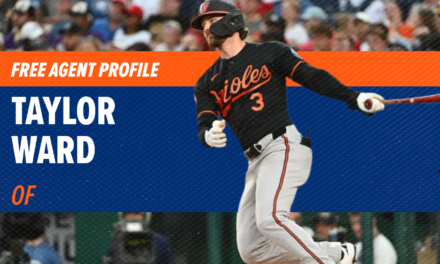
Kyle Tucker was another free agent; it would seem the Mets did not know where they stood while negotiating, with Cohen making his infamous “white smoke” tweet. The Mets seemingly were not willing to go to terms with Tucker, and the Mets and Dodgers went back and forth on short-term deals until he chose the Dodgers. It could be argued that the Mets’ offer was better, but at no point did the Mets go all out and vastly outbid the Dodgers. Instead, both teams made similar offers, and the Mets did not get the player.
Tucker’s takedown when discussing a Cubs extension was rumored to be around $475 million, as mentioned by Lance Brodowski on Cubs Daily Podcast based on conversations with Excel Sports Management. Alden Gonzalez of ESPN later said in free agency he was looking for $400 million. Maybe that range is what would have pried him away from the Dodgers, though he did turn down ten years and $350 million from the Blue Jays. One year into his contract, it would seem the Mets were right not to make that deal, but when discussing the idea of Cohen going all out and vastly outbidding the top offer, this is what it would look like.
Yoshinobu Yamamoto
Yoshinobu Yamamoto‘s desire to both break Gerrit Cole‘s contract and to be a Dodger were heavily reported throughout his negotiations, as chronicled by DodgersBlue.com and Sports Illustrated. Maybe the Mets misread the Dodgers’ interest? The final offer they made was $25 million higher than the $300 million contract the Yankees offered, per Ken Rosenthal of The Athletic. Maybe the Mets considered that going “all out”. It is hard to argue that is “vastly outbidding,” though. It was also immediately matched by the Dodgers, and the Mets never got a chance to make another bid.
Maybe the Mets misread where the other teams were in the negotiations. Maybe they expected to get another chance to bid and then would have vastly outspent, but time and time again the Mets seem to think they will get another chance to submit another bid and then do not get the opportunity. That happened in 2026 with Edwin Diaz as well, who shares an agent with Yamamoto. Maybe the Mets did not consider Yamamoto an “all-in” player at the time. But if Cohen was going to vastly outspend, they probably should have offered $400-500 million when they made the $325 million, especially with what had been publicly reported.
Kyle Schwarber
The Mets were heavily reported to have circled Kyle Schwarber as an offseason target. All that was reported was the three-year, $120 million offer from the Mets, per Michael Marino, but it is unknown if that was the first offer or final offer. It was the highest reported average annual value, but significantly less total dollars than the Phillies offered in the end. Could this be another case of the Mets thinking they would get a chance to bid again and then they didn’t? Possibly. Whatever the reason, this was another top free agent the Mets under Cohen did not vastly outbid and instead tried to get by offering a contract that was better by a technicality.
Max Scherzer and Justin Verlander
Max Scherzer and Justin Verlander signed for similar contracts, and both were short-term. The Dodgers were rumored to have offered Scherzer a deal a little under $40 million per year per Jon Heyman on the Big Time Baseball podcast, but on a two-year deal whereas the Mets gave a player option for year three. Verlander signed quickly and not a ton is known about his market, but it is hard to really argue that, on deals this short, Cohen truly outspent anyone to the levels he would with Skubal.
Bo Bichette
The Mets went above and beyond with the Bo Bichette contract in terms of AAV and opt-outs, but they did it to ensure Bichette came to the team on their preferred length. Bichette turned down a seven-year, $200 million offer from the Phillies, and it could be argued that there are reasons he should have taken the longer deal with more guaranteed money. This seems to be the wheelhouse Cohen has preferred to live in since he bought the team, giving out shorter-term high AAV deals as opposed to vastly outspending the market with term and AAV.
Pete Alonso
The Mets very clearly did not value Pete Alonso at a deal longer than three years, nor did twenty-eight other teams, as no team offered more than three years. Time will tell if they were correct, and while he had great results in 2026, many of his trends under the hood were very concerning. The Orioles landed Pete by outspending every other offer by a long shot, nearly doubling the highest reported bids. They determined he was a “must-have” player and made an offer he could not refuse.
What Does This All Mean?
So much focus is put on how David Stearns needs to go outside of his comfort zone and give term to a starting pitcher, but Steve Cohen also needs to go out of his comfort zone when it comes to being the high bidder. The Mets under Cohen, between each of the three front offices the team has had during his tenure, have seemed to not want to be used as leverage but that cannot be a fear if they truly want Skubal to be a Met. They are unlikely to land him on a deal that is close to the Dodgers or just better on a technicality.
The Mets will likely need to do something they have never actually done in the Cohen era, despite continual talk about his ability to do so: vastly outspend to get the player they want. That may mean paying 20%, 40%, 60% or more than what the Dodgers offer. The Mets also need to improve their ability to read markets and understand where they stand in bidding wars.
But if the Mets do give him an offer so ludicrously higher than the next best one that he cannot possibly turn it down, not only would it be the first time the Mets have done it, but it would be the first time they came close.