
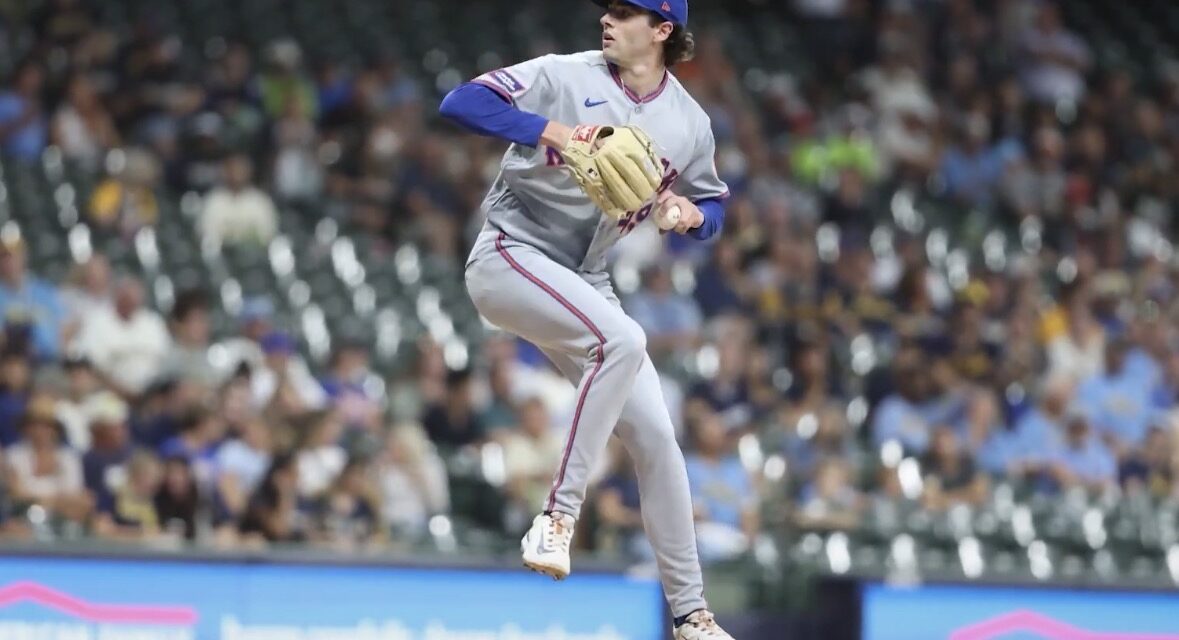
On Tuesday, Zac Thornton twirled another quality start en route to a thrilling 3-2 Mets win over the Milwaukee Brewers. Thornton has been one of the bright spots in an otherwise hugely disappointing 2026 for the orange and blue.
Through 10 MLB starts, Thornton has pitched 56 1/3 innings with a 2.88 ERA and a 1.15 WHIP. Thornton is yet another success story for the pitcher development side, following in the footsteps of Nolan McLean and Christian Scott. And while Thornton has had tremendous surface level success, it was only until recently that the underlying metrics began to mirror the results.
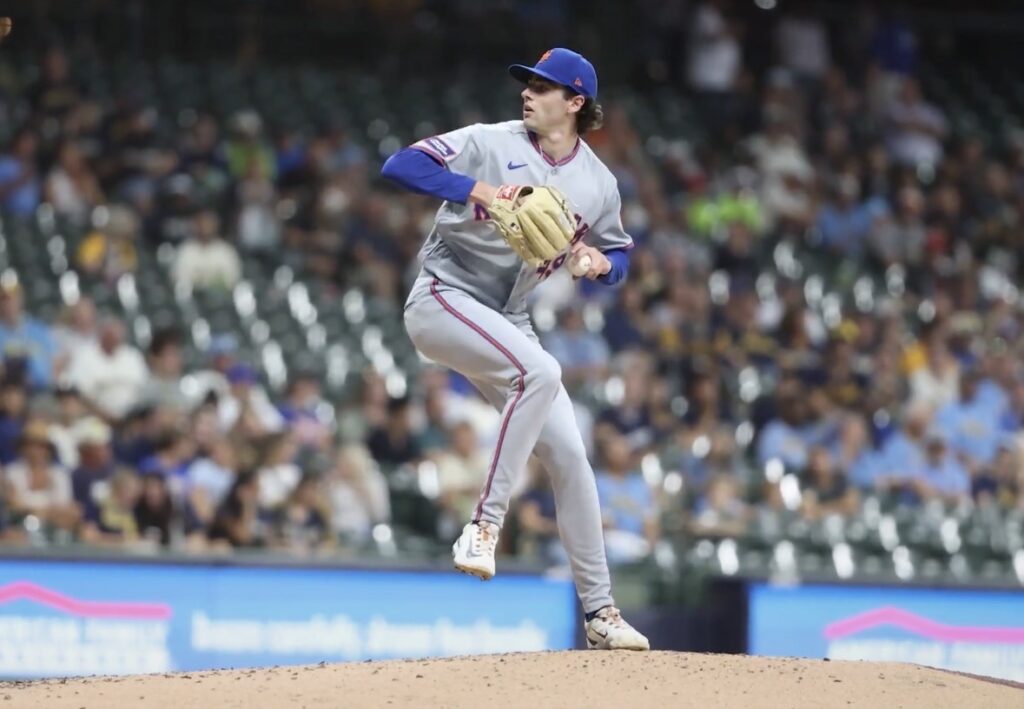
Zac Thornton vs. Brewers
Over his last two starts, Thornton has made two dramatic adjustments.
First, Thornton has tapped into more raw velocity. His four-seam fastball averaged 91.9 mph across his first eight starts; over his last two outings, it has averaged 92.6 mph. While a 0.7 mph jump might seem modest, for a pitcher in the 16th percentile in average fastball velocity, that extra tick creates vital separation between his fastball and his cutter, his second most frequent offering.
Second, Thornton has adjusted his pitch mix. In his first eight starts, Thornton leaned heavily on his cutter (38.7%) and his fastball (35.8%) while throwing his slider 19.7% and virtually never throwing his curveball (2.3%). Over his last two starts, Thornton has pumped his curveball usage up to 7.5% and his slider to 21.3%.
This shift aligns with his Stuff+ metrics. Per Fangraphs, Thornton’s best pitch is his curveball (115, where 100 is league average). In contrast, his fastball is a 95 according to the Stuff+ model. By leaning more heavily into his high graded breaking stuff, 115 Stuff+ curveball and 97 Stuff+ slider, Thornton is leaning into his strengths and expanding his arsenal.
These usage adjustments are already paying dividends in his plate discipline and batted-ball profiles: 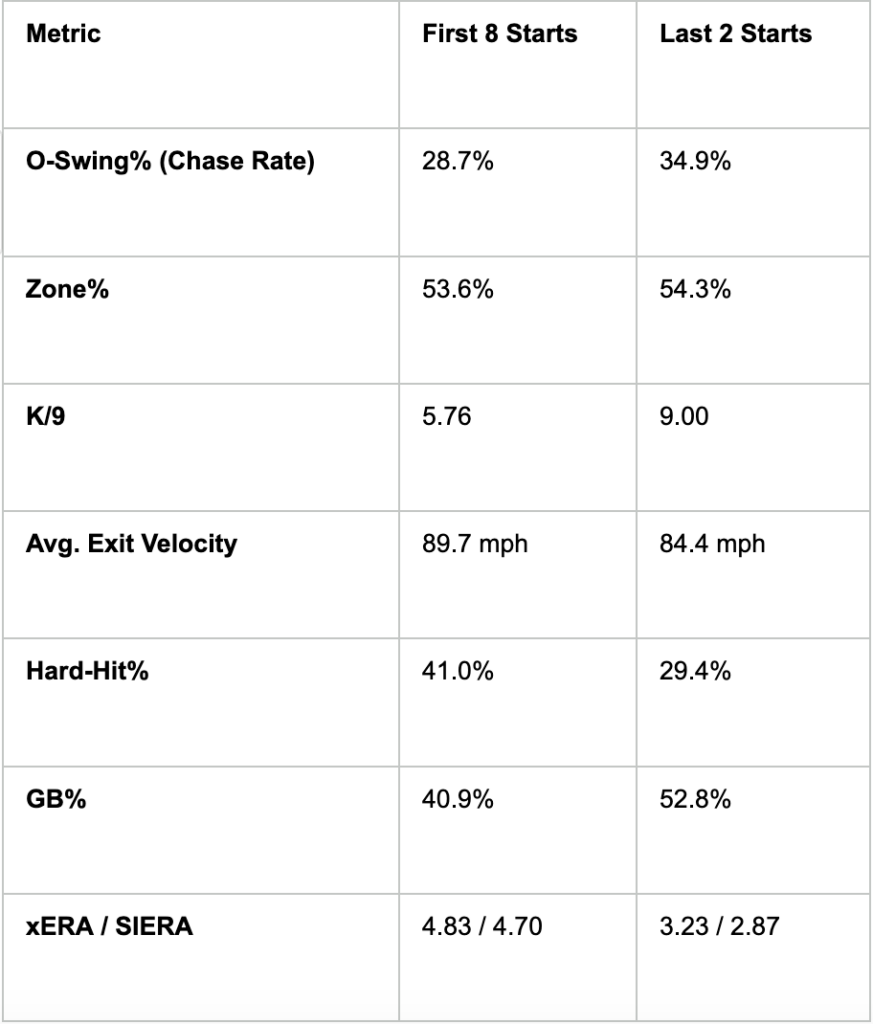
Earlier in the year, Thornton’s pristine ERA was largely the result of favorable batted ball luck resulting in a .256 opponent BABIP (he has a .375 BABIP in his last two starts). He wasn’t striking hitters out much with only 29 strikeouts in 45 1/3 innings, wasn’t generating a high groundball rate 40.8%, ( Clay Holmes sits at 56%), and allowed hard contact (9% barrel rate and 41% hard hit rate).
In his last two starts, despite throwing more strikes in the zone (54.3%), his is generating significantly more chase (34.9%) and inducing softer contact (84.4 average exit velocity). The result is an underlying profile that finally validates his performance: 3.27 ERA backed by a 3.23 xERA and a 2.87 SIERA.
Ten starts remain a small sample size, and these numbers will continue to shift over the final month of the season. But if Thornton can maintain this velocity bump while continuing to optimize his pitch mix, the Mets may be able to write his name into the 2027 rotation in pen rather than pencil.