The part of running a baseball team that is the most public facing is signing free agents. Everyone can view who is available and take their own stab at it playing MLB the Show or Out of the Park baseball. But is it the most important part of the job? What else is the head of a baseball doing?
At the same time, there are plenty of moves the team makes this day and age that are attributed to the president of baseball operations or general manager that simply shouldn’t. All of the draft picks are a prime example. (Billy Eppler didn’t sign off on every pick under his watch.)
We wanted to add some clarity to the conversation. Here are some of the main parts of the job of the person running a baseball team, whether it be the president of baseball operations or general manager.
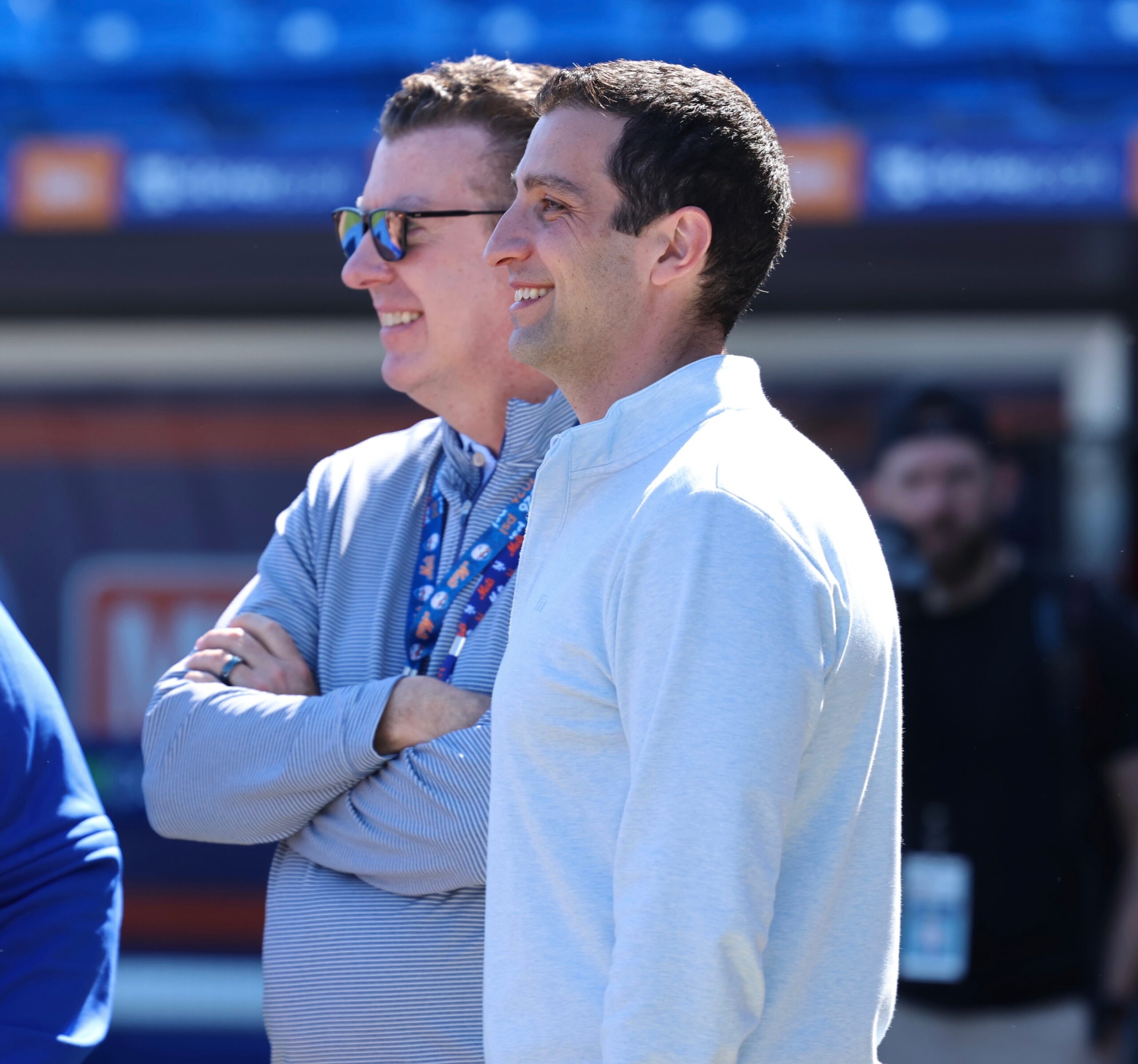
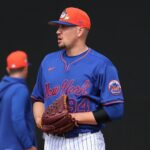
David Stearns
Photo by Ed Delany of Metsmerized
Player Evaluation Processes
The head of a baseball organization sets the framework for how the club views players. It is important to have consistency throughout the organization so the crosschecker in the Dominican Republic scouting international free agents and the pro scout analyzing players for the first pick in the amateur draft are on the same page.
This includes how different traits are weighed. The Mets under Stearns have shown clear archetypes in players they have acquired and looked to develop. For instance, their drafts have been full of athletic up the middle defenders and high slot pitchers with good spin profiles. Part of this also revolves around what the organization feels they are well equipped to develop. When you have continual success with specific player archetypes, it makes sense to continue to acquire those player types.
Every team has a model they utilize to evaluate players and project future performance. How much are you weighing contact rate vs exit velocities? How much do you factor a player’s results vs their metrics? How do you judge where a player is vs where they can be after specific changes? Stearns with the Brewers and the Mets has typically been known for having a balance of focusing between what you see on the field and what you see under the hood.
Scouting and the Draft
The president of baseball operations is not personally picking each draft pick. They are not personally reviewing film of every prospect in the draft or every international free agent. They may not even be in the room for every pick made. They very likely are heavily involved in the early round picks. But Kris Gross, Vice President of Amateur & International Scouting, largely runs the scouting and draft process for the Mets. This is true on other teams, too.
What David Stearns has done is transform how the Mets approach scouting. The Mets have largely moved away from focusing heavily on in person scouting to scouting through data and film. In a recent Baseball America survey, the Mets were listed among the teams that invested the least in in person scouting. This is not to say that the Mets never view a player in person, we have even seen David Stearns personally travel with scouts to view the big potential signings. But the focus has shifted to a more modern approach. This also means scouts are not necessarily going to view players in person as a fact-finding mission, but going with their data and research already completed to see how it translates on the field.
Under Stearns the Mets have worked to build cohesion between the development and scouting departments. It makes absolute sense – why draft a player who the team is not confident they can develop? You can see this in the players they have drafted compared to the breakouts throughout the minor league systems.
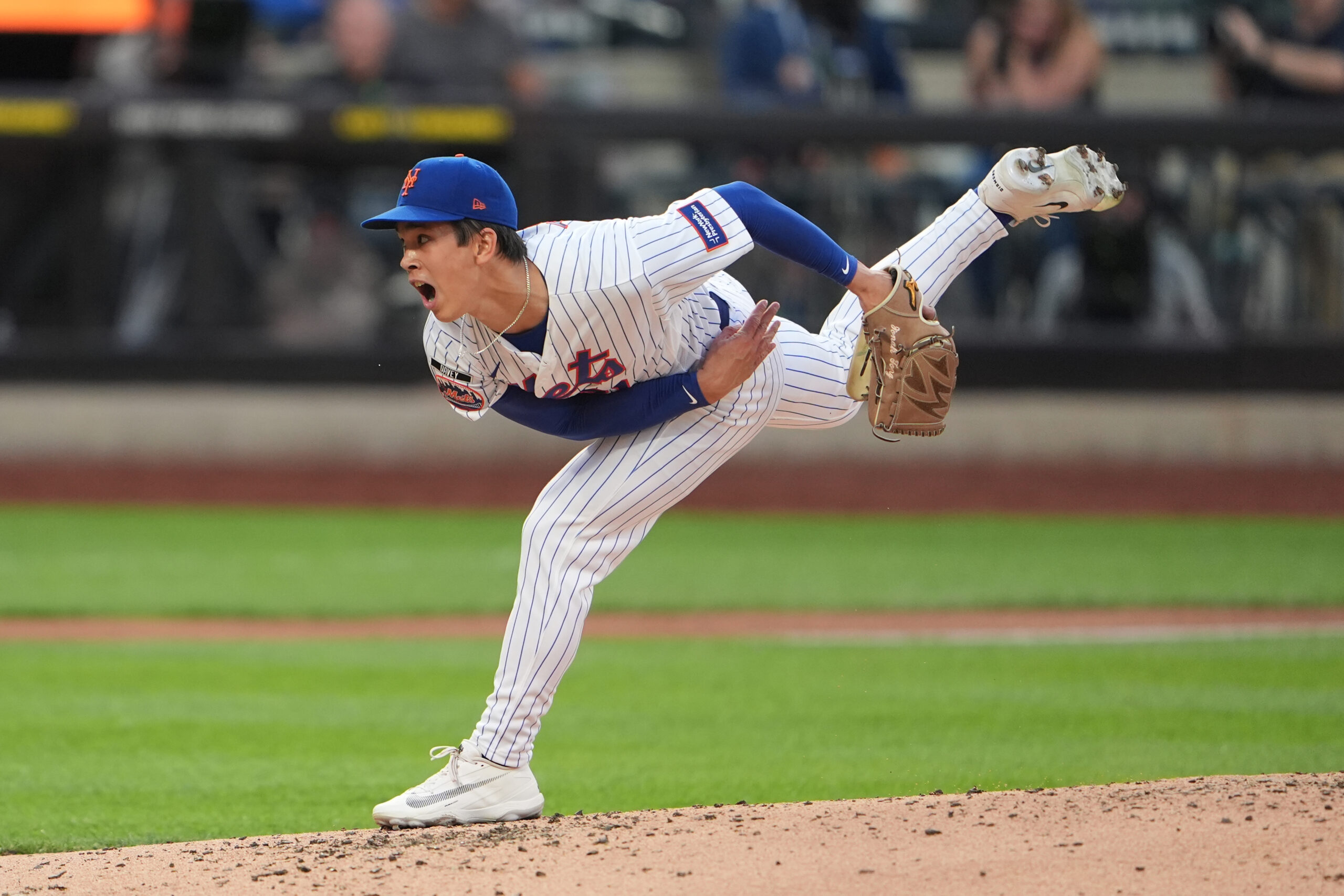
Gregory Fisher-Imagn Images
Building the Farm System
Building the farm system is the culmination of drafts, international signings, and player development. It also involves recognizing areas that may be overlooked by other teams. For instance, the Mets signed reliever Jonathan Pintaro out of the Pioneer League and recognized the swing changes Jared Young made in the Korean Baseball Organization.
In the offseason the Mets saw the following prospects make top 100 prospect lists: Nolan McLean, Carson Benge, Jonah Tong, A.J. Ewing, Brandon Sproat, Jett Williams, Ryan Clifford, Jacob Reimer, Jack Wenninger, and Will Watson. Sproat and Williams were traded. McLean, Benge, Tong and Ewing are currently in the majors. They have also pulled from deeper in their farm with Nick Morabito, Zach Thornton and Jonathan Pintaro spending time in the majors so far.
Even with two top prospects traded and four potentially losing prospect status this year, the Mets still look to have multiple top 100 prospects. Both Jack Wenninger and Jacob Reimer are in strong top 100 contention, while Elian Peña and Eli Serrano have begun to make noise. Ryan Clifford has finally started to show some signs of life in May and could raise his stock back up. Outside of the top 100 contenders, the Mets minor league system is full of players who could make a future impact in the majors at some point including Jonathan Santucci, Chris Suero, Ryan Lambert, Dylan Ross and Randy Guzman.
Even with so many top prospects graduating, the Mets have a very strong farm system with clear development direction.
Analytics and Performance Science
Organizations need structure when it comes to the data they acquire. It does not make a huge difference to measure data if you do not know how to analyze it. Griffin Canning in 2025 spoke about how the Mets’ and Angel’s pitching labs structurally were similar in terms of the machines they had, but whereas the Angels provided all the raw data to the players for them to analyze, the Mets had staff on site that could tell the pitchers what each data point meant.
This not only requires having staff that have a strong working and foundational knowledge of this information, but that there are staff that know how to communicate it across the organization and to the players. At the major league level, Steve Gelbs of SNY recently mentioned on the broadcast that the players feel the information they have received has been communicated well to them despite their offensive struggles. The have been focused on making hard contact with the Mets placing fifth in barrel rate, seventh in hard hit rate and ninth in exit velocity, while placing in the middle of the pack in strikeout rate. Where they have not done well, also mentioned by Steve Gelbs on the broadcast, is working through the mental side of slumping—an issue they seemed to have in the second half of 2025 as well.
In the minor leagues, David Stearns has prioritized infrastructure and standardized development plans. The Mets have expanded the pitching lab and have been designing a hitting lab to go alongside it. The Mets have invested in understanding the biomechanical side of evaluation – how does changing a player’s swing/load or a pitcher’s arm angle change kinetic chain? How does that change in the transfer of energy impact the ball? We have seen multiple players drafted come to the Mets and adjust their loads at the plate significantly or change their arm slot, leading to improved results.
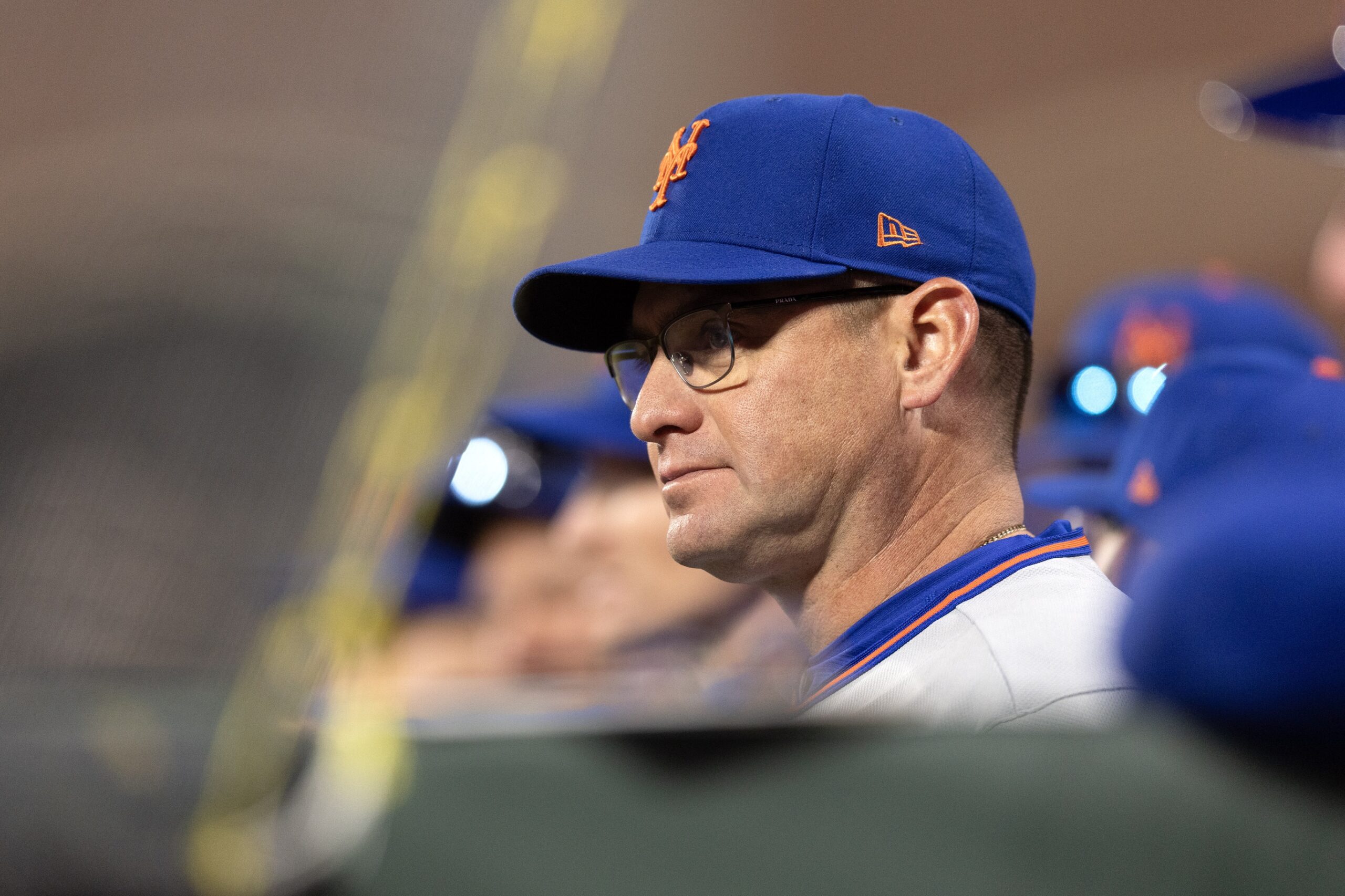
D. Ross Cameron-Imagn Images
Organizing Communication Flow
This has two parts to it, the internal portion and the external portion.
Externally the head of the baseball organization oversees how information is communicated to the media. They work to ensure stuff they do not want leaked stays internal, and what they do want leaked is done so through the filter in which the organization wants the information communicated. They are also in charge of ensuring there is consistent messaging with the media. There is a reason when Carlos Mendoza and David Stearns speak with the media back-to-back their messaging is in line.
Internally the head of the organization sets up the structure of the organization and communication flow. Who is running departments and how are the different departments communicating with each other. How is feedback being shared throughout the various levels of the organization to ensure everyone is on the same page? Is there cohesion?
Until recently the Mets have been largely viewed as a fractured organization without unity. For much of the past few decades the organization was cobbled together across various different philosophies with vacancies scattered throughout. Under former general manager Billy Eppler and owner Steve Cohen, many long-term members of the organization left for various reasons. Over the last two and a half years the structure of the organization has largely been rebuilt and for the first time in a long time there is a clear unifying vision and structure.
Managing the Staff of the Organization
The Mets under Steve Cohen have grown into a massive organization. They have well over 500 staff members per their staff directory across various departments including scouting, player development, field staff, baseball operations, etc. The person running the team is the architect of this entire infrastructure. While they do not directly hire and manage every single individual, they are directly in charge of the individuals at the top and through them impact the full trickle-down affect.
The Mets do not have a general manager at the moment. That role is split between three assistant general managers, Eduardo Brizuela, Jonathan Strangio, and Ben Zauzmer. It is not uncommon to leave some high-profile positions like that empty for a few years so you can promote one of your AGMs into that position when a team looks to poach them. They handle many of the day-to-day operational aspects of the organization, allowing David Stearns to focus on the higher-level decisions.
Departments like player development, headed by senior vice president of baseball development Andy Green, are massive both in terms of staff and responsibilities. Hundreds of players go through a team’s minor league system annually from prospects, to rehab assignments, to veterans on minor league deals. Each level has their own individuals overseeing development.
Similarly, the coaching staff is managed by the managers at each level: Carlos Mendoza in the majors, Dick Scott in Triple-A, Michael Collins in Double-A, Eduardo Nunez in High-A, Luis Rivera in Single-A, Lino Diaz in the Florida Complex League, and JC Rodriguez and Felix Fermin in the Dominican Summer League. Alongside Steve Cohen and the AGMs, David Stearns is responsible for getting the right people into those positions. David Stearns has also always been known for being very hands off with his managers, allowing them to do their jobs without micromanaging.
Joe Nicholson-Imagn Images
Major League Player Acquisition
Saving the most recognizable part for last. Deciding who to sign and who not to sign to the majors. Who to trade for, and who to give up. Jorge Polanco has spent most of the season hurt, but most team’s models likely would have grouped Ryan O’Hearn, Willson Contreras, and Jorge Polanco together in the offseason. Contreras would have cost multiple top prospects at least to beat the Red Sox massive offer, while Ryan O’Hearn is currently injured and reportedly wanted to get significant outfield time.
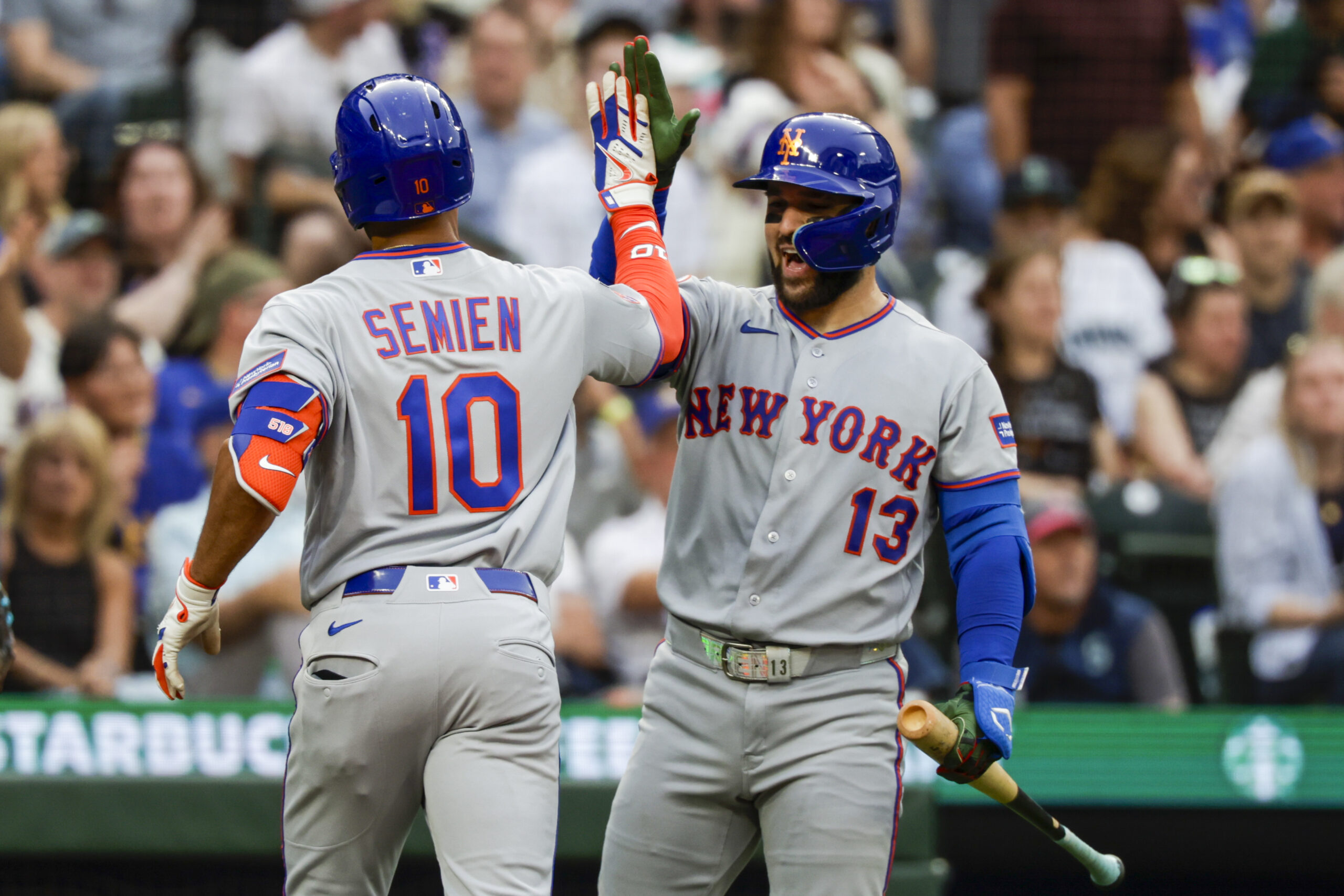
While Marcus Semien has struggled, he is much easier to cut in a year than Brandon Nimmo who has struggled heavily at the plate for over a month now with a .656 OPS over that span and has had trouble staying on the field due to multiple chronic medical issues that are unlikely to get better as he ages. Moving him also allowed the Mets call up Carson Benge and A.J. Ewing and play them every day. Both short and long term it is likely better for the organization this move was made even when it is sad to see a fan favorite leave.
Meanwhile Pete Alonso has taken a massive step backwards this year both in terms of results and under the hood. His contact rates have plummeted, and he is not hitting the ball as hard as he did in the past. Edwin Diaz began the year with decreased velocity and what the manager described as discomfort in the knee he has surgically repaired and has missed most of the season with elbow surgery to remove bone chips. Jeff McNeil has struggled defensively after his thoracic outlet surgery, and he has been a below average hitter despite playing half of his games in one of the most hitter friendly ballparks.
Part of the job is knowing when it is time to move on from players even when it is fan favorites.
On the replacements, it has been a mixed bag at first. Did anyone see Bo Bichette severely underperforming his metrics to be one of the worst hitters in baseball? Marcus Semien has struggled even more than expected yet the manager continues to play him every day. Jorge Polanco and Luis Robert Jr.are hurt. With Brett Baty and Mark Vientos you expected some of this could be managed but they have largely underperformed, though Baty has looked much better throughout May.
On the positive side, Freddy Peralta looks exactly as expected. Tobias Myers looks incredible even if the team’s usage of him continues to be perplexing. Devin Williams has had two horrible blow ups, but for the most part has looked strong giving up four runs across eighteen games. Luke Weaver has looked strong. Brooks Raley continues to be a good contract. Before he got hurt Clay Holmes looked to be one of the Mets best ever signings. MJ Melendez has struggled recently as he has gotten over exposed but has performed well as a depth piece. Many of the depth pieces like Austin Warren, Chris Devenski, Brandon Waddell, Jared Young, Carl Edwards Jr, Joey Gerber, Jose Castillo, Ben Gamel, etc. performed well while here.
Going back to past offseasons you have signings that made sense recognizing the free agent landscape but haven’t worked out for various reasons like Sean Manaea, Frankie Montas, and A.J. Minter. Meanwhile, Juan Soto, Clay Holmes, Jose Iglesias, Luis Severino, the first Manaea contract, Griffin Canning, and Pete Alonso’s 2025 deal were all great contracts. Harrison Bader and JD Martinez were fine one-year deals.
The trades have been a mixed bag as well. Luis Torrens, Ryne Stanek, Phil Maton, Jesse Winker, Tyler Rogers on the positive side where they gave up very little of value to get good performances. Cedric Mullins, Ryan Helsley, and Gregory Soto ago in the bad column, but also they did not cost much of value either. Marcus Semien has been awful, but you also were not getting anything of value to free yourself of the constraints of Nimmo’s contract. Even there we probably won’t truly be able to evaluate for a few more years. Luis Robert Jr. has been hurt and probably does not deserve to be judged before the season’s end, but the main piece sent over, Luisangel Acuña looks like he may need to be cut soon and may not have made the Mets opening day roster.
Conclusion
If you are judging David Stearns only on major league acquisitions or team record it is easy to argue that he has failed in that aspect of the job. If you take a step back, look at the landscape of players available and the process it is also easy to defend many of these moves. I think both paths are absolutely valid when discussing these players and acquisitions.
I also would not consider the major league player acquisition to be the most important part of the job. It is definitely the most public facing and easiest to comprehend.
But building the organizational infrastructure is far and beyond the most important part of a general manager or president of baseball operations. It is the part of the job that has the longest-term impact to lead to success.
We have seen under Steve Cohen that just throwing money at free agents doesn’t build success on its own. We have also been lucky that these have mostly been short term deals compared to organizations like the Angels and Giants who have seen their teams bogged down by lengthy contracts where players have been made playing time promises so they cannot be easily cut even across many years of struggle.
The Mets organization has cohesion for the first time in a long time. David Stearns inherited a mess of incompatible philosophies, with a lack of infrastructure and direction, and many vacancies. This was never going to be fixed in just two years, but the Mets have made massive strides. The continual churn of front offices over the years is what led to this mess, and ideally Steve Cohen will recognize where the organization as a whole is, where it was, and where it is going.