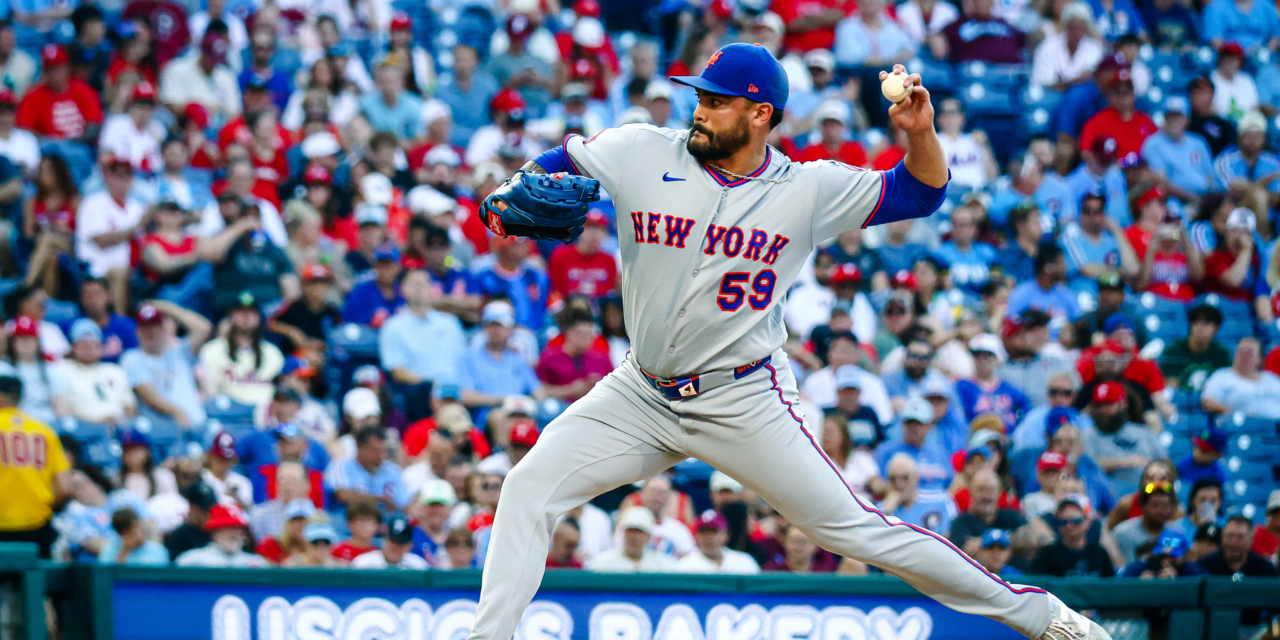
Sean Manaea walked off the mound on Thursday believing his night wasn’t quite finished. He had worked through traffic for much of the evening and there was reason to think he had enough left in the tank to get another couple of outs.
After 95 pitches and five-plus innings, Manaea wanted the baseball a little longer. The Mets, protecting both a tie game and their pitcher, chose otherwise.
“I felt like I could give a couple more,” Manaea said, “but I respect the decision.”
The Phillies made him work for it. They put runners on base in each of the first four innings and capitalized on a few defensive mistakes to erase an early deficit. Manaea never fully got into a rhythm, but he also never allowed the game to get away from him. By the time he exited, the Mets were still in position to win, which they eventually did, 6-4, behind Juan Soto’s two home runs and Marcus Semien’s seventh-inning triple.
Altogether, Manaea allowed three runs (two earned) on six hits and one walk over 5 1/3 innings.
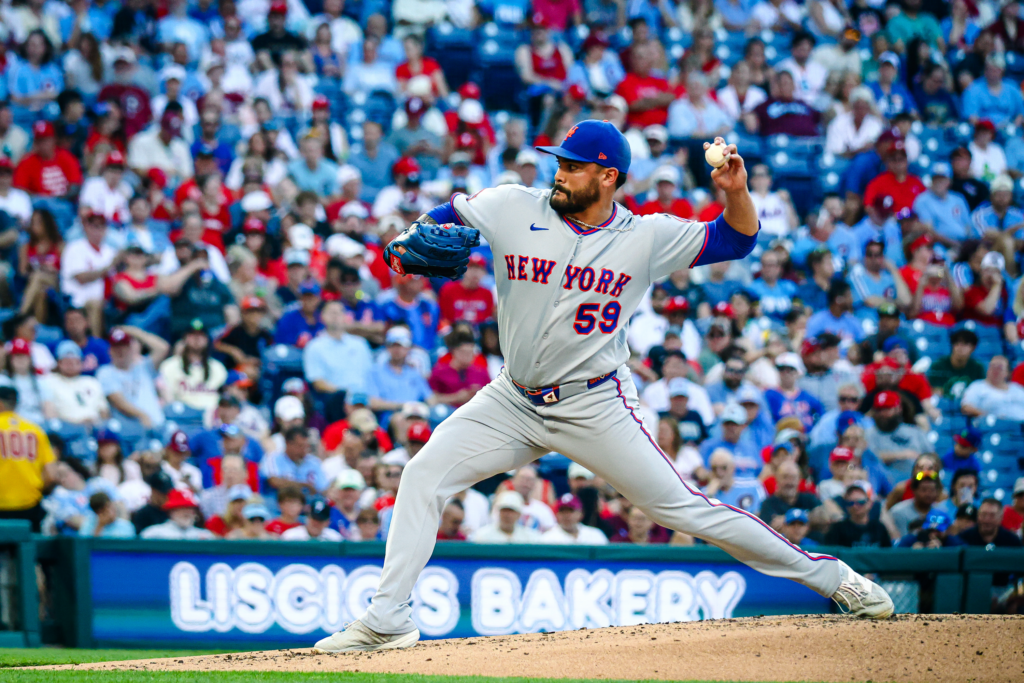
Sean Manaea by Berto Carlo
The final line was less important than the way Manaea got there. The outing required constant adjustment. Manaea began the game by hitting Trea Turner with a pitch, then gave up a run via a single from Kyle Schwarber and an Alec Bohm RBI knock. After navigating that early trouble, he ran into another challenge in the second when Edmundo Sosa tripled to lead off the inning, but Manaea settled in and stranded him there.
The Phillies continued to create traffic over the next two innings. In the third, a passed ball and throwing error turned a Schwarber strikeout into a runner on second, and Bohm doubled him home. An inning later, Bryson Stott stole second and scored on Derek Hill’s single after an awkward throw home. Philadelphia kept pressing, but Manaea never allowed any one inning to spiral out of control.
The more encouraging part for the Mets is simply how different Manaea has looked in recent weeks. Earlier in the season, he looked as if he was scrambling to find consistency and trying to find the right balance within his arsenal. Now, the adjustments he has made are beginning to show up in tangible ways. His fastball averaged 91.5 mph on Thursday, a notable jump from the 89.6 mph it averaged in April.
For Manaea, the added velocity makes the rest of his arsenal play up. Hitters have to respect the fastball more than they did earlier in the season, which creates more separation from the sweeper and gives his cutter clearer intent. He now looks more equipped to attack hitters, rather than pitching as if he is just trying to survive each at-bat. The shift has been reflected in the way Manaea is carrying himself on the mound. He looks more comfortable, more aggressive and more like the pitcher we saw in 2024. At the very least, he has given himself more leeway to work through trouble.
On Thursday, he limited damage well enough to keep the Mets in the game and ease the burden on a staff that has become increasingly bullpen-reliant. Huascar Brazobán, A.J. Minter, Luke Weaver and Devin Williams still had to cover the final four innings, combining to allow one run, but Manaea’s start kept the night from becoming a scramble.
Of course, the Mets as a team have not been particularly sharp overall, but the production from their pitching staff deserves acknowledgment. Their bullpen owns the fourth-best ERA in baseball at 3.33, while the overall staff ranks ninth at 3.92. In close losses, the bullpen has generally not been the reason games have gotten away from the Mets.
The turning points of the game occurred later, after Manaea left. With the score tied in the seventh, Eric Wagaman pushed the Mets ahead with a pinch-hit RBI single. Then Semien, given new life after an uncaught foul-tip kept his at-bat alive, drove a José Alvarado sinker off the left center field fence for a two-run triple.
“Sean’s been great, he’s made some adjustments,” Semien said after the game. “I played behind him for a lot of years in Oakland. He’s looking a lot more like that guy.”
Coming from someone who spent years watching Manaea at his best, Semien’s comment carries some weight. He seemed to be describing not a reinvention, per se, but a reawakening.
Whether this marks a true turning point will become clearer with a larger sample of starts. What is evident, though, is that Manaea looks far more capable of giving the Mets innings than he did earlier in the season. The offense and bullpen ultimately finished the job on Thursday, but Manaea’s ability to work through traffic and prevent the game from slipping away gave them the chance to do so.