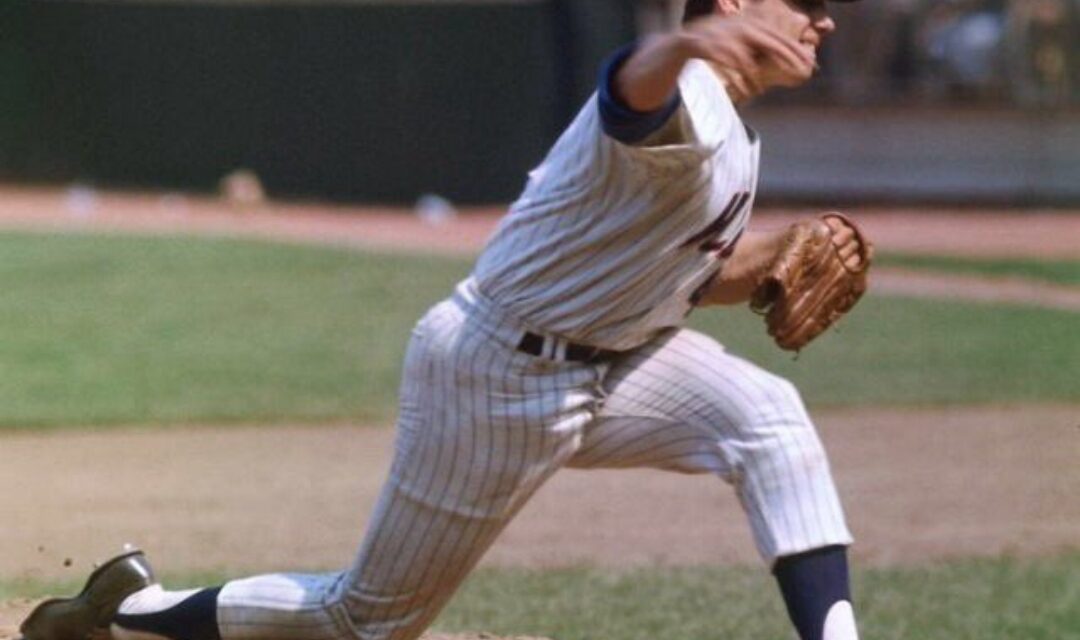
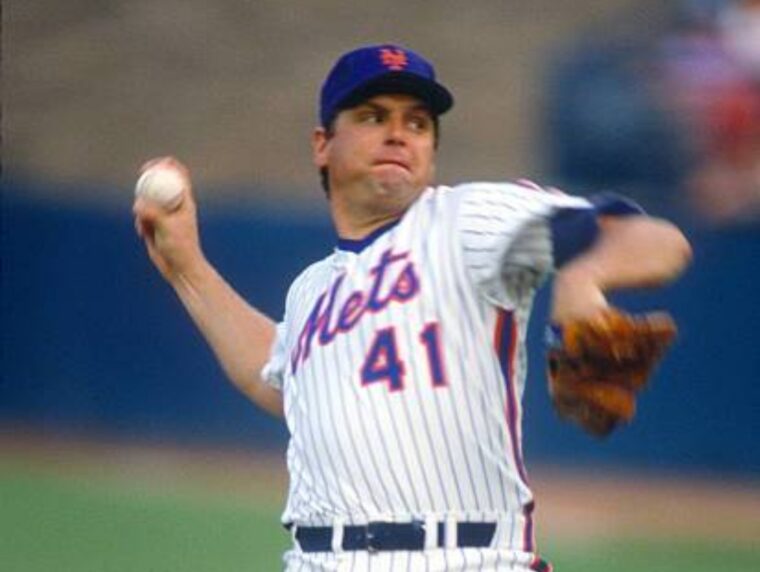
On December 16, 1982, the Mets atoned for a mistake made five and half years earlier (almost to the day) by sending pitcher Charlie Puleo and minor leaguers Lloyd McClendon and Jason Felice to Cincinnati for 38 year-old Tom Seaver, “The Franchise”.
Seaver had pitched for the Reds for five and a half seasons, compiling a record of 75-46 with an ERA of 3.18 and a 116 ERA+. Seaver also tossed his only no-hitter while with Cincinnati, and was a two-time All-Star as a Red (I consider his 1977 All-Star appearance a Mets appearance, as he had pitched for the Mets up to June 15th of that season).
For the Mets, their favorite son was coming home for the 1983 season. Seaver was the franchise leader in virtually every pitching category when he returned, having a career record of 189-110 as a Met. Seaver would go on to have a modest 1983 record of 9-14, an ERA of 3.55 and an ERA+ of 103 on a team that lost 94 games.
Seaver made the opening day start against the Phillies on April 5, 1983, tying Walter Johnson‘s record for most Opening Day starts in a career. Seaver, who chose to walk to the mound from the bullpen rather than take the ride on the bullpen cart as was common in that era, did not disappoint the Shea Stadium crowd of over 46,00. He pitched six innings, allowing just three hits, no runs, and striking out five.
The Mets were not good in 1983, but signs of life were popping up in Queens. They obtained Keith Hernandez at the trade deadline, and Darryl Strawberry was on his way to a Rookie of the Year award. Mookie Wilson was a dynamic, exciting center fielder. Ron Darling was a September call up, the first of several young and talented players to come from the Mets much touted farm system.
Things were shaping nicely for the Mets. They had young talent, with more coming, and veteran leadership in Hernandez and Seaver. There was a sense of optimism for the 1984 season and beyond. After six dark years, things were looking up in Flushing.
Then, a strange thing happened. There was a free agent compensation draft in MLB at that time, where teams losing a “Class A” player to free agency would be able to select a compensation player from a list of players left unprotected by their teams. The White Sox had lost a player to free agency after the 1983 season, and the Mets left Seaver unprotected.
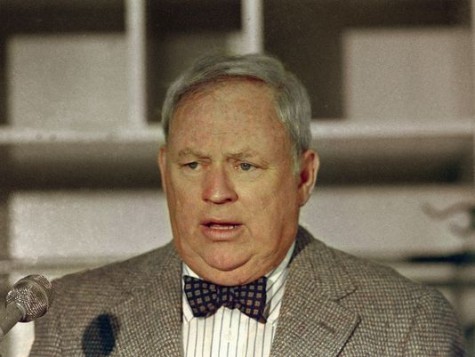
Some say that Mets GM Frank Cashen took what he called a “regrettable gamble” by leaving Seaver unprotected. The theory behind this is that teams would not want to take on the contract of an aging pitcher, whose $750,000 salary was quite high in that time.
The other school of thought is that Cashen, a seasoned baseball executive, knew exactly what was doing, and was trying to find a way to shed Seaver’s high salary and clear a roster spot at a time when the Mets had a stable of young arms ready to take his place. Cashen could not trade Seaver, as the organization could not withstand that public relations nightmare all over again.
Seaver had inherent value, as his 1983 season was certainly respectable, and importantly, he was within striking distance of a huge career milestone, his 300th win. If nothing else, Seaver’s presence in chasing that goal could create fan interest.
The White Sox decided to take Seaver, and once again, The Franchise was off to another organization. The fan base was enraged. I recall reading about the deluge of phone calls coming in, with fans expressing their disdain on how “it” could happen again. I remember seeing television news reports with fan interviews. One dismayed fan referred to the situation as “typical Mets mismanagement”.
Of course, the Mets were headed for and achieved a renaissance, as the young players generally delivered on expectations, and veterans like Gary Carter and Ray Knight were added to put the final pieces in place for the team’s second championship. The sting of Seaver’s loss faded fairly quickly from the fans’ minds. Seaver won his 300th game at Yankee Stadium as a member of the White Sox, pitching for Chicago into the 1986 season, during which he was traded to the Red Sox.
After all that happened between Seaver and the Mets, his relationship with the organization was strained when his playing career ended after the 1986 season. Seaver returned to New York baseball as a broadcaster with the Yankees from 1989-1993. He later seemed to mend fences with the Mets, working in their WPIX television booth from 1999-2005.
Seaver passed away on August 31, 2020. There is an expectation that a statue of him will be unveiled at Citi Field on Opening Day 2022. Steve Cohen, as team owner, brings hope for better days ahead. What better to start the 2022 campaign, with hope for those better days, than with a ceremony and statue honoring the organization’s most prolific player, The Franchise, Tom Seaver.