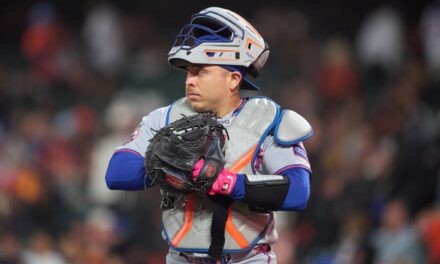
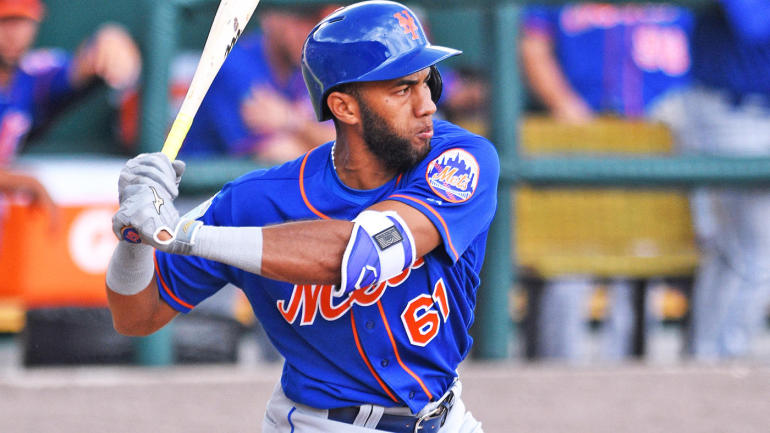
As we saw Thursday, new manager Mickey Callaway chose to bat Amed Rosario ninth on Opening Day, with pitcher Noah Syndergaard batting eighth.
This was an unconventional move, but it ultimately proved to work out, as Rosario went 2-for-4 in the Mets’ 9-4 win.
When I first heard of the concept of the pitcher batting eighth, I didn’t like it.
My first thought was, “Why would you want to give the pitcher more plate appearances than even your weakest hitter?” For instance, if you have runners on second and third with two outs and the eighth hitter coming up, you’d rather have at least a somewhat competent hitter come up to bat…right?
Well, an interesting point was made recently in an article by Tim Britton, who covers the Mets for The Athletic.
In 2017, Chicago Cubs manager Joe Maddon batted the pitcher eighth in a third of the Cubs’ games. When the pitcher was batting ninth, the Cubs’ leadoff hitter came to bat with men on base about 31.25 percent of the time, and runners in scoring position about 22.67 percent of the time, whereas with the pitcher batting eighth, there were men on about 38.75 percent of the time and runners in scoring position about 23.75 percent of the time.
Having the pitcher bat eighth with an actual hitter batting ninth gives the guys at the top of the order more chances to drive runners in.
With Yoenis Cespedes likely to be batting second most of the time and an above-average hitter like Brandon Nimmo or Michael Conforto batting leadoff, it should be beneficial to put more guys on base for them to drive in, even if it means sacrificing an out one lineup spot earlier than normal.
The greatest long-term effect that I think this will have is on Rosario’s development as a hitter.
In my article about him, I explained how Rosario swung at way too many pitches out of the strike zone in his debut last season.
Being only 22-years-old who put up a mere 74 wRC+ last year makes it too risky for Callaway to bat Rosario any higher than eighth in the order.
But for a player like Rosario who swings at too many bad pitches, batting eighth would have only further exploited this weakness.
Pitchers would have given him very few pitches to hit with a pitcher batting right behind him. With Rosario batting ninth, he’s now batting in front of a capable hitter, whether it be Nimmo, Conforto, Juan Lagares, Todd Frazier, or whoever else they decide to stick in the leadoff spot.
With the presence of one of those hitters in mind, as well as the powerful Cespedes looming on deck, it puts way more pressure on the pitcher to throw a strike.
And as we saw on Wednesday, this strategy was successful.
Obviously, it’s a minuscule sample size, but a whopping 75 percent of the pitches Rosario saw in the first game were thrown in the strike zone.
This is obviously not sustainable over a long period of time, but it shows that having a good hitter behind Rosario caused the Cardinals pitching staff to throw more strikes to him, and thus he was able to get the bat on the ball and collect two hits. And remember, this was a pitching staff that was all over the place, walking a total of nine Mets hitters throughout the game, so it’s not like they were throwing strikes to everybody.
When Rosario came up to bat with second and third and two outs in the fifth inning, pitching around him to get to the pitcher was not an option. Instead, the pitcher knew that if he didn’t retire Rosario, he was going to have to deal with Nimmo, so instead of getting Rosario to chase, he threw a strike and Rosario took advantage by slapping the pitch for a clutch two-run single.
Now that Rosario’s on base, you have his elite speed on the basepaths with Nimmo’s great OBP skills and Cespedes’ ferocious power coming up behind him.
It’s almost like having a second leadoff hitter and is a great way to transition to the sluggers in the Mets’ lineup.
It’s still early and Callaway is still playing with the lineups, but I believe that Rosario batting ninth should be a regular thing going forward.