
David Stearns put a cap on the “tremendously disappointing” 2025 season with a press conference on Monday. He owned up to the construction of the roster and, ultimately, its performance. He highlighted three areas where the team didn’t do well enough this year:
- Run prevention
- Defense
- “Failed to score the runs we needed to score”
Let’s take a deeper look at each of these problem areas, and then, I want to look at what the offseason plan could look like.
(As a note, I’m going to do a little bit of interpreting of Stearns’ words, which is what’s required when analyzing the words of the lead front office man, who keeps things close to the vest.)
Mandatory Credit: Vincent Carchietta-Imagn Images
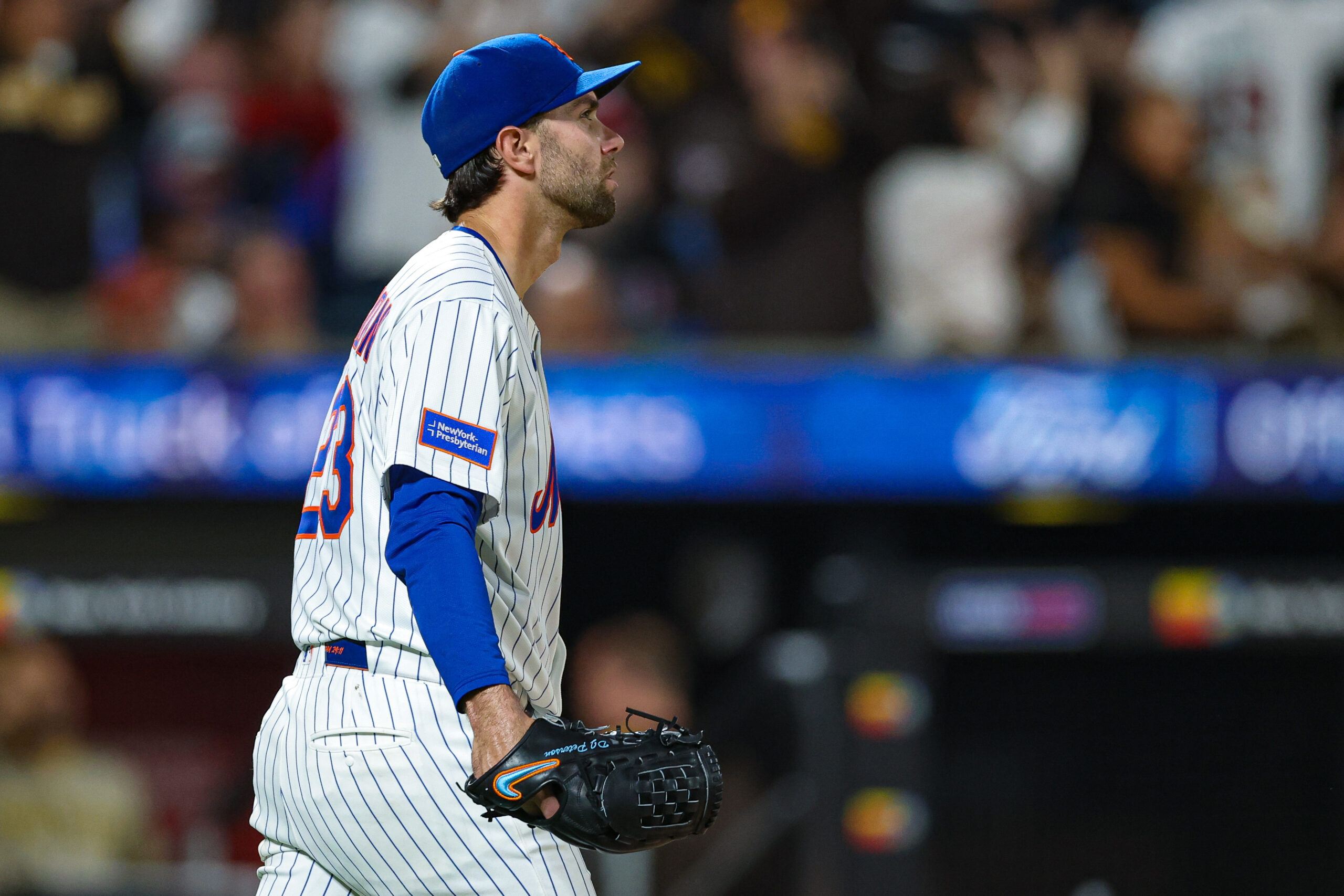
Run Prevention
Run prevention is a newer framing of pitching and defense combining to prevent the other team from scoring. For this section, we’ll focus on the pitching side of run prevention, because Stearns called out defense separately.
As a pitcher, it’s very straightforward: you prevent runs by not allowing base runners. You do that by striking out players and not giving them free passes to first. And when you do allow balls to be hit in play, you make sure it’s not over the fence. (This is where the defensive part of run prevention is—of course, dozens of balls will be hit in play each game.)
Stearns specifically mentioned that the run prevention was worse once injuries struck in the middle of the season. Kodai Senga went down with a calf injury on June 12. Tylor Megill went on the IL with an elbow injury five days later, then Griffin Canning tore his Achilles on June 26. It’s no surprise that the downturn started once the starters went down. (Amid this, the Mets saw AJ Minter, Danny Young, Max Kranick and Dedniel Núñez suffer season-ending injuries, too.)
So let’s look at some key run prevention stats before and after June 12 for the starters:
- K%: 23.5% (before June 12) // 21.4% (from June 13 on)
- BB%: 9.4% // 9.5%
- HR/FB%: 9.1% // 13.7%
- FIP: 3.54 // 4.31
- WHIP: 1.23 // 1.44
Across the board, the likes of Clay Holmes, David Peterson, Sean Manaea, Frankie Montas, Kodai Senga and many more allowed more base runners, struck out fewer batters, and fly balls left the park at much higher rates as the downturn started. Just a total disaster all around. The relievers were not much better. Stearns acknowledged he didn’t address these issues as aggressively as he needed to at the deadline.
Mark Vientos (27) Credit: Aaron Doster-Imagn Images
Team Defense
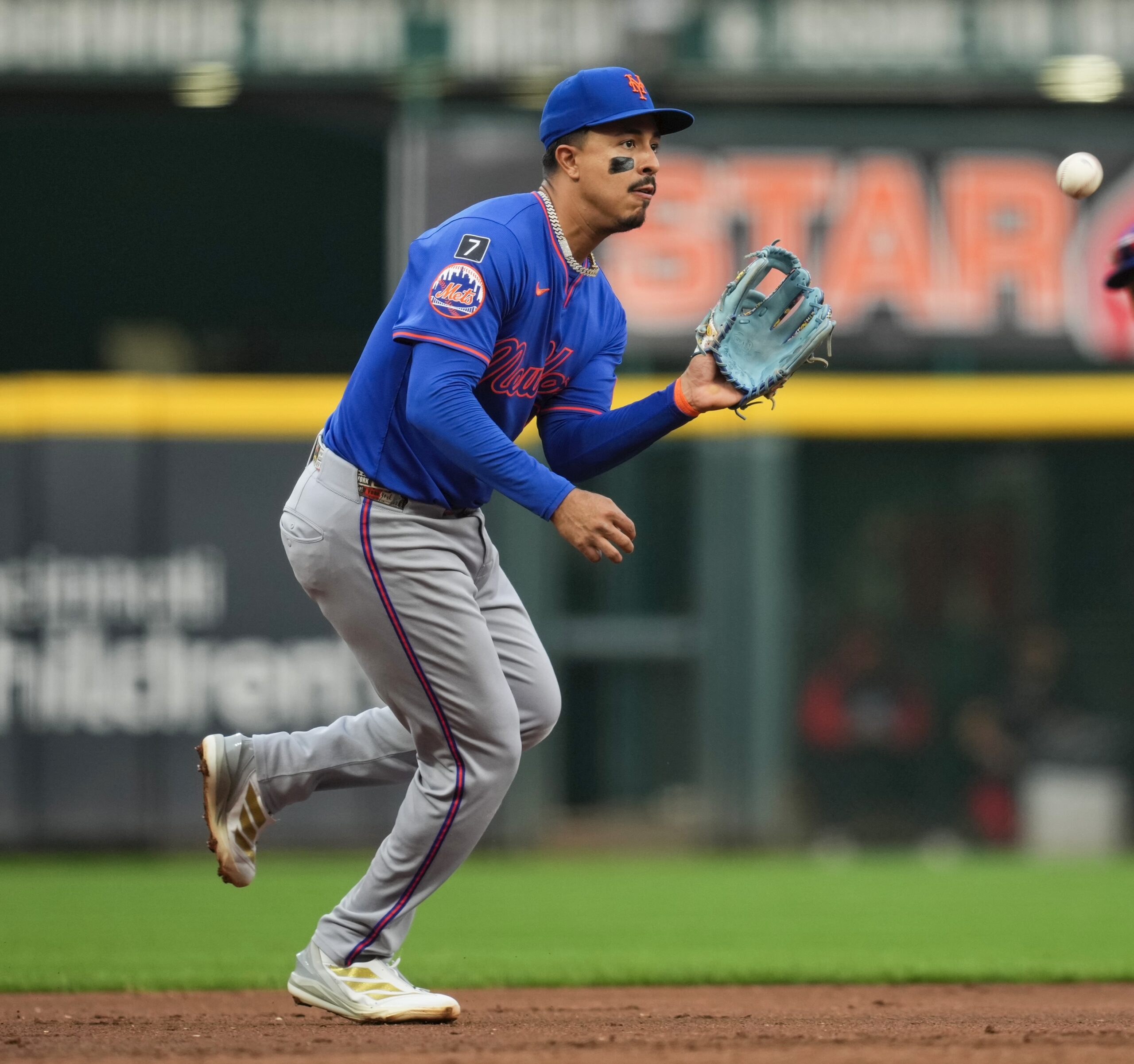
Here’s where I’m going to do some heavy interpreting of David Stearns’ words: I think Stearns hated having Pete Alonso at first and Mark Vientos at third for any inning this year, let alone for the 556 innings that Mark Vientos played third. Combined, the two accounted for -16 Outs Above Average (Vientos -7, and Alonso -9—two of the 20 worst marks by infielders in MLB). If you look at Defensive Runs Saved, they combined for -20 (Vientos -11, and Alonso -9). Those runs allowed by the defense add up over the year in one-run games, of which the Mets played 49.
And then there was the rest of the team:
- Juan Soto was an awful -12 OAA and -7 DRS and an overall -10 Fielding Run Value (Statcast’s all-encompassing fielding metric). It’s far worse than his average number in 2024, when he played in a much smaller right field in Yankee Stadium.
- Francisco Alvarez‘s poor framing (and poor offense) led to his demotion in June.
- Up the middle, Tyrone Taylor‘s defense was elite, but his backups (Jose Siri, then Cedric Mullins) left plenty to be desired and were significant drop-offs from Taylor. (They didn’t do much better than Taylor offensively, either, and that was the problem.)
- Brett Baty slotted in fine at second base, but when he played there, it likely meant Mark Vientos was at third, resulting in a major drop off in the field.
- Their best infield had Alonso at first, Jeff McNeil at second, Francisco Lindor at shortstop, and Ronny Mauricio at third. They got that defensive lineup out there in 11 games this year. They had nearly triple the games with Vientos at third and Baty at second. Surely Stearns didn’t like that, upon reflection, and again, owned being the one who constructed the roster.
Gregory Fisher-Imagn Images
Scoring the Needed Runs
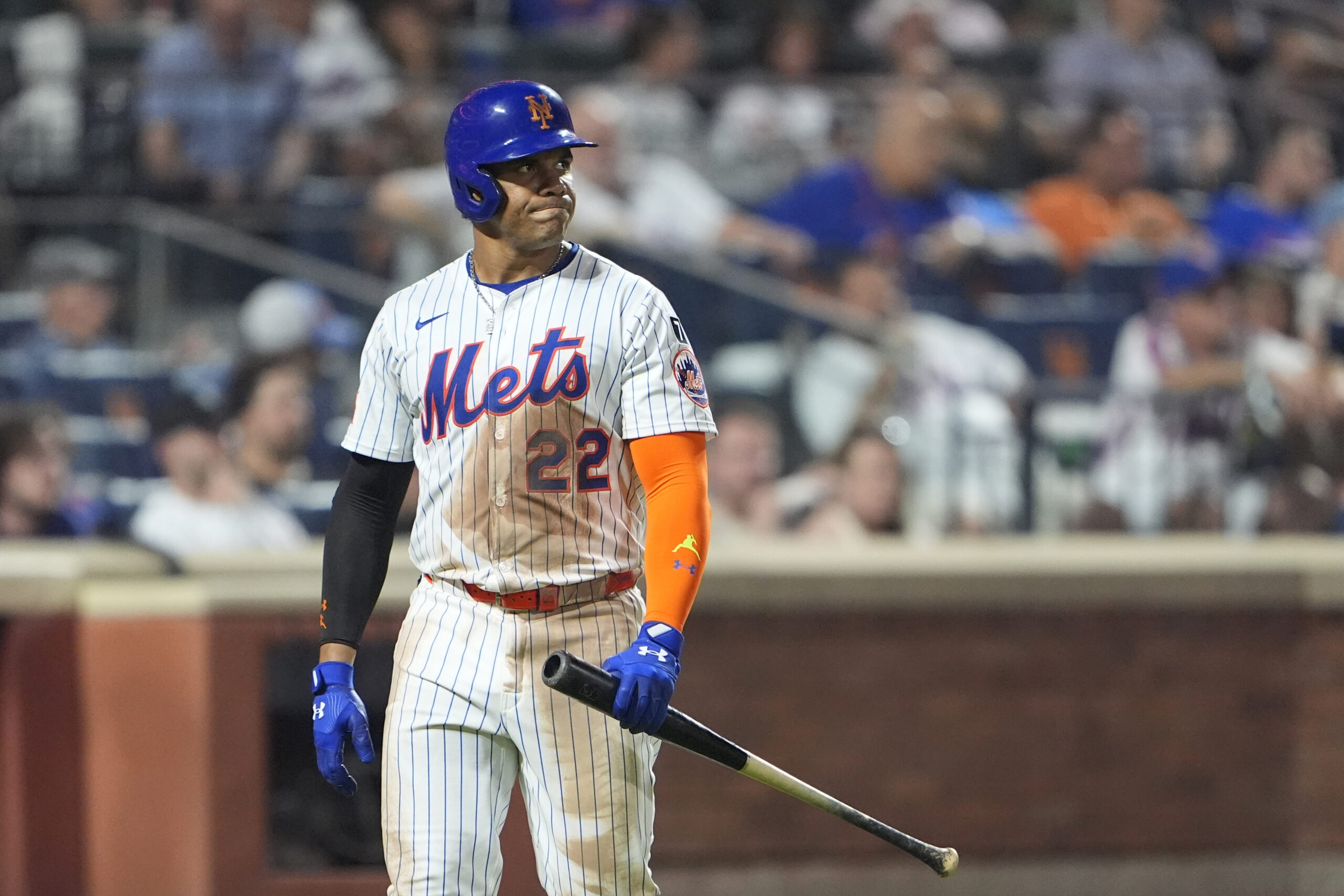
Well, no shit. If they’d score two more runs in any of their one-run losses this year, they’d be in the playoffs. But that’s not what Stearns meant. He did cite great individual offensive years by some of their players (Alonso, Soto, Lindor, Nimmo). But I do think he meant the team wasn’t great at situational hitting, nor were they particularly good in the clutch.
They simply didn’t score runs when they needed to and had the opportunity. And they had plenty of them through August 12, when the team’s performance with runners in scoring position finally broke back to the average. Until August 12, the team was 17th in plate appearances with runners in scoring position and 20th in runs scored.
Stearns seemed perplexed that they were 0-70 when going into the ninth inning down. With the game “late and close,” the team slashed .229/.312/.361/.672. With the team up or down by four runs, they slashed better across the board: .261/.325/.478/.803.
This was Stearns’ most ambiguous reason, and the press spent the least time asking questions about it. Their first four and a half months of poor runners-in-scoring-position balanced out the last month-and-a-half with elite-level production. Next year, things will naturally balance themselves.
However, Stearns did cop to the team not making mid-game adjustments as frequently as they needed to. That’s where the coaches are most to blame, and coach evaluations are the next item on Stearns’ to-do list. Eric Chavez’s and Jeremy Barnes’ days may be limited.
What Could the Offseason Look Like?
Spelling these issues out makes you realize what the naked eye told you: they could never click all at once. When the pitchers weren’t preventing runs, the offense’s run-scoring issues persisted—or they couldn’t keep up with how many runs were given up. When the defense was at its best, it also meant putting some poor offensive hitters on the field. When the offense was worse, that usually meant putting poorer defenders on the field. The best they could muster was a seven-game winning streak in April, and a six-game streak against the Rockies and Nationals.
But the season is over, and 2026 is now in sight. This offseason will be vital for Stearns to correct these areas. Here are some moves Stearns could make to address these areas:
Run Prevention
Based on Stearns’ comments, it seems like he trusts Manaea, Peterson and Holmes. He doens’t trust Senga to get through 2026 in one piece and be effective, and McLean is as close of a lock as you can get to the rotation. But injuries happen and Stearns will build as much depth as he ever has, especially with Tong and Sproat being extremely viable options. Expect Stearns to be aggressive in the trade market and free agency for quality and reliable starters who have proven they can go deep into games. Think names like: Joe Ryan, Zac Gallen, Dylan Cease, Edward Cabrera, Shane Bieber, Chris Bassitt, Ranger Suarez. Stearns said nothing is off limits, which seemed like a different tone from last offseason, when he said they likely wouldn’t fish at the top of the starter market.
Team Defense
This is where things could get complicated. The Mets would certainly love Pete Alonso’s bat back, but would they want that bat to also play first 99.5% of the team’s innings? Will Sammon reported if they wanted Alonso back, he’d need to “see some more time at designated hitter than he has in the past,” according to sources. Juan Soto would need more time there, too, given his glove.
In any case, they’d need a backup (or starting) first baseman and backup corner outfielder so Soto (and potentially Alonso) could DH more. Internally, could Vientos be better at first than third? He ought to be, but he doesn’t have the reps at first to make a solid decision. Stearns also said they’d ask for more flexibility out of players next year. Could Brett Baty see time at first to get his bat in the lineup? Could Jeff McNeil??? Ryan Clifford could also make an impact. As for right field, Carson Benge seems to slot in better at a corner than in center field. He could be ready to back up Soto when Soto’s DHing.
Externally, some quality names include Ty France, Rob Refsnyder, Mike Yastrzemski, and plenty of others, among other names surely available for trade.
Then, Stearns need to consider:
- How much of Taylor’s elite center field defense would you give up for 10% more on offense?
- Also, would a youngster’s glove (Jett Williams, Carson Benge) be average or near it in center, and how comfortable are you with one of them getting half the reps? Would you rather shell out to get someone to platoon with Taylor?
- Are Francisco Alvarez’s framing issues behind him?
- What do you do with Mark Vientos? Does he have a place on the roster if Pete Alonso is there? Does he have one if he’s not?
- Is Luisangel Acuña worth a 40-man roster spot if he’s an absolutely zero on offense? Is his defense worth the lack of offense?
And so much more.
Thank goodness for David Stearns, there’s a month before moves can really be made to address these. It’s a lot to consider and game plan around.
Scoring Runs “When They Need”
We saw in August that the team eventually could come through with runners in scoring position en masse. These, naturally, will sway across 2026. But it seems a coaching change is coming. Perhaps that allows the Mets to approach more “clutch” run-scoring situations with a cohesive mindset, but the plan here is simple: be better.