Every team needs to add around the edges. Whether it is adding depth, inviting non-roster invites to compete for the final roster spots, or acquiring bench players, teams need inexpensive players with upside.
Infield
The Mets need help at first base and second base. They have internal candidates, and there are big-name free agents, and whatever path the Mets take, they will want depth and competition. The market for these positions, especially if the Mets are not looking to sign a player with the qualifying offer, is not robust, so this may be an area to increase their depth.
Ryan Mountcastle
2025-2026: 372 PA, .251/.288/.367/.655, 7 HR, 36 RBI, 83 WRC+
Ryan Mountcastle might be the clearest bounce-back candidate on this list coming off back-to-back injury-plagued seasons. Similarly to Ty France, despite the poor results, much of Mountcastle’s underlying data in recent years looks similar to when he was performing well.
His 106.4 miles per hour 90% EV in 2025 was right in line with his 107 miles per hour in 2023, and his 116.7 Max EV was almost a full two miles per hour higher. His 11.7% barrel rate was higher than it was in 2023, as was his 47.1% hard-hit rate. Across the board, his damage rates are almost identical.
Where he did show a drop-off was his zone-contact rate, going from 82.6% all the way down to 77.6%. This came with a roughly 4% increase in whiff rate and a 4% jump in strikeouts. His walk rate also fell from 7.5% to 4.2%. Mountcastle still has plus bat speed and his whiff rate against velocity stayed roughly the same, as did many of his selectivity markers, so there is reason to be optimistic in a contact bounce back. If he continues to hit the ball as hard as he has, he could be a true power sleeper in a better ballpark for his skill set.
Ha-Seong Kim
2025-2026: 338 PA, .183/.267/.257/.524, 5 HR, 26 RBI, 50 WRC+
When Ha-Seong Kim was at his best, he was running elite contact rates with plus selectivity metrics and fine power metrics. This was not the case in 2026, and was also somewhat diminished in 2025. Interestingly, he put up his best power metrics in 2025 but with more chase and a drop in selectivity. It is hard to see Kim getting a major league contract this offseason, and he could be good depth with the potential to force his way onto the major league roster. But Kim still is good against velocity, put up above-average contact rates, and hit a ball 109 miles per hour this year. If he can get the defense back, he could be fine depth.
Jonathan India
2025-2026: 625 PA, .228/.322/.343/.665, 11 HR, 53 RBI, 88 WRC+
Jonathan India finally got labrum surgery for a shoulder issue that has persisted for five years, so this write-up is dependent on a clean bill of health and a minor league or split contract. Across the board, 2024 and 2025 look almost identical under the hood, with good contact rates, the ability to hit velocity, fine power metrics, and fine selectivity markers. A good outcome is a league-average hitter with good defense in the infield and outfield – fine depth with the ability to force his way onto the major league roster.
Yoán Moncada
2026: 130 PA, .189/.308/.297/.605, 3 HR, 10 RBI, 78 WRC+
Outside of the poorer results, the two biggest differences between Yoan Moncada’s strong 2025 and struggles in 2026 is that he swung far less and struggled significantly more against velocity. Velocity has never been an issue for him, and it is possible the passivity came from an attempt to improve his selectivity, but that did not work. Moncada could be an interesting buy-low switch-hitting power bat if the Mets think a change in intent could fix his 2026 issues.
Outfield
The Mets’ starting outfield is set between Juan Soto, A.J. Ewing and Carson Benge. But players need days off and get hurt. This year, 618 plate appearances came from other players than those three. With Ewing and Benge both capable of playing center field, they do not need a defensive specialist on their bench. They should consider a bat-first fourth outfielder. Players like Seiya Suzuki are not taking a bench role and will likely get an everyday outfield role over a designated hitter role, so going with a bat-first outfielder that might accept either a part-time role or a split between DH and outfield could be the right way to go. With three left-handed outfielders on the roster, a right-handed bat should be the preference.
Taylor Ward
2026: 607 PA, .225/.359/.311/.670, 7 HRs, 37 RBIs, 102 WRC+
Taylor Ward had a dreadful end to 2026 and, even before being traded to Seattle, did not look like himself. All of his power markers fell off a cliff, and his launch angle dropped while the rest of the profile stayed largely unchanged. This could be an approach change as a right-handed hitter in Baltimore, or it could be the effects of turning 32 with poor bat speed. If the Mets think they can get his power stroke back, he could be a good buy-low player to split time between the outfield, DH, and the bench.
Ramón Laureano
2026: 206 PA, .203/.286/.374/.660, 7 HRs, 21 RBIs, 86 WRC+
There really is not much under the hood different between Ramón Laureano in 2026 compared to the last few years outside of the results, and sometimes half a season of games can be skewed by variance. April, he looked like he usually does; May was awful and then he got hip surgery. Any deal would depend on clean medicals, but like Ward, he could be a good option to take reps at OF, DH, and off the bench.
Trent Grisham
2026: 484 PA, .211/.308/.395/.703, 18 HRs, 59 RBIs, 98 WRC+
Trent Grisham is not a right-handed bat, but it could be possible to get him on a cheap contract if he does not want to have to move. He is a player you likely would not feel awful if he needs to play 50+ games in the outfield, with the potential to add pop off the bench and fine corner outfield defense.
Starting Pitchers
The Mets need to add to the front of their rotation. That is clear, and this is not what this section is about. The Mets also likely need to add at least one to two more starters in addition to a frontline starter. They might need to consider moving on from Sean Manaea, and if they do, they should look for a fifth starter that has more upside even if their floor is similar.
Shane Bieber
2026: 11 GS, 55.2 IP, 4.37 ERA, 1.42 WHIP, 18.2% K%, 9.9% BB%
There are concerns under the hood from Bieber’s 2026 season. He only struck out 18.2% of batters to a 9.9% walk rate off just a 23.5% whiff rate. As the season went on pitching to a 2.84 ERA across his final seven outings, his last start was on August 20 as he ended the season with a shoulder injury. During that span, he struck out 21.8% of batters to a 5.9% walk rate. Still not amazing, it was a step in the right direction.
His stuff overall looked good. His low 90s fastball came in with 18 inches of induced vertical break while his breaking balls put up plus spin rates in the 2,500-2,600 rpm range. He throws six pitches and relies heavily on chase out of the zone. In August, he ran a 29.8% chase rate across his pitches.
Bieber is not the pitcher he was when he won the Cy Young Award, and it is possible that he does not return the same from his shoulder injury. But that injury will likely limit what he can earn in free agency, and he could be an inexpensive flyer on a prove-it deal with upside to be a mid-rotation starter across the 2027 season. He still has multiple pitches with plus shapes and the ability to command them.
Nick Lodolo
2026: 21 GS, 108.2 IP, 4.97 ERA, 1.48 WHIP, 17.1% K%, 9.5% BB%
If a team can figure out how to prevent Nick Lodolo from getting blisters, they could end up with a top-ten pitcher in baseball. We saw flashes of that when he threw 156.2 innings in 2025 to a 3.33 ERA and 1.08 WHIP alongside a 24.3% strikeout rate and 4.8% walk rate. When Lodolo is right, he throws two plus fastballs, a high-spin curveball, and a high-80s mile-per-hour changeup from the left side. His floor is similar to Sean Manaea, but his ceiling is much higher.
Roki Sasaki
2026: 26 G, 23 GS, 122.1 IP, 4.49 ERA, 1.32 WHIP, 23.6% K%, 9.2% BB%
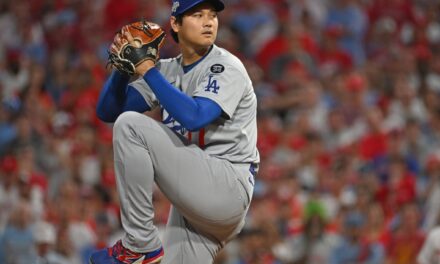
The Dodgers’ rotation is getting crowded. Shohei Ohtani, Yoshinobu Yamamoto, Blake Snell and Tyler Glasnow are all making legitimate money the next two seasons or beyond; Emmett Sheehan, Justin Wrobleski, Gavin Stone, Jack Dreyer and Landon Knack will all be competing for the rotation, and Seth Halvorsen, Christian Zazueta, Zach Root, Jackson Ferris and Adam Serwinowski could all come up in the near future. Roki Sasaki could be the odd man out here as the current weak link, but he did not choose the Dodgers over other teams to be in the bullpen in year three of being in the majors.
Sasaki still has legitimate upside. He throws four plus pitches with a strong ability to induce swing-and-miss. His profile is heavily built on velocity and can collapse when it falters, which gives him a strong ceiling and a weak floor. He is still young and has only pitched in 36 major league games, so he could continue to develop. It really comes down to whether or not the Dodgers feel it makes sense for them to continue to do that.
Relief Pitchers
It is always difficult to peg what the reliever market will look like, and the Mets have shown over the years why it is important to have veteran depth for when relievers get hurt or struggle.
Mark Leiter Jr.
2026: 36 G, 33.2 IP, 4.28 ERA, 1.31 WHIP, 5 SV, 5 HLD, 26.4% K%, 7.6% BB%
Mark Leiter Jr’s underlying data is better than his stats were, and pitching in that Sacramento ballpark could not have helped him. He throws a unique splitter as part of a six-pitch mix and generates significant chase and whiff. He has experience in leverage and middle relief and could be a good buy low.
Hunter Harvey
2026: 4 G, 4 IP, 6.75 ERA, 1.50 WHIP, 0 SV, 0 HLD, 22.2% K%, 5.6% BB%
One of the Mets’ issues this season was a lack of velocity in the bullpen. Hunter Harvey has run his fastball into the upper 90s and has reached 100 miles per hour in the past. Coming off back-to-back injury-plagued seasons, he could be an interesting buy-low candidate to add some velocity to the 2027 roster.
Pierce Johnson
2026: 56 G, 48.2 IP, 4.62 ERA, 1.36 WHIP, 1 SV, 18 HLD, 19.9% K%, 9% BB%
Pierce Johnson has one of the best curveballs in baseball with plus spin and movement. It is a unique profile that could add a different look to the bullpen at a low cost. Johnson has leverage experience if needed and should not be an expensive flyer.