Different Monday, same result. The professional baseball team from Flushing, Queens, lost to the Milwaukee Brewers, 8-3. It was a quiet night offensively even though the lineup returned to full strength following the return of Cuban centerfielder, Luis Robert Jr..
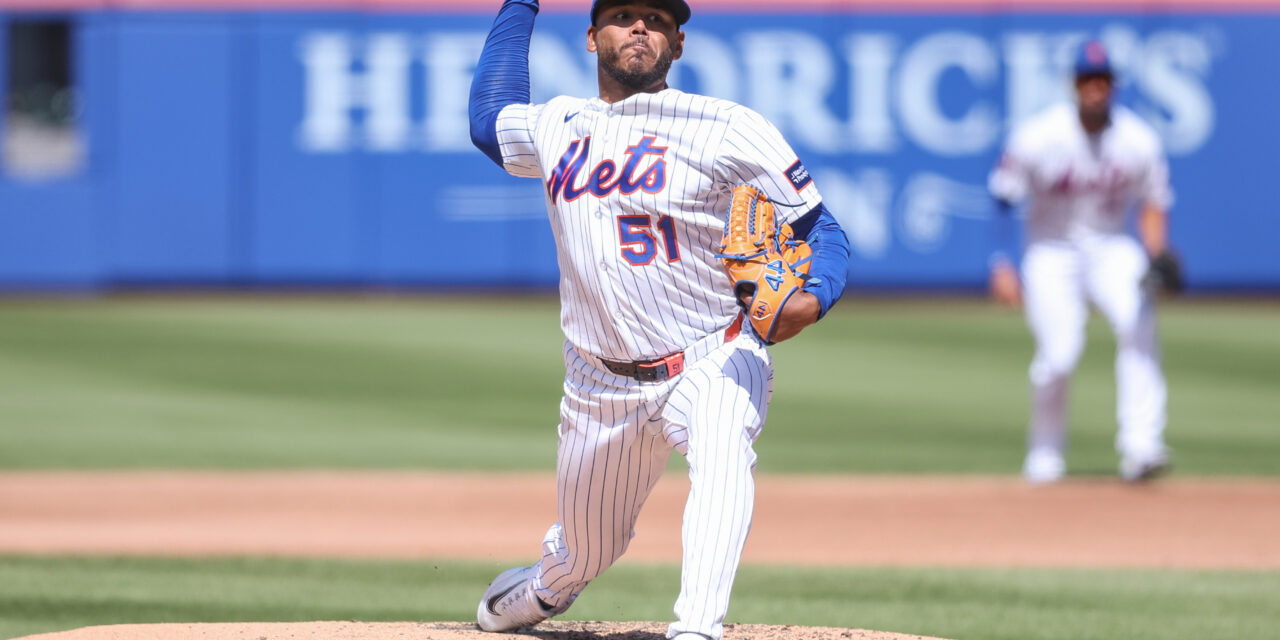
The biggest concern was another dud from the supposed front-line starter the Mets acquired from these same Brewers in January. Freddy Peralta doesn’t just need to right the ship. At this point, he may need a whole new one. The durable righty coughed up another seven runs across 5 1/3 innings on eight hits and two walks to go with six punch outs.
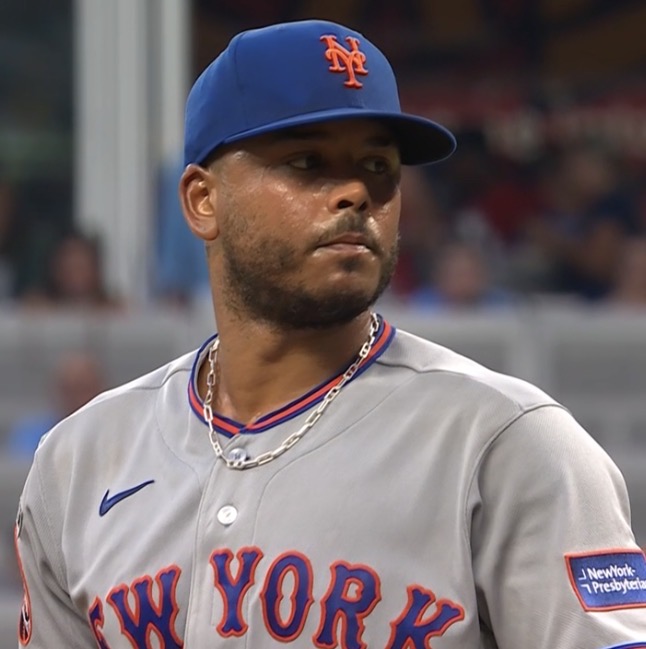
Freddy Peralta
But just how bad has Peralta been? First, an obligatory preface. Like all of the most recent off season acquisitions, Peralta’s underlying metrics suggest he’s been the victim of bad luck. His xERA is in the 60th percentile with a 3.83, he remains in the 68th percentile in average exit velocity allowed, and his barrel rate is at a career low 5.4%, which is in the 83rd percentile.
Alas, what players should do doesn’t always line up with what we see on the field, and Peralta’s performance has been far from what his advanced metrics might lead you to believe. The bad luck is real, but it doesn’t tell the whole story.
Peralta was brought in to be a high-end, dependable starter every fifth day. However, the biggest concern coming into the year was Peralta’s inability to complete the sixth inning, earning him the moniker “Five-Inning Freddy” from the Milwaukee fan base. Hindsight would suggest Mets fans would now be thrilled if he could complete five innings each time out and post an ERA in the high 2s as he did in 2025.
Peralta has never had pinpoint control, but a 3.8 BB/9 would be his highest mark as a starter and nearly half a walk above last year’s rate (3.4). His bigger issue has been the contact he’s allowing. Peralta’s 9.4 H/9 is by far the highest mark of his career. For context, over Peralta’s last six seasons (767 ⅔ innings) his H/9 rate is a combined 6.5 to go with a 1.096 WHIP.
When you dig deeper, there isn’t one obvious culprit. Nearly every aspect of Peralta’s profile has taken a step backward. It’s death by a thousand cuts.
|
Stat |
2025 | 2026 |
|
xBA |
.206 (85th) | .235 (58th) |
|
wOBA |
.270 (81st) | .342 (25th) |
|
xwOBA |
.289 (76th) | .303 (61st) |
| Hard Hit Rate | 34.5% (90th) |
38.7% (50th) |
| K Rate | 28.2% (84th) |
22.4% (48th) |
Let’s take it one step further and examine Peralta’s arsenal (in order of usage), a four seam fastball, a changeup, a curveball, a slider, and a sweeper. He’s currently utilizing all of his pitches at around the same usage rate as 2025 except for his sweeper (1.1% to 5.2%) and his slider (9.1% to 5.9%). In terms of velocity, the only notable change is in his changeup which averaged 88.9 mph in 2025 versus 87.3 mph now.
Let’s break it down pitch by pitch to see where there are gaps. Everything in Peralta’s arsenal plays off his four-seam fastball, making its decline particularly concerning. Opponents have posted a 50.3% hard-hit rate against the four-seamer compared to 41.8% last year, while its strikeout rate has fallen from 23.5% to 19%.
His changeup has an even starker drop in K rate (25.3% to 20.7%) to go along with a big falloff in whiff rate, 35.2% to 27.5%. His changeup’s wOBA also skyrocketed from .250 to .352.
The story is much the same for Peralta’s curveball and slider:
| Curveball | 2025 | 2026 |
| wOBA | .234 | .328 |
| xwOBA | .187 | .266 |
| Hard Hit Rate | 18.5 | 38.8 |
| K Rate | 40.7 | 33.8 |
| Slider | 2025 | 2026 |
| wOBA | .216 | .400 |
| xwOBA | .180 | .450 |
| Hard Hit Rate | 19.4 | 33.3 |
| K Rate | 37.7 | 25 |
All in all, the only pitch that really hasn’t had a drop off in his production from 2025 is his sweeper, which is likely more to do with sample size than anything else (he threw 33 total in 2025).
Because Peralta’s four-seamer sets up the rest of his arsenal, its decline has created a domino effect. His secondary pitches are generating fewer strikeouts, more hard contact, and more deep counts. The result is shorter outings and significantly worse run prevention.
To give perspective on Peralta’s propensity for short outings, in 21 starts he’s been unable to complete the fifth innings (6) as many times as he’s been able to complete the sixth (6).
When you couple his poor execution with his inability to work deep into games, you get a pitcher who is far from a front-line starter. It remains to be seen how much value, if any, Peralta can recoup before the trade deadline. He’s nearly guaranteed to be traded. With perhaps only one or two starts remaining before the deadline arrives, Peralta is running out of opportunities to rebuild his value. Clubs will have to decide whether they trust the underlying metrics or the increasingly concerning results.