Truthfully, the premise of this article would not have been possible without the shoulders of Yoenis Cespedes and Daniel Murphy, which carried the Mets to their fifth World Series appearance as a franchise in 2o15.
Between Cespedes’ otherworldly stretch after his trade from the Tigers at the deadline and Murphy’s Ruthian run in the first two rounds of the playoffs (not to mention he was fantastic in the second half, as well), there was enough firepower in the bats of those two to lift the Mets out of the days when the middle of the order featured John Mayberry, Johnny Monell, and Eric Campbell.
In reality, the offensive bounceback from a dreadful first half was the result of a collective effort. Let’s remember some of the other bats who contributed to that amazin’ run.
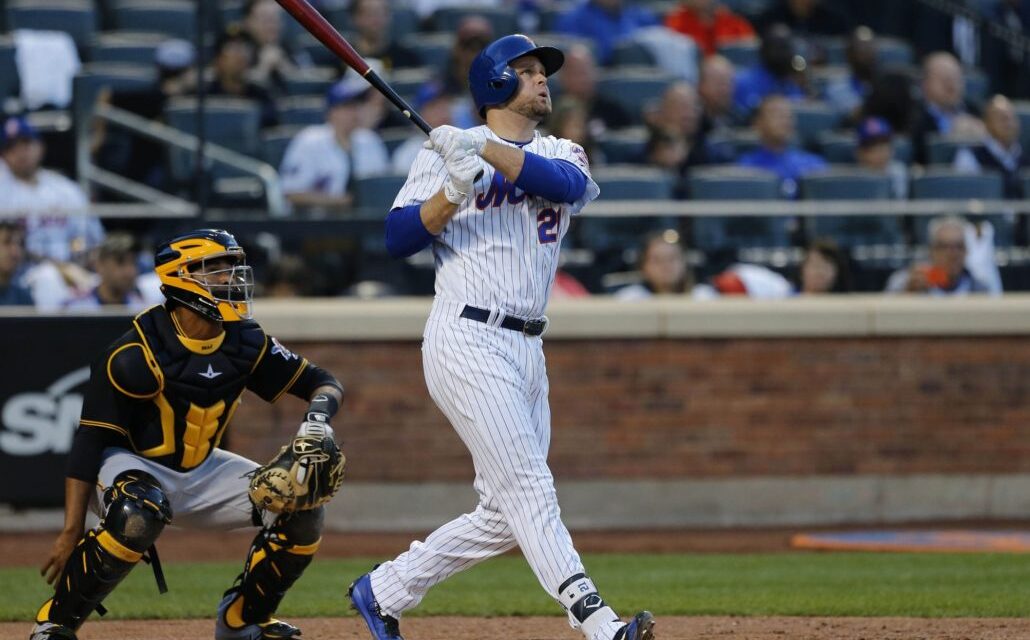
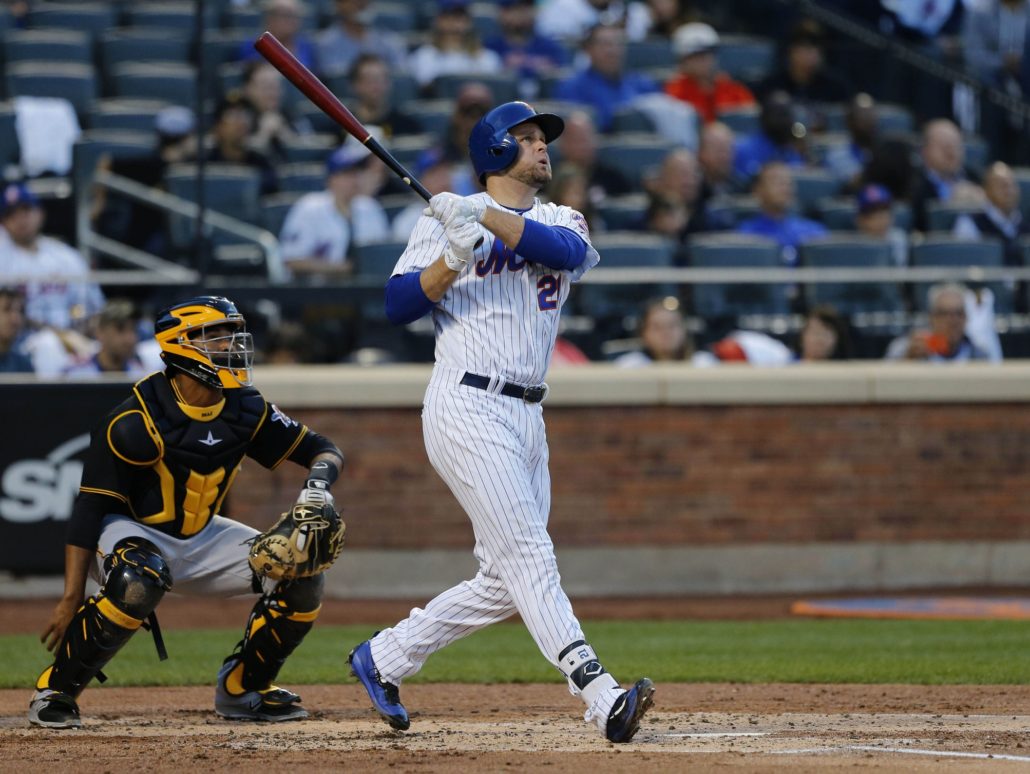
Lucas Duda
Over parts of eight seasons in Flushing, Duda developed a reputation as the ultimate streaky hitter, alternating between two-week stretches during which you either couldn’t get him out or couldn’t wait to get him out of the lineup. It all came together in 2014, when he hit 30 home runs — topping 15 for the first time — after the Mets chose to part ways with Ike Davis and hand Duda the reigns at first base.
Duda was solid in the first half of 2015, but he exploded after the break. Among National Leaguers who matched his 190 plate appearances in the second half, Duda’s 159 wRC+ trailed only Joey Votto (213), Bryce Harper (182), and David Peralta (161). Yes, Duda’s complete offensive performance even topped Cespedes’ 156.
Between his three-homer game that was overshadowed by the Wilmer Flores non-trade and first-career grand slam that sealed the deal in the NL East clincher, Duda’s second half wasn’t lacking in moments, either. It’s probably worth remembering him for much more than one errant throw in the World Series.
Curtis Granderson
In all honesty, the list of players that I have enjoyed watching in a Mets uniform more than Granderson is very short. Though the winning was not plentiful during his three-plus seasons with the team, he always embodied what it means to be a professional. I couldn’t have cared less if he was a professional or not in the second half of 2015, because his bat was on fire. Flames blazing.
Though batting average holds little weight with this writer, Granderson, a .239 hitter with the Mets, boosted his line to .278/.392/.506 during the stretch run, including a 19-game period from August 18 to September 9 where he hit .320 with 12 extra-base hits and 18 walks.
Granderson was a key player in the postseason as well, tying Murphy for the team lead in hits (7) and RBI (5) in the NLDS and hitting a team-high three home runs in the World Series, in addition to stellar defense all October long.
Travis d’Arnaud
It is safe to say that d’Arnaud did not live up to the hype as the organization’s catcher of the future. Injuries had a big say in that, allowing him to play in more than 100 games in a season just twice. But for a brief period, after returning from an early-season hand fracture in 2015, he at least resembled the player that the team had raved about for so long.
d’Arnaud’s 126 second-half wRC+ was more than adequate for a catcher, as he hit eight home runs and drove in 24 from August through the end of the regular season. Among major league backstops with 190 plate appearances, only the Cubs’ Kyle Schwarber (128 wRC+) was better.
d’Arnaud’s career will always be a “what could have been, had he stayed healthy.” Still, he will always know his contributions helped the Mets to a World Series appearance.
Michael Cuddyer
Cuddyer was not very good with the Mets in 2015. Coming off a two-year stretch with the Colorado Rockies during which he hit .331 and won a batting title, his decline was swift and he ultimately retired in-between seasons of his two-year contract in New York.
The issue was that Cuddyer started 92 games in 2015, because he was very good off the bench, especially in the second half. As a pinch hitter from the break through the end of the regular season, he hit .357 in such situations. He delivered a bases-loaded, two-RBI single on August 25 to put the Mets in front for good against the Phillies.