
The more things change, the more they stay the same. At least, that’s what it feels like with the New York Mets most of the time.
Since the Mets’ rebuilding process ended in time for a trip to the World Series in 2015, the franchise has been in “win-now” mode each following offseason (at least, their own definition of it). The problem is that it’s felt as if the majority of the moves made, whether they were signings or trades for MLB talent, haven’t really panned out. This has especially been the case in more recent years, as New York hasn’t qualified for the postseason since 2016, and with a 40-50 record at the All-Star break, it’s not looking like that streak is going to be broken this year.
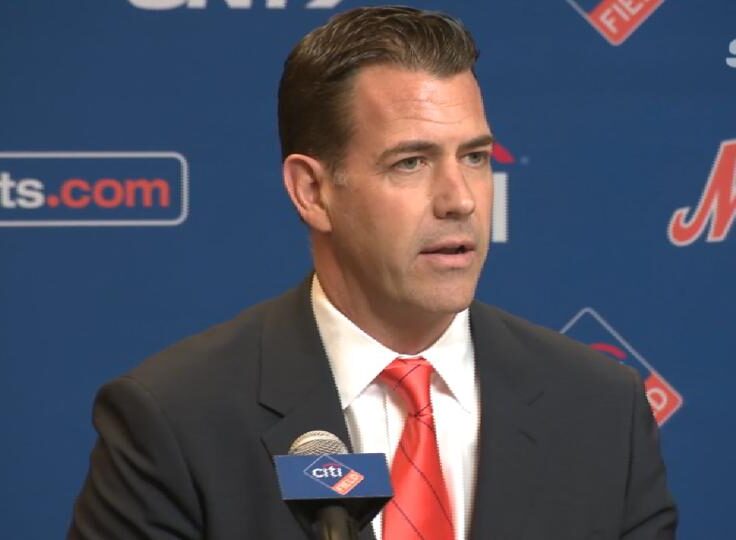
There was a lot said with regard to the official passing of the torch between the front office regimes of Sandy Alderson and Brodie Van Wagenen. The current Mets general manager wasted no time putting his stamp on his front office or his roster. Unfortunately, the results haven’t followed, and it’s interesting to see the parallels between Alderson’s final offseason in charge and Brodie’s first offseason in charge.
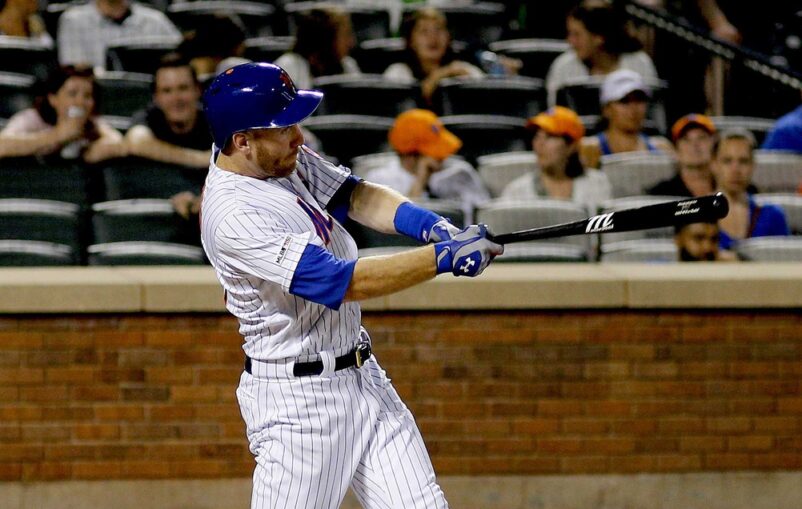
Sandy’s Last Winter in Charge
With regard to major-league signings in advance of the 2018 season, the Mets ended up spending just shy of $90 million in total contracts. Hey, they did spend some money! They just didn’t spend it on the right players. Here is who received that money and how it was distributed:
- Jay Bruce: three years, $39 million
- Todd Frazier: two years, $17 million
- Jason Vargas: two years, $16 million
- Anthony Swarzak: two years, $14 million
- Jose Reyes: one year, $2 million
- Adrian Gonzalez: one year, $545K
These six players combined to accumulate 0.2 fWAR last year. That’s what you call a not-too-great return on your investments, I’d say.
Following a year of numerous busts, it’s not surprising that this group was basically gutted. Gonzalez barely made it to June before getting designated for assignment and then released. Reyes shouldn’t have been far behind him, but he managed to make it to the end of the season before hearing crickets all winter, and both Bruce and Swarzak were traded to the Seattle Mariners for Robinson Cano and Edwin Diaz.
Frazier and Vargas have combined to produce 2.0 fWAR (1.0 each), which is obviously a huge improvement from this collective group’s production from the year before. However, it’s only useful at this point because there’s hope the Mets will find takers prior to the trade deadline passing.
So, while Sandy’s last year steering the ship was frustrating on multiple levels, the lack of bang for the buck they received from offseason acquisitions had to be at the top of the list.
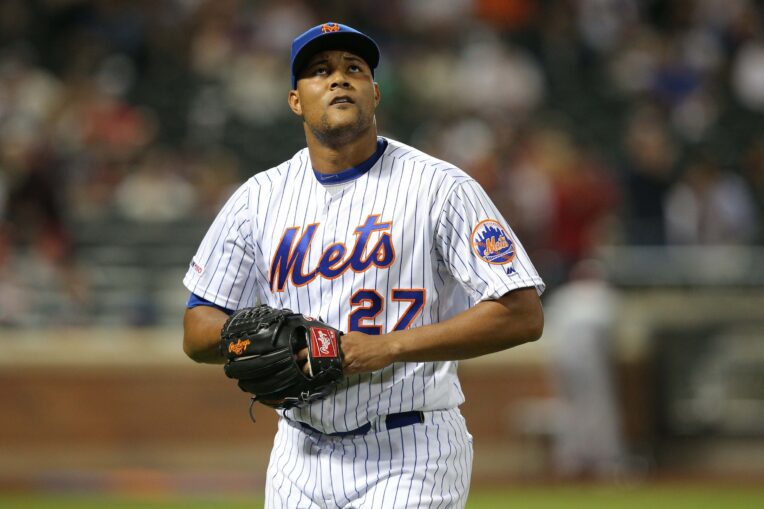
Brodie’s First Winter in Charge
Van Wagenen didn’t waste any time consummating deals that would have significant implications to the Mets’ big-league roster now and moving forward. Just not the right kind of “significant” thus far. Here’s a list of the signings made and trades agreed upon that have had an impact during the first half:
- Signed Jeurys Familia for three years, $30 million
- Signed Jed Lowrie for two years, $20 million
- Signed Wilson Ramos for two years, $19 million
- Signed Justin Wilson for two years, $10 million
- Traded for Robinson Cano and Edwin Diaz
- Traded for Keon Broxton
- Traded for J.D. Davis
There’s literally just one player amongst this group that’s performed better than expected, and that’s Davis. This has only happened because of the number of injuries the Mets have had to deal with, though. If Lowrie was healthy at any point, it would’ve been tough for the former Houston Astros farmhand to get as much playing time as he has — especially at the start of the year when Frazier was also on the Injured List.
Broxton barely even said hello to the Flushing Faithful before getting designated for assignment himself. Multiple IL stints has limited Wilson to 10.2 innings, so there’s no way to know how effective he’ll be at this point. Meanwhile, we’ve already gone over just how bad Familia has been. Ramos has overcome a slow start, but it’s unsettling when two of your team’s top starting pitchers (Jacob deGrom and Noah Syndergaard) would rather have Tomas Nido behind the plate when they’re on the mound.
And then there’s Cano and Diaz — BVW’s first big splash that signaled the organization was going to do things differently. Their unequivocal three-hole hitter has struggled to a 74 wRC+ through 254 plate appearances, while the lockdown closer has a 5.50 ERA in 34.1 innings and might even be temporarily moved from the ninth inning if he can’t right the ship.
Does any of this have underlying significance? Not particularly. It’s hard to ignore the irony, though, isn’t it? Not all external additions are going to work out — that’s just the way baseball (or any sport) goes. However, with the sheer number of players acquired by the Mets over the past two offseasons — and by two different regimes, no less — it’s incredible to see so few work out.
And when I say “incredible”, I mean it in the worst way possible.