
Eric Sim, who played in the Giants Minor League organization, summed up his minor league experience in one sentence. “You can lose everything in a matter of a second while getting treated like shit”
It is no secret that minor league baseball players are paid less than their major league counterparts, but what most don’t know, is just how much less.
According to Sim, his average take home every paycheck was about $400. His contract, which was standard for every player in the San Francisco Giants organization at the time (2010), outlined a minor league monthly salary starting at $1,100 and capping at $2,150 before tax.
They receive no pay in the offseason and no pay in spring training. To put that in perspective, for a Triple-A player that works an average of 10 hours a day, six days a week, that is an $8.95 hourly salary.
According to minor league baseball writer, Emily Waldon, on average, a Triple-A player is making $14,850 a year. The United States government states that a single person household is living in poverty if their yearly take home is $14,380 or below. Triple-A baseball players are only $470 above that.
Signing bonuses, along with other things, keep minor leaguers afloat. Depending on the skill set of the player and if they have an agent, they can receive an $8,000 bonus or a $1 million dollar bonus.
Signing bonuses are split in half to where the player receives one half when they sign, and the other half during spring training. The average player could open their signing bonus and see a check for $4,000. That money is usually put aside for things like rent, food, and gear and is meant to last them the remainder of the six-month season.
For things like gear, most players are on their own. In Sim’s case, he was only given gear in his first year. Little things like batting gloves start to add up for players.
“I went through over 10 in a short season in Arizona” Sim recalls, “they get expensive.”
Louisville Slugger bats cost an average of $150 dollars each, Rawlings gloves cost an average of $300 and Nike batting gloves cost an average of $30.
Many major league players recognize the struggle that minor league players face. While doing a rehab stint in a minor league spring training camp, Buster Posey left a box of gear behind.
“As soon as he left about 100 of us fought our ways into the box. I’m pretty sure I saw a bloody nose.” Sim, who was also a catcher, ended up with Posey’s shin guards.
“My Dominican pal ended up with the chest protector, and he was a pitcher!”
To those that don’t play baseball, things like batting gloves may seem trivial, but to almost every human being, a shelter is a necessity.
Living accommodations are not provided for most minor league baseball players. Rookie-ball players occasionally have their living accommodations set up for them, but low A through Triple-A, players are on their own. Many players have to live with one another, sometimes six guys in one apartment.
Although players receive more money as they go up the club ranks, the cost of living also goes up. For example, in the New York Mets organization, their class-A affiliate is located in Columbia, S.C.. Rent in Columbia averages about $1,026 a month plus utilities.
The class-A advanced affiliate is located in Port St. Lucie, Florida where rent averages $1,396 per month plus utilities. That is a $370 difference between class A and class A-Advanced.
Looking at a Triple-A player in the New York Mets organization, they would be getting paid, before tax, around $2,150 a month. Rent in Syracuse, N.Y. averages about $1,112 per month (not including utilities). That leaves $1,038 (before tax) for things like utilities, food, transportation, clubhouse fees, and gear.
According to the USDA, the lowest amount a one person household made up of a man ages 19-50 spent on food in 2014 was $187.60 a month. Sim recalled the struggles he faced buying food each month.
“All I ate was pretty much fast foods and on paydays, I’d get Chipotle with guac.”
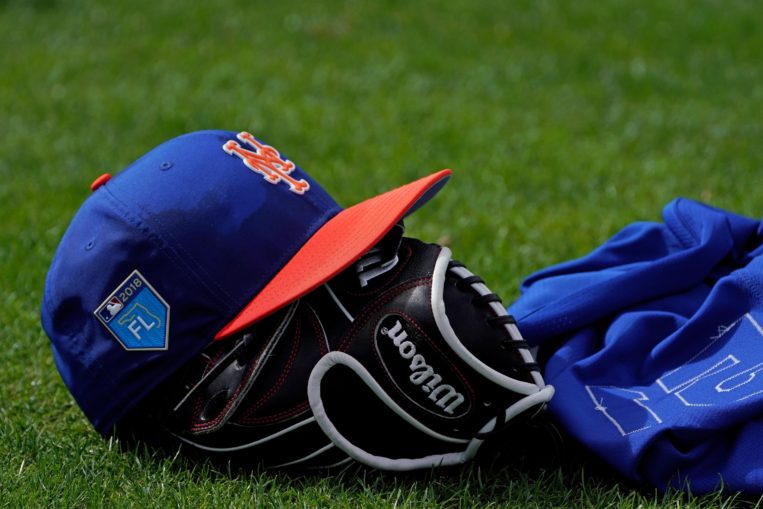
Being professional athletes, their bodies are their machines, and if a machine isn’t fed the correct things it will begin to break down.
Why would teams invest in a player only to let them fuel themselves with low-quality food? Are the players not worth enough to them?
On top of all that, minor league players pay clubhouse dues whenever they show up to the clubhouse. Dues are used to keep facilities in good shape and to keep things like protein bars and Gatorade stocked in the kitchen. In Sim’s case, “clubbie dues” were taken from his road meal money.
“When we got our meal money, they actually deducted the amount and gave us the rest”
For a Triple-A player, an average of $12 per day is taken from the meal money they would otherwise be receiving on road games. Having around 140 games per season, that adds up to a good $1,000.
The most frustrating part though? Major League Baseball can afford to pay minor league players more. Last year the league earned a record-setting $10.3 billion. Think about it, how can you expect an employee to perform to the best of his ability when he is getting paid little to nothing, living with three of his coworkers and eating fast food every day? Give a little and you get a little. Pay a little more and maybe a couple more kids make it to the bigs. Instead, you have homesick kids eating greasy food, some of which barely speak any English.
In recent years, more minor league players have begun to speak out on the issue, but unfortunately, Major League Baseball and the MLBPA have done little to nothing to help minor leaguers and their families. Even small things like helping with living accommodations, or giving grocery per diem would help players immensely.
An organization called More Than Baseball has stepped up to the plate to try and help minor league players in any way they can. They believe strongly in their mission to make sure every minor league player is given food, shelter, and the gear they need.
Their website states, “We refuse to allow any ballplayers go to bed hungry and wake up on an air mattress only to play in front of thousands of paying fans per night.”
If you believe in their mission, you can visit More Than Baseball and sign up to give as little or as much as you can to help minor league players get by.
Minor League Baseball players live through terrible conditions, but for some, that’s not even the worst part. Sim, who spent five years playing for the Giants organization, was released during a five-minute phone call in the offseason.
Not every player needs or deserves a farewell tour, but every player deserves respect. Enough respect to be treated like a professional athlete and a human being both while playing, and while being let go.
Many argue that ‘They’re playing a game for a living. They can’t complain’ but to these players, baseball is not a game. It’s their livelihood that they put countless hours of physical labor into. They live through the horrible treatment to chase a dream that so many ignore. MLB and the MLBPA take advantage of minor league players and their dreams.
There is no reason to have these men be living in such terrible conditions while the company they work for makes billions of dollars. Minor leaguers should not be paid millions of dollars, but they should be paid more than just getting by day to day. There is no reason to have them sleeping on air mattresses and going to bed hungry all while giving their all to a sport that doesn’t give them anything.