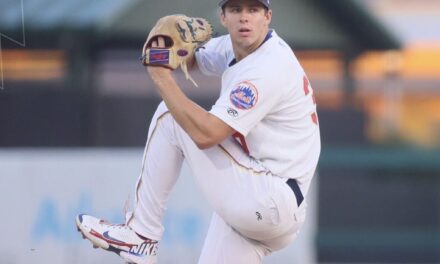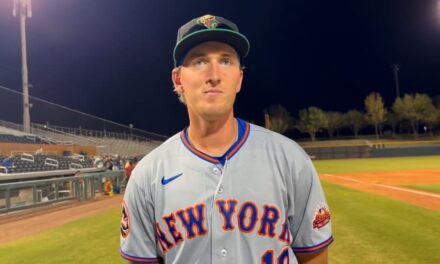
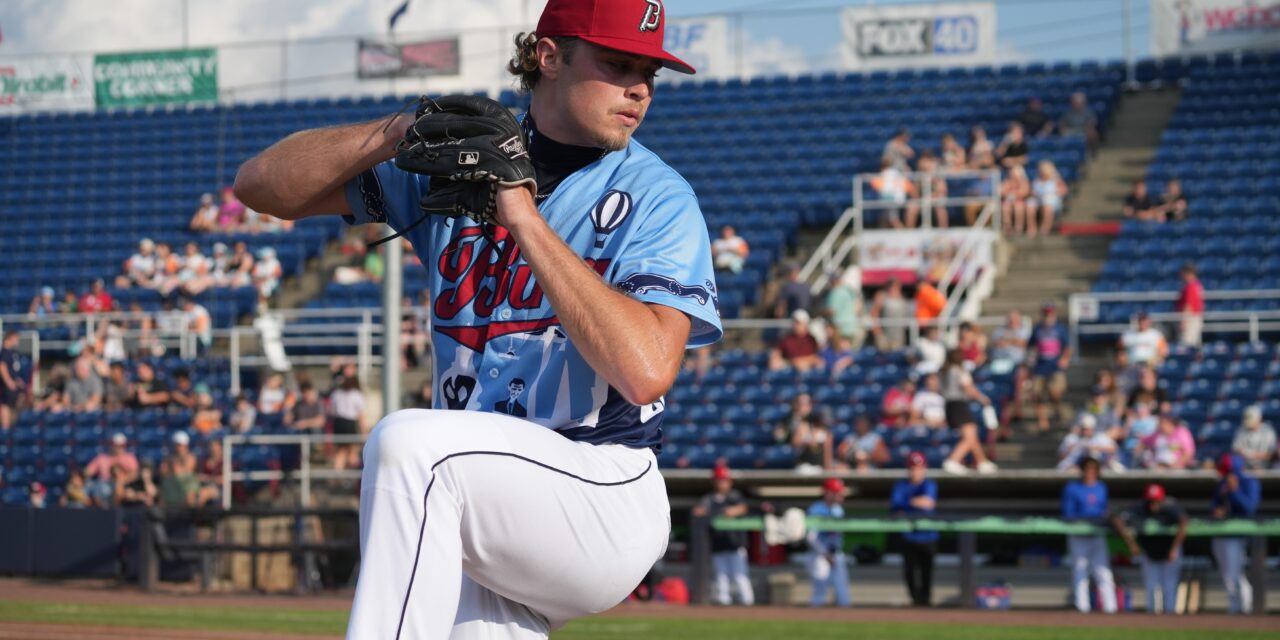
The Mets acquired 13 players at the trade deadline, five being pitchers. The bats have understandably gotten the most attention thanks to how Jefferson Rojas, Sammy Stafura, Aidan Smith, and, most of all, Billy Amick have started their Mets tenures, but the pitchers are very interesting in their own respects. Let’s go through them all.
Gabe Davis
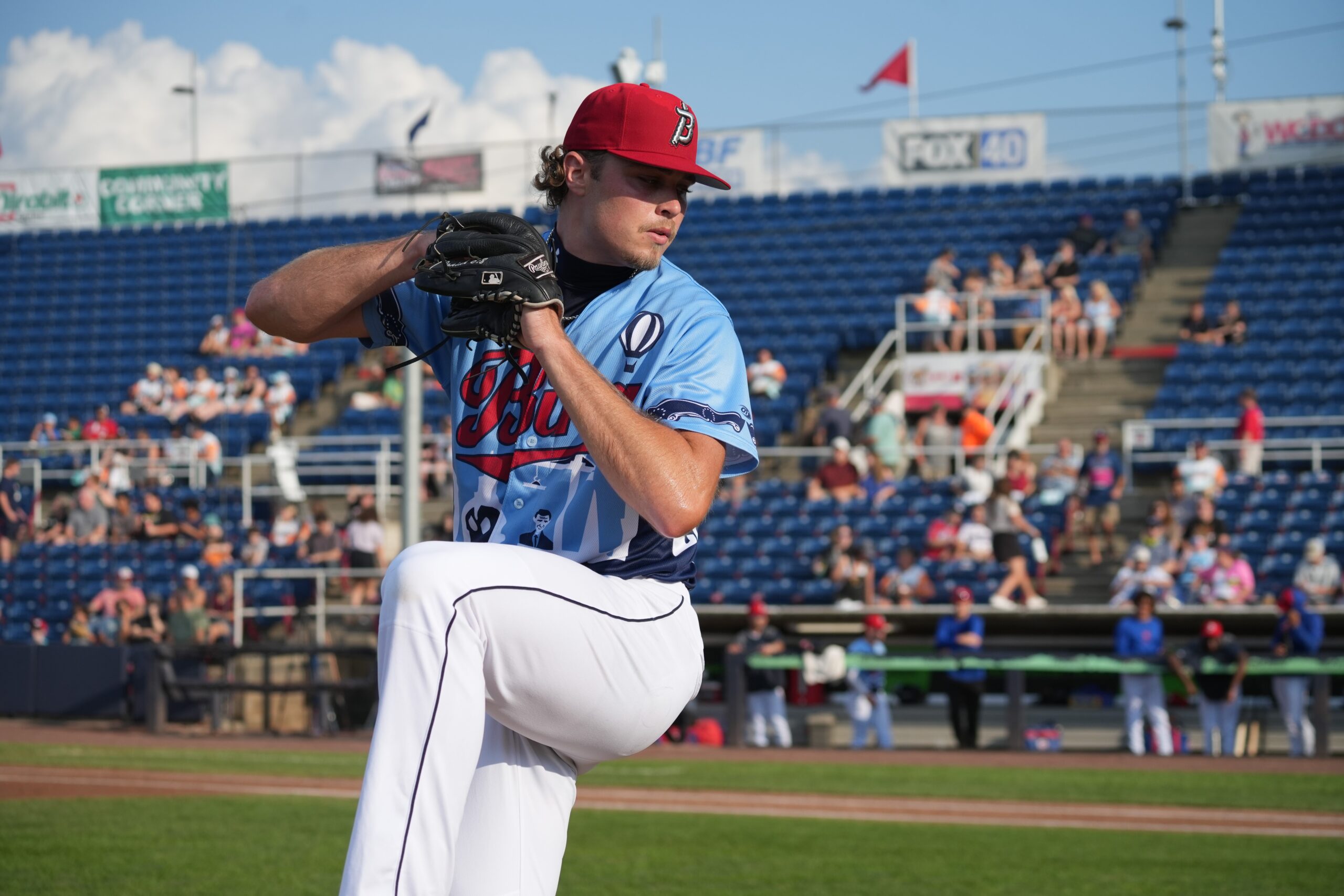
Gabe Davis is without a doubt the highest-ceiling arm acquired by the Mets at the deadline. Davis tore up High-A with the White Sox in eight games before going to Double-A and getting hit hard, but most of that damage also came in a three-start stretch. Since the trade, he’s thrown twice for the Rumble Ponies and has been much more in line with who he’s been all season besides that bad stretch. In his first start, he threw three innings and gave up five hits, a walk and three earned runs while punching out three. In his next, he threw three and 1/3 innings with one hit, three walks, one hit batsman and one unearned run while punching out four.
It’s probably already obvious, but his biggest flaw is strike throwing. He can run his fastball up into the triple digits, and control is a common problem for flamethrowers like him. He’s also 6-foot-9, which adds another wrinkle, as tall guys often have issues being consistent with their mechanics. Now for the good: He can hit 100 with great extension, which helps it play even faster. MLB Pipeline believes he has room to add velocity, too. His slider is also filthy, and he can throw it in the 90s. He has two legitimately great pitches, and he should have some time to work on a third and possibly fourth.
There’s a lot—and I mean A LOT—of reliever risk here, but the Mets will obviously do their best to make him work as a starter. Two elite pitches can play in short-inning stints, so if he can’t develop his changeup and curveball enough, he’ll almost certainly slide to the pen. The good thing is that if he does end up in the bullpen, his stuff is nasty enough where he does have a real chance of being a high-leverage reliever.
This is an upside play for the Mets. If he hits his ceiling, then he’s a true frontline starter type of arm.
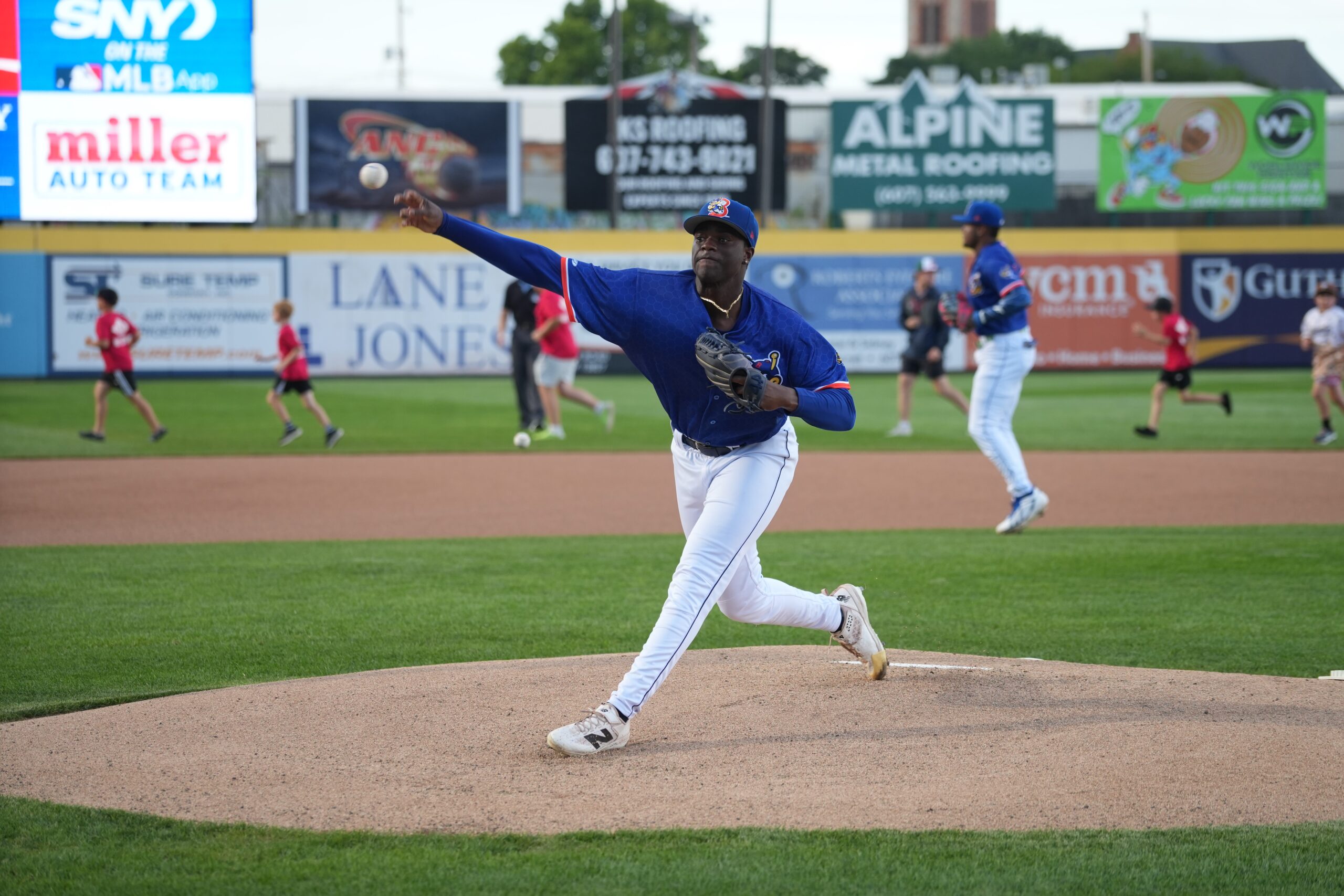
Gary Gill Hill
Gary Gill Hill is just about the exact opposite type of arm from Davis. He doesn’t have nearly the same ceiling, but his floor is significantly higher. He doesn’t throw nearly as hard, sitting in the low-to-mid 90s, but can run it up higher on occasion. He’s also only 21, so there’s always the possibility there’s more velo to be unlocked. The four-pitch mix is solid, he just doesn’t throw anything that wows you.
His best attribute is easily his control. Gill Hill doesn’t walk batters at all. Among the 288 minor leaguers with at least 100 innings pitched, Gill Hill’s 5.3% walk rate ranks 20th. He’s also incredibly built up, throwing 136 2/3 innings so far this year, and he’s not done.
Gill Hill is a really safe bet to be a big leaguer. He throws strikes and has good enough stuff to make it, he just likely won’t ever be anything more than a back-end starter or swingman. I think there’s a really good path to significant MLB innings in 2027, as he’ll need to be added to the 40-man roster anyway to protect him from the Rule 5 Draft. Already up to Double-A, he could be one of the main candidates to make spot starts or provide length out of the pen when needed.
Luke Gabrysh
A lot of Mets fans were understandably underwhelmed by the return for Brooks Raley, and trading him to the Phillies doesn’t help matters. This trade hinges on Luke Gabrysh.
He does a lot of things well. He throws decently hard—not Davis levels—but firmly in the mid 90s. He throws a lot of strikes—not Gill Hill levels—but at a very solid rate. He needs to do a little bit better job of limiting walks, but his strike-throwing suggests that’ll come. He throws three fastballs (four-seam, sinker and cutter), a changeup and a sweeper, and all five pitches are useable. He might not have one standout trait, but he does almost everything well. He strikes batters out, keeps the ball on the ground at an above-average rate and throws strikes.
A 23-year-old at High-A, he is a tad old for the level, so I could see him getting a short look at Double-A before the season is up. At the very least, he’ll certainly start 2027 (if there is a 2027) there.
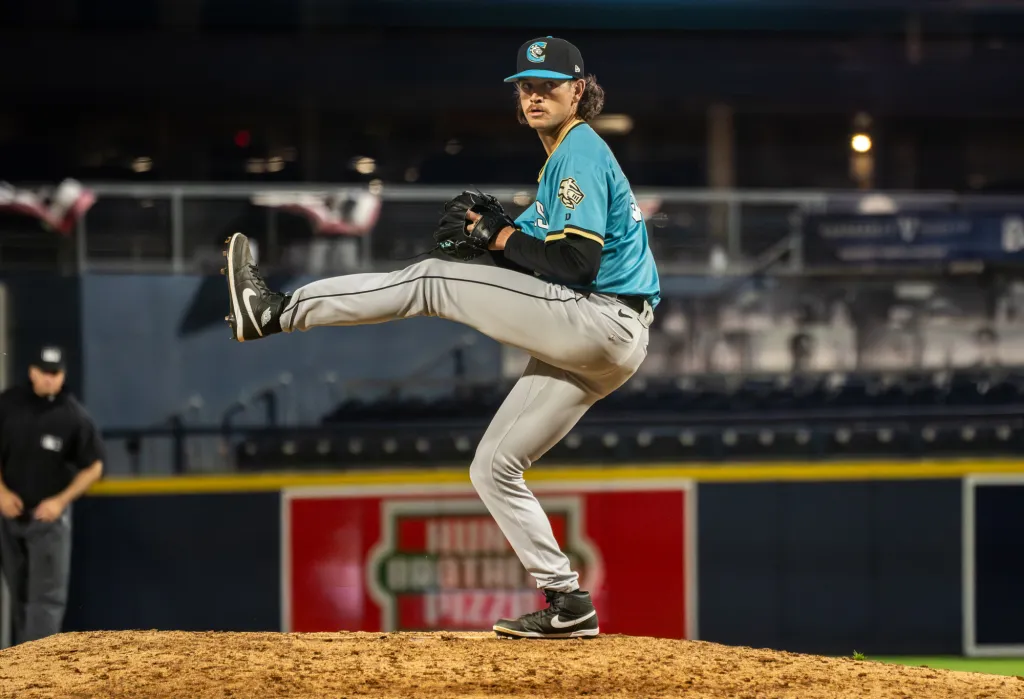
Zach Franklin, Photo Credit: Jim Margalus of Sox Machine
Zach Franklin
Now onto the relievers. Zach Franklin came along with Davis in the Huascar Brazobán deal, and there’s a lot to like about him as well. He does the two most important things a pitcher can do: He strikes batters out and walks batters at rates that are both well better than league averages. He primarily operates with a four-seam, slider, and splitter, and while all can play, the soft stuff is definitely the strong point. It’s a great trio of pitches for a relief pitcher.
His surface numbers in the minor leagues this year are iffy at best, but it’s wise not to trust minor league ERA a ton. There are too many variables at play—especially with how sloppy minor league defense can be—to use it as the primary stat. There are a lot of different things to look at, but one number I like to get a base gauge of a pitcher is K-BB%, and he has a great one. Put him in front of an MLB defense, and it’ll help him a ton.
Already at Triple-A, he could make his MLB debut this season. However, with how the Mets’ bullpen is pitching at the moment, I’m not sure there will be a spot. He’s another guy who will need to be added to the 40-man this offseason, so he’ll definitely get an opportunity at the latest next season.
Chayce McDermott
Fans will definitely recognize this name, as he went straight to the big league bullpen after the Mets acquired him on deadline day. Chayce McDermott was once the top pitching prospect in the Baltimore Orioles’ system, but he’s had a quick fall from grace after being ineffective in his limited big league looks in 2024 and 2025.
I’m really intrigued by McDermott. He landed with the Dodgers this year in mid-April following a trade, and it seems the Dodgers worked some of their magic on him before sending him along to the Mets. He sits at 95.9 mph on his four-seam fastball this year, up from 93.5 mph last year. He’s also messed with his usage rates, with that four-seam dropping from his first to third most used pitch, swapping places with his cutter. There’s significant velocity gains on that pitch, too, going from 87.2 mph in 2025 to 89.3 mph in 2026. The cutter’s usage is up from 11% to 42%, with the four-seam and slider both taking back seats. Who knows if it’ll work, but there’s a very clear deliberate change here coupled with some improved stuff, so I’m interested to see how it shakes out.
So far, he’s allowed just a two-run homer to a disgusted Matt Olson in 3 1/3 innings. They also got him at the cost of just Ben Rortvedt, so it’s a fantastic dart throw to see if there’s something here. If not, they lose nothing.