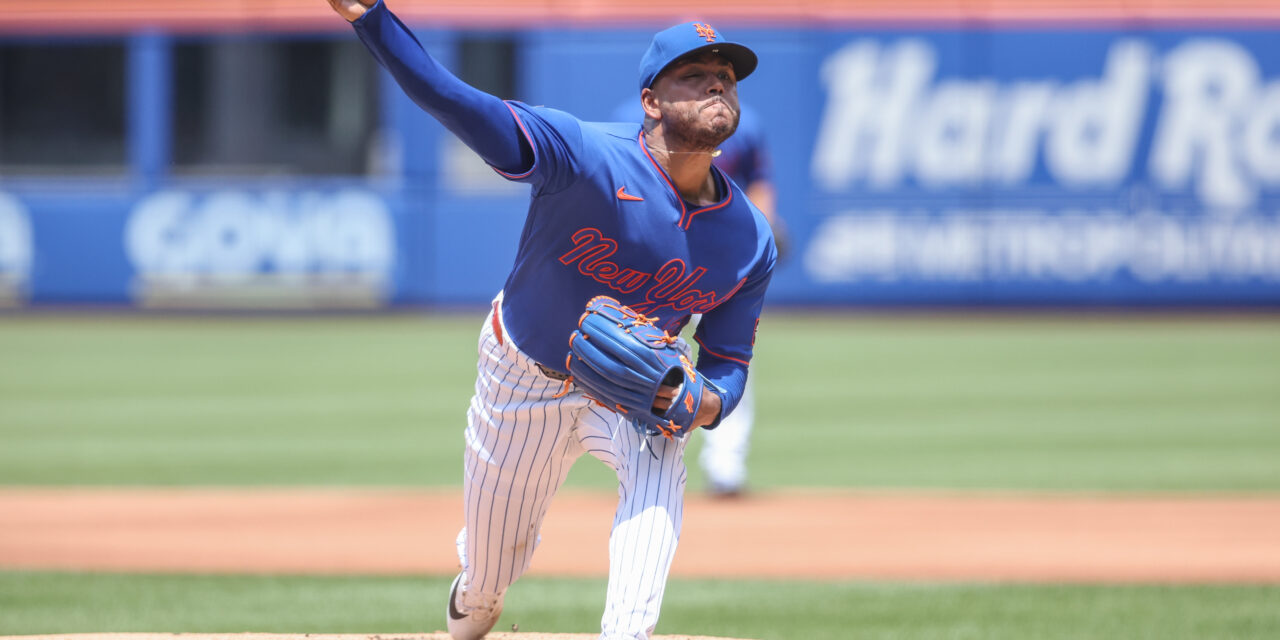
The Mets simply cannot have nice things for more than one day. After Nolan McLean delivered a masterful bounce-back performance on Tuesday, the Mets turned to Freddy Peralta on Wednesday, hoping for more of the same. Instead, the former Cy Young finalist delivered another disappointing outing, lasting just four innings as the Blue Jays dismantled his arsenal and celebrated Canada Day in fitting fashion.
Peralta’s season ERA climbed to 4.81 after he allowed five earned runs on seven hits and three walks, striking out four. The long ball continues to be a problem. He’s surrendered five home runs since the start of June, and 13 on the season.
“I just need to be better,” Peralta said after the game, calling this stretch of starts the roughest of his career. “I don’t feel good. I am just trying to come back and make the adjustments.”
The biggest concern lies within Peralta’s secondary pitches. His fastball remains among the most effective in baseball, with a run value ranking in the top 20 percent of the league. His breaking and offspeed offerings, however, have cratered. Both currently rank in the bottom 15 percent of qualified pitchers by run value.
The contrast from last season is staggering. In 2025, Peralta’s offspeed pitches ranked in the 96th percentile in run value. He finished among the league’s elite, placing in the top three percent of qualified pitchers in overall pitching value. Hitters appear to be far more comfortable against pitches that once made him one of the league’s most difficult starters to solve.
That decline is beginning to impact more than just the Mets’ place in the standings. With free agency approaching, Peralta has become one of the most intriguing names to watch ahead of the trade deadline. Just a few months ago, he looked like the type of pitcher who could command a significant prospect return if the season wasn’t panning out.
Not only would an acquiring team be getting a proven frontline starter, but one who seemed like a near lock to reject a qualifying offer and pursue a lucrative multiyear deal in free agency. The qualifying offer, which is expected to exceed $22 million this offseason, only holds value if a team is comfortable paying that salary should the player accept. Earlier in Peralta’s career, that decision would have been a no-brainer. If he declined, the offering team would receive draft-pick compensation. If he accepted, they would still be getting an ace at a reasonable rate.
Now, that safety net is far less certain. Should Peralta continue to struggle, an acquiring club may be hesitant to extend a qualifying offer at all, eliminating the possibility of draft-pick compensation and reducing his value to little more than a shaky two-month rental.
That uncertainty naturally weakens the prospect package the Mets could expect in return. The next few weeks will likely determine how the market views him. If Peralta can rediscover the form that made him one of the National League’s premier starters last year, contenders may once again be willing to part with premium prospects, confident they could either retain him or recoup value through the qualifying offer process. If the struggles continue, however, that leverage evaporates.
The Mets now sit 15 games under .500, and the front office faces increasingly difficult decisions as the deadline approaches. Peralta’s performance over his next handful of starts may play a significant role in shaping them.