June 15 covers the spectrum of Mets trades. Each had an impact on the franchise, for better and for worse.
By 1969, the Mets couldn’t get much worse. But they were reversing the trend which was their reputation over the first seven years of the franchise.
So when the mid-June trade deadline arrived, the Mets—over .500 yet in a rather distant second place—looked to improve the offense to complement an exemplary pitching staff.
It’s not about getting the best player. It’s about getting the right player. Donn Clendenon was a seamless fit. The veteran first baseman was languishing with the expansion Expos after leaving the Pirates and even briefly retiring, had found the right team. He deposited twelve home runs, thirty-seven RBIs, and a .777 OPS.
Clendenon reinforced the Mets’ lineup against left-handed pitching, deepened a relatively thin bench, was defensively solid at first base, and added experience to a team that had never faced the pressures of a pennant race.
It led to the overthrow of the Chicago Cubs’ NL East lead, steamrolling to the division title and then conquering the National League pennant. Those happenings were prologue to what took place in the World Series—when he batted .357 and went deep in Games 2, 4, and 5 to garner Most Valuable Player award honors.
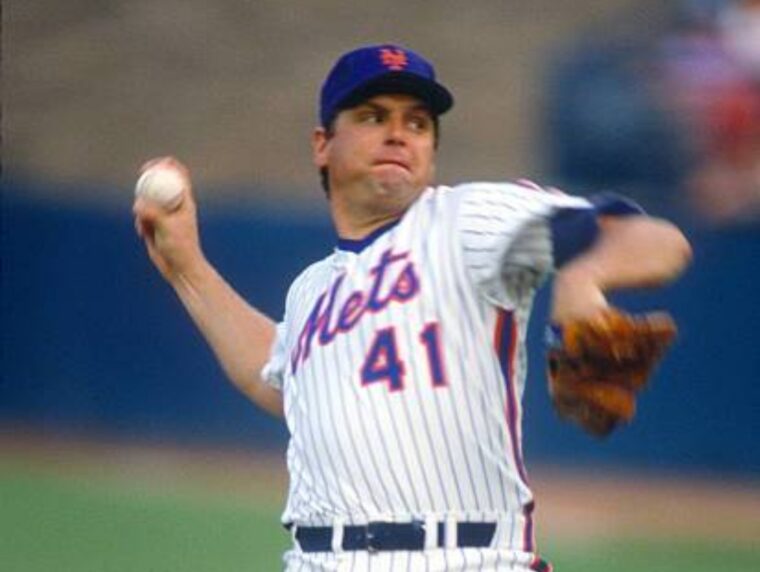
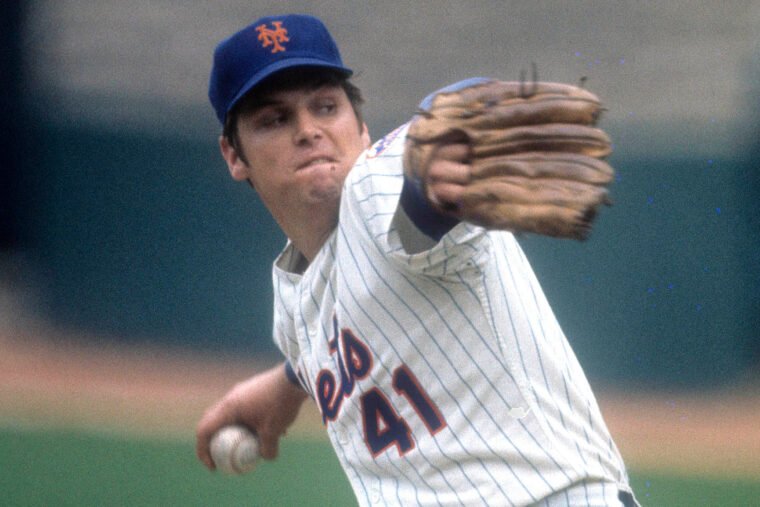
Tom Seaver was among many who benefited from Clendenon’s heroics. Seaver, naturally, was a tremendous impact on the World Series season himself, winning Game 4 of the Fall Classic and earning a Cy Young Award.
All he did after was further his Mets legacy—so much that it seemed impossible to see him in another uniform.
Leave it to M. Donald Grant to ruin a great thing. The deaths of Joan Payson and Gil Hodges erased Seaver’s sources of comfort. As team chairman, Grant had little to no interest during the advent of free agency and initially scoffed at his star pitcher’s demands for more money.
Grant wasn’t alone in challenging the face of the Mets. He had a powerful voice taking up his argument. Dick Young, the legendary and cantankerous columnist for the New York Daily News, shared Grant’s disdain for free agency and regularly wrote with scorn for Seaver.
Tom went into 1977 disgruntled and continued to pitch with little support, but had secretly worked out a three-year extension with Lorinda de Roulet two days before the trade deadline.
On that fateful day, Young’s latest piece alleged that Tom’s wife, Nancy, was jealous of Nolan Ryan’s wife, Ruth, because his former teammate was earning a higher salary with the California Angels. That was a match to the powder keg.
Seaver asked out of New York. The Mets bent to his demand, sending him to the Cincinnati Reds and letting the proverbial wrecking ball loose on what is now known as the “Midnight Massacre” (which also included a separate trade for Dave Kingman to San Diego). The cumulative WAR of the four players the Mets received over their careers in New York (12.3 combined) was only slightly above Seaver’s best season (11.0 in 1973). And it certainly couldn’t measure up to his stature. As expected, the Mets cratered into irrelevance.
Six years later, much had changed with the organization. Grant was gone, new ownership was in, Frank Cashen was installed as general manager, and seeds for the future had been planted in the farm system.
But a lot hadn’t changed. They were still at the bottom of the NL East.
Six years to the day of the team’s darkest day came one of its most significant—and the greatest trade in Mets history.
In Cashen’s efforts to restore respectability, he had cultivated promising prospects that had reached—or were approaching—big-league status. But no amount of veteran leadership would come from the farm system. Cashen pulled a coup that put the Mets rebuild on the accelerator by getting first baseman Keith Hernandez.
Hernandez and St. Louis manager Whitey Herzog were at odds. Thus, the former MVP and multiple Gold Glove-winning first baseman was expendable. All the Mets had to give up was a declining relief pitcher, Neil Allen, and another arm, Rick Ownbey, who would make seven more big-league starts and win once.
Hernandez’s leadership changed the attitude of the Mets. The team improved in each of his first three full seasons, culminating of course with the championship in 1986—a significant reason why his number will soon be in the Citi Field rafters.