People have been asking us all winter what we’ve been doing to pass the time during the MLB lockout. I’ll tell you what we do here at MMO — we come up with ideas that not only help us stay busy, but will help you all stay busy, too.
Talking about the best teams and/or players in New York Mets history is always a good debate to have — especially during the cold winter months — but what if we created our own teams with players from different eras? That’d be fun, right? Well, we thought it was, and we think you’ll agree. We’ve created eight different Mets teams, all of which consist of a catcher, first baseman, second baseman, shortstop, third baseman, three outfielders, two starting pitchers, one relief pitcher, and a manager. We took the top eight at each position (as well as the top 24 for outfielders and top 16 for starting pitchers) with the goal of splitting them up across eight teams and making them as evenly matched as possible.
We used four players twice, given their multi-positionality: Edgardo Alfonzo (2B/3B), Jeff McNeil (2B/OF), John Milner (1B/OF) and Dave Magadan (1B/3B).
What we’ll be doing over the next eight days is introducing each of the squads and taking a look at their perceived strengths and weaknesses. Once that’s complete, the fun will start with some good ol’ fashioned Twitter polls so you can decide which ones would be victorious if they faced one another. We’ll open up the voting on February 8th, so mark your calendars accordingly.
The Squad: Team 2

Strengths
As Yogi Berra said about the 1973 Mets “we were overwhelming underdogs” it might ring true for this team but you can’t sleep on a top trio of Piazza, Johnson, and Conforto. Three players with 30-or more home run potential every season is nothing to slouch at.
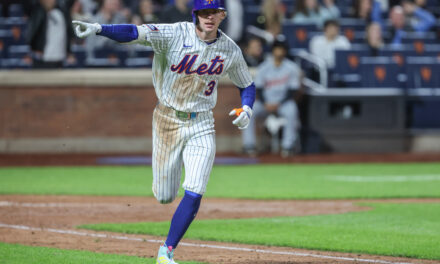
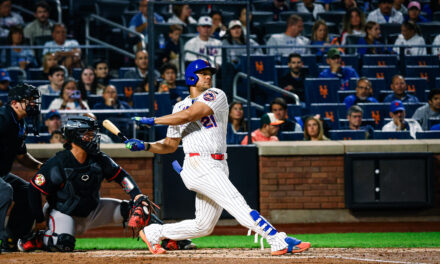
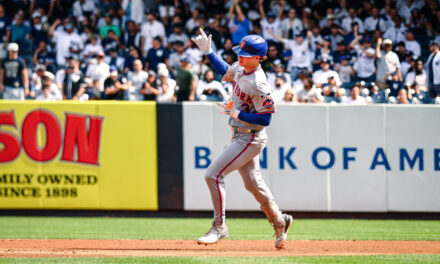
I imagine this lineup with Pagan leading off and reminisce on his best season in 2010 when he batted .290/.349/.425 with 37 steals. Followed by Conforto, Piazza and HoJo. Following them would be the lefty Milner batting five and his .250 bat, then the switch-hitting Flores, Backman, and Swoboda.
Even though it tails off toward the end, you might get two intentional walks every time Piazza and Johnson come to bat. Over a five-year stretch from 1987-81, HoJo averaged 31.4 home runs per season and led the National League with 38 home runs and 117 runs batted in. Right before that you have Piazza who immediately became the king of New York with his first full season as a Met with 40 home runs and 124 runs batted in. Even Tom Seaver would be nervous.
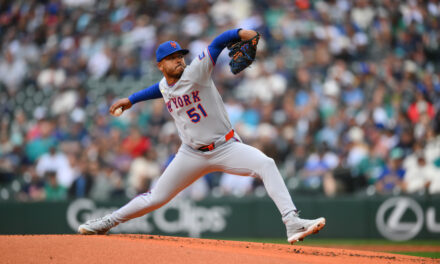
There might not be a better No. 1 starter and closer combo than Santana and K-Rod. Santana was brilliant as a Met with a league-low 2.53 ERA across a league-high 234.1 innings in 2008. Rodrguez didn’t get the saves he deserved on some cruddy teams but he was lights out in 2009 coming up clutch to save 35 of the Mets’ 70 wins that year.
Weaknesses
After the top-four, this lineup falls off hard. Lefties might be frightful with Milner and Flores coming up but Backman, Swoboda, and a pitcher won’t turn the lineup over many times.
The left side of the infield will be weak with Flores at short. Everybody knows he was nothing more than serviceable there.
Rick Reed was actually a two-time All-Star in 1998 and 2001 when he was traded to Minnesota mid-season. But he was never better than 1997 when he had a 2.89 ERA in 208 innings pitched. The problem with Reed are his 34 and 35-year-old seasons when his ERA ballooned up to 4.58 and 4.11. He lacked the consistency other secondary starters have on these teams.
But like Yogi said again “take it with a grin of salt.” If this team isn’t to your taste we still have six more left to go with No. 3 revealed tomorrow.
Past teams