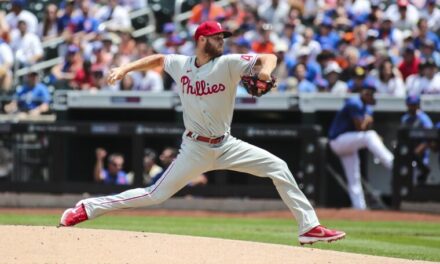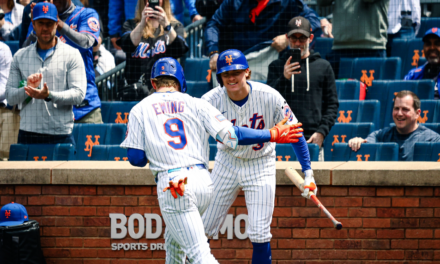
On Saturday night, the New York Mets lost to the Philadelphia Phillies by a final score of 15-3. Kyle Schwarber hit as many home runs (three) as the Mets scored runs. Bryce Harper hit for the cycle, in only five innings, for the first time in his career. And yet, neither of these players were the biggest problem for the Mets.
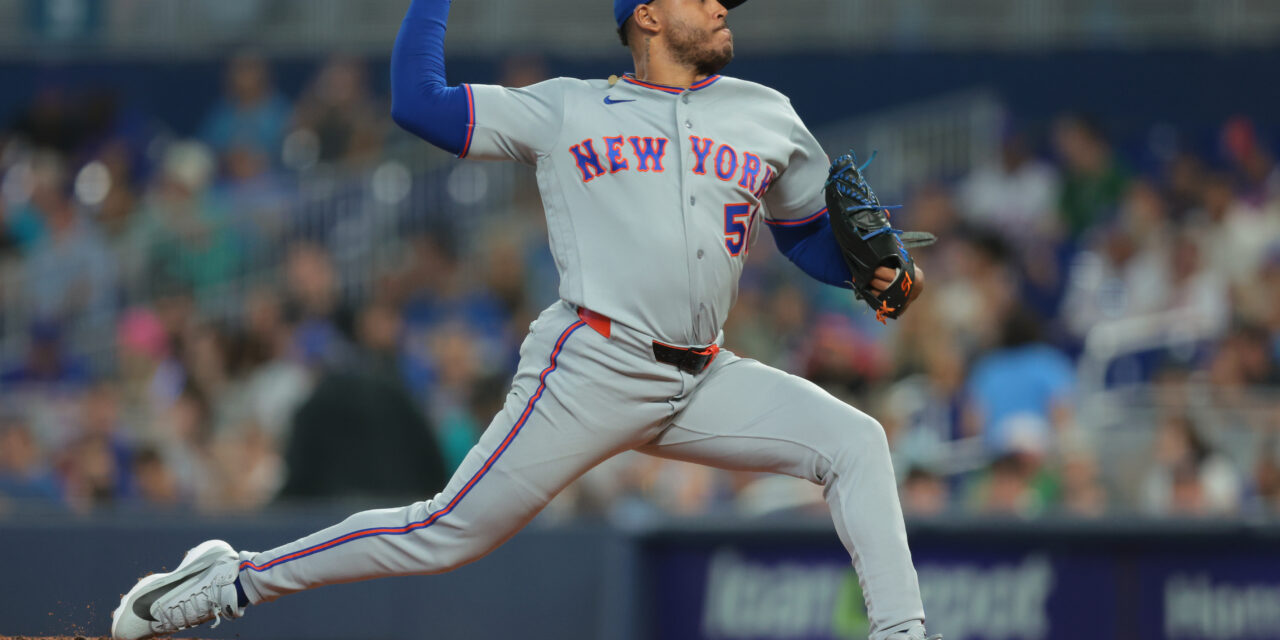
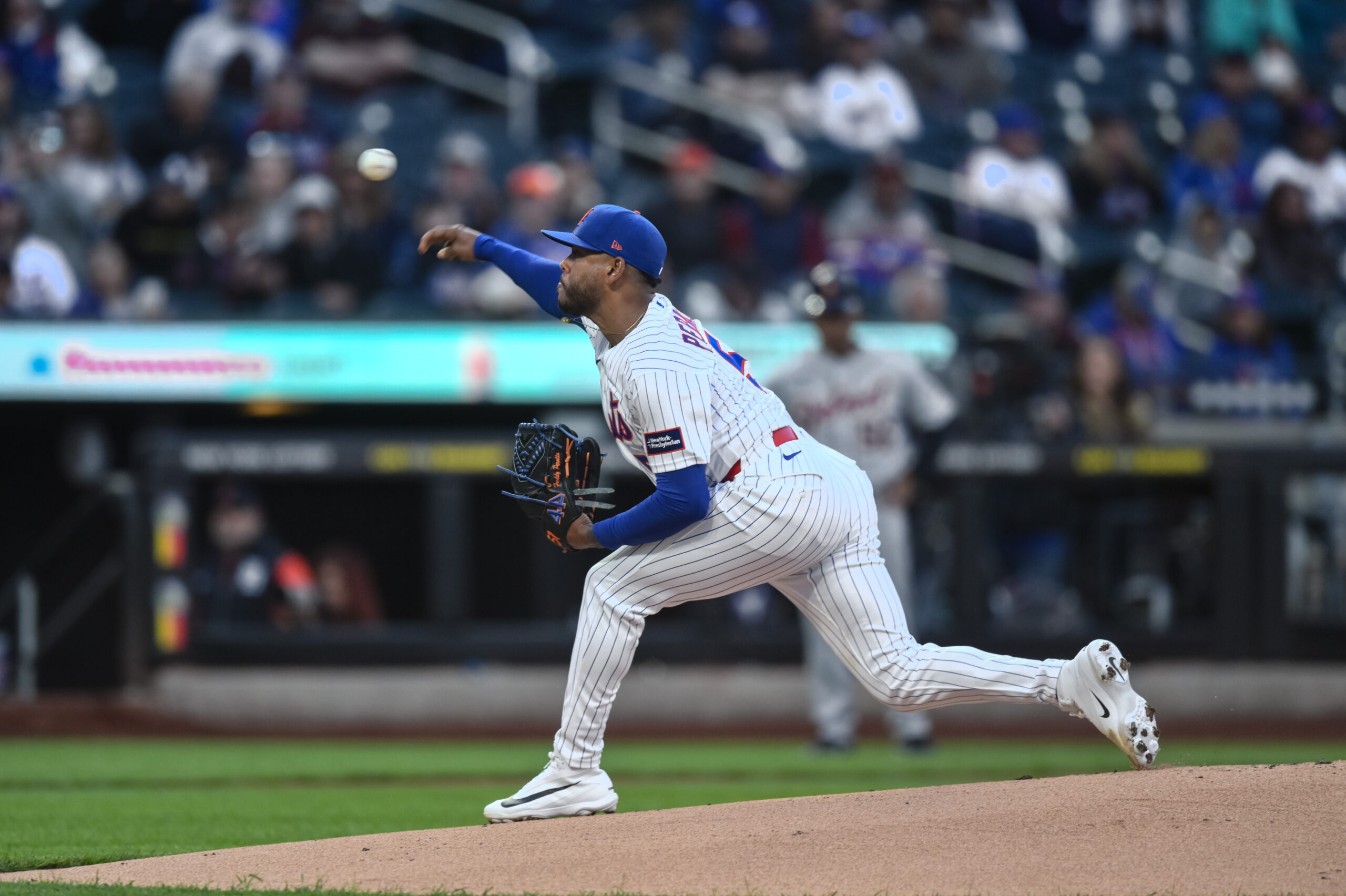
On January 21, when the Mets made the blockbuster trade for ace Freddy Peralta, how many envisioned him giving up 10 earned runs in a single start? Against the Phillies on Saturday night, Peralta lasted only 2 2/3 innings, giving up a career-high 10 earned runs on 10 hits, striking out two, and giving up a pair of home runs. Peralta’s ERA on the year is now 4.83, higher than Sean Manaea’s, who spent the majority of the season in a mop-up bullpen role.
There is simply no way to describe Peralta’s Mets tenure other than a disaster. Between the inability to get deep into starts and the seemingly repeated let down every time the Mets start to build momentum, this is not what New York thought they were getting when they traded for Peralta.
After Saturday night’s start, Peralta is now having his worst season since 2019 in ERA, WHIP, K/9, K/BB, and OPS against. Simply not seem like a recipe for success.
Well, what is really going on with Peralta? How can he go from someone who was a frontline starter in 2025 to a middle of the rotation guy at best in one offseason?
Manager Carlos Mendoza, when asked about his struggles Saturday, said that “He got behind hitters, had a hard time executing, and every time they came in the zone they got him.”
John Jones-Imagn Images
That has unfortunately been the theme for a majority of Peralta’s starts this year. Freddy is throwing pitches in the zone at a career-low, excluding the shortened 2020 COVID season. However, unlike other pitchers whose stuff can generate chases out of the zone, Peralta is not able to, leading to the walks, long at bats, and long innings that feel inevitable every fifth day.
Peralta is also experiencing big-time struggles with his off-speed pitches. Last year, Peralta was in the 88th percentile of breaking stuff run value and 96th percentile of off-speed run value. Those are incredible numbers, really emphasizing his ability to spin his slider and curveball, and “hold serve” with a change-up that has always graded poorly on a Stuff+ basis.
Then, seemingly out of nowhere, his run value on breaking stuff and off-speed pitches dropped to 16th and 31st percentiles, respectively. Entering his start against the Phillies, opponents have a 156 wRC+ when facing Peralta’s curveball. For context, Juan Soto entered the same game with a 163 wRC+. Essentially, everyone is Juan Soto off of Peralta’s curveball. What has changed that could possibly be leading to the poor results on these pitches?
Is the root of the issues due to a change in mechanics? Peralta, for the most part, has always lived between a 36 degree and 38 degree arm angle. This year, Peralta’s arm angle is all the way down to 32 degrees. That drop is too much to be chalked up to early season variance or a subtle change. That is a major change, that could be part of the reason why he is not spinning the ball as much on his slider and curveball. Peralta is also releasing the ball three-to-four inches further from the plate than he did last year. While this may not seem like a ton, the extra split second for hitters makes a huge difference.
The sad part about this season is that most of his overall underlying metrics are right around his career averages. His xFIP, xERA, and his xwOBA are all close to last year and his career averages. Entering Saturday, his xwOBAcon, which measures the quality of contact on balls in play, is actually better than it was last year. This means, unfortunately, maybe this just is who Freddy Peralta is.
As crazy as it seems considering the magnitude of move it was this offseason, Peralta just doesn’t have the same effectiveness as he did last year. For a guy who was rumored to have the contractual desires similar to Max Fried‘s eight-year, $218 millioncontract extension, this was not exactly an ideal tryout. If the Mets continue to lose, Peralta should be firmly in the trade discussions as we approach trade deadline season.