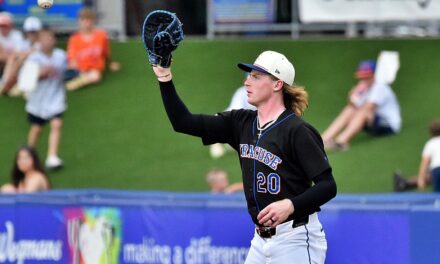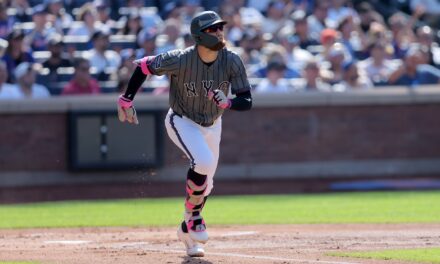
The Mets’ farm system is loaded. The pitching, headlined by Jonah Tong, Christian Scott, Jack Wenninger and Jonathan Santucci, is as deep as any team in baseball. The hitting, with bats like A.J. Ewing, Jacob Reimer and Ryan Clifford, is also strong.
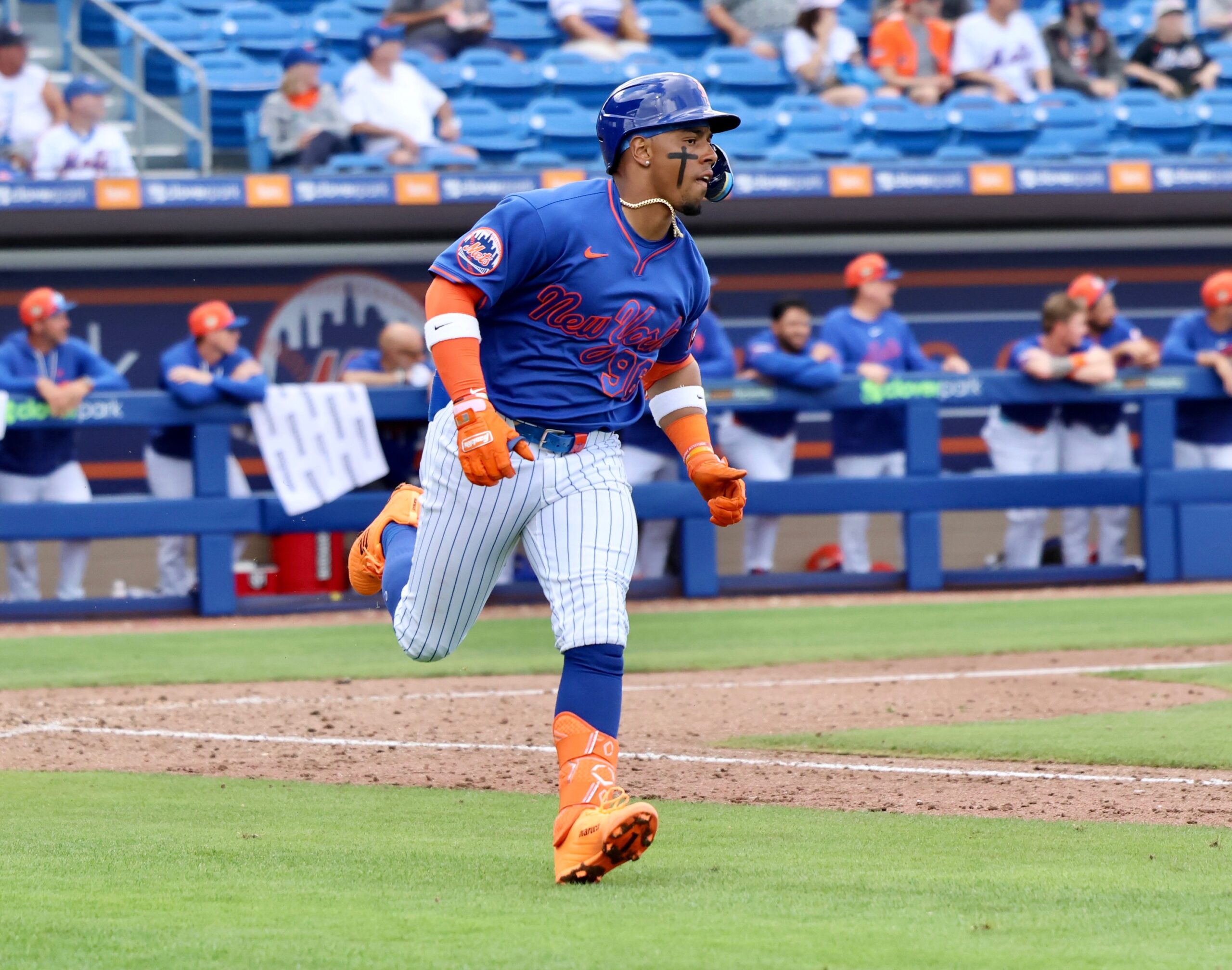
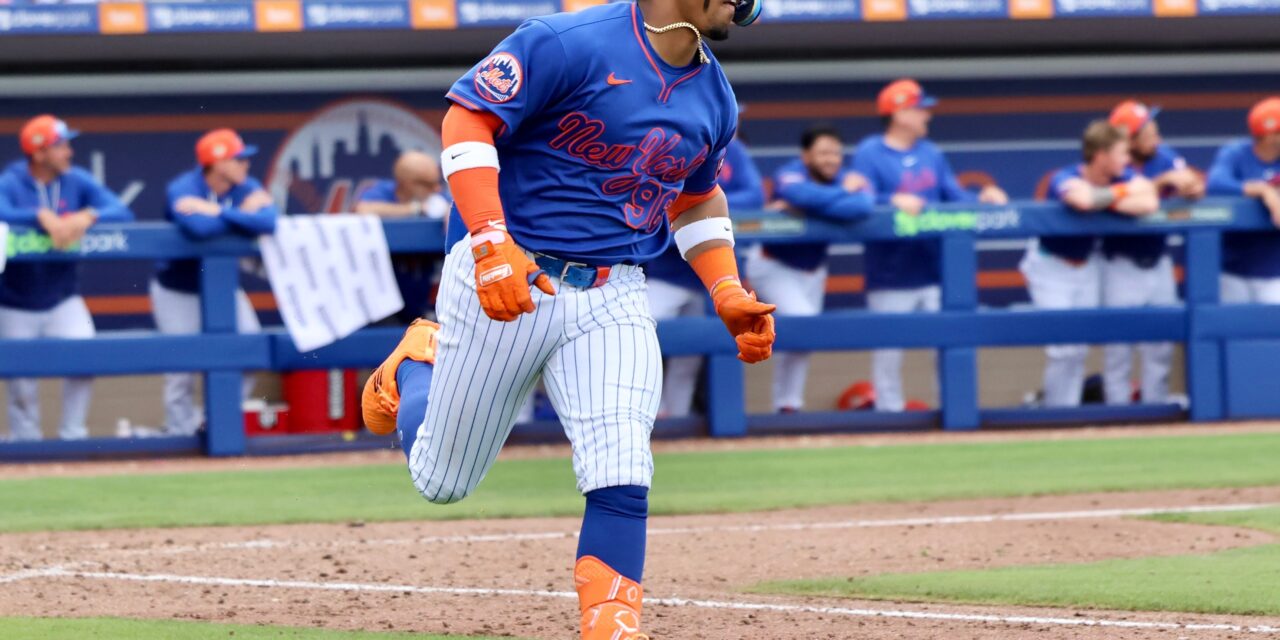
Chris Suero
Photo by Ed Delany of Metsmerized
As a result, Chris Suero and his rise through the organization has gone a bit under the radar. At this point, most Mets fans know of Suero, so calling him “under the radar” could be a stretch. He’s MMO‘s No. 13-ranked organizational prospect, MLB Pipeline‘s No. 15 and Baseball America‘s No. 12—and he’ll gain a spot for both MMO and BA when accounting for McLean’s graduation.
So, while he might not be fully “under the radar,” the level to which he’s fascinating still might not be fully appreciated. Suero is truly unique.
A Bronx native of Dominican heritage, Suero moved to the Dominican Republic as a teenager so he could bypass the MLB draft and sign with an MLB team as an international free agent. He landed with the Mets for a signing bonus of just $10,000, the maximum amount a team can give for a player to not count against the team’s bonus pool.
He made his pro debut in 2022 at 18 in the Dominican Summer League, and has slowly climbed the minor league ladder since. Now, beginning his fifth minor league season, the 22-year-old is showing exactly why he’s so interesting.
Offensive Outlook
Suero has a ton of power, and like many power hitters, also a ton of swing-and-miss.
In 2024, his first time playing over 100 games in a season, Suero struck out 22.1% of the time. That’s not low, but that’s also not outrageous for a minor league hitter. Among 18 Mets minor leaguers with at least 400 plate appearances in 2024, it ranked eighth. Not outstanding, but not bad.
In 2025, his strikeout rate jumped up to 29.3%, 20th of 22 Mets minor leaguers under the same criteria. Interestingly, though, his overall offensive production improved significantly. His OPS went from .730 to .786, and his wRC+ went from 119 to 140, seventh and fourth, respectively, among Mets minor leaguers.
The trend continued in the Arizona Fall League following the 2025 regular season. Suero hit five home runs—tied with Tigers top prospect Kevin McGonigle for the second-most—while striking out roughly 26.5% of the time.
Despite a noticeable increase in strikeouts, Suero had a much better offensive year. He got on base more and hit seven more home runs despite a minimal increase in plate appearances. Having spent all of 2025 between High-A and Double-A, there is no Statcast data available, but the results showed that Suero sacrificed some contact to add power. And it worked.
His wRC+ was 33rd of the 607 minor league players with at least 400 plate appearances in 2025. Among the 186 players who were 21 years old or younger, Suero is 14th—and only seven of the players ahead of him made it to at least Double-A, as he did. Those seven players, listed in order of wRC+: Konnor Griffin, Reimer, Esmerlyn Valdez, Josue Briceño, Sal Stewart, Max Clark and Ewing.
Griffin, Briceño, Stewart, Clark and Ewing are all top 100 prospects for both MLB Pipeline and Baseball America. Reimer and Valdez are not, but both are still well-regarded prospects in their own right. Reimer is a top 100 prospect for Just Baseball and Baseball Prospectus. Valdez is the only player who had more home runs than Suero in the Arizona Fall League.
The top hitters below Suero who reached at least Double-A are also impressive. Michael Arroyo, Aidan Miller, Clifford, Jett Williams and Carter Jensen are the next five, and all are well-regarded prospects.
Defensive Outlook
This is where Suero really stands out. Suero is a catcher. Already, that makes him stand out. There were just six catchers at least 21-years-old or younger to reach Double-A or higher last season. Suero’s wRC+ ranked second, only trailing Briceño. Suero also played much more catcher than he did, starting 73 games behind the plate in 2025 to Briceño’s 46.
But he’s not just a catcher. He’s also a first baseman, and he’s an outfielder. Suero played 16 games at first base and 21 games in left field in 2025, and can play both positions well.
He’s not a player who occasionally catches but pretty clearly won’t in the big leagues. Briceño is a potential example of that, as there is some doubt he’ll be able to handle catcher full-time at the highest level. Suero is a primary catcher, and looks like he’ll be able to stick there. Just a few days ago, he back-picked top Yankees prospect George Lombard Jr. off of first base.
Suero is uber-athletic, which helps him move from behind the plate to first base and left field, and is an asset when he is catching. He’s also fast, stealing 35 bases in 43 attempts in 2025, more than any catcher at any level of affiliated baseball.
A catcher/first baseman/left fielder, who can hit for power and steal bases, is a very interesting and unique profile.
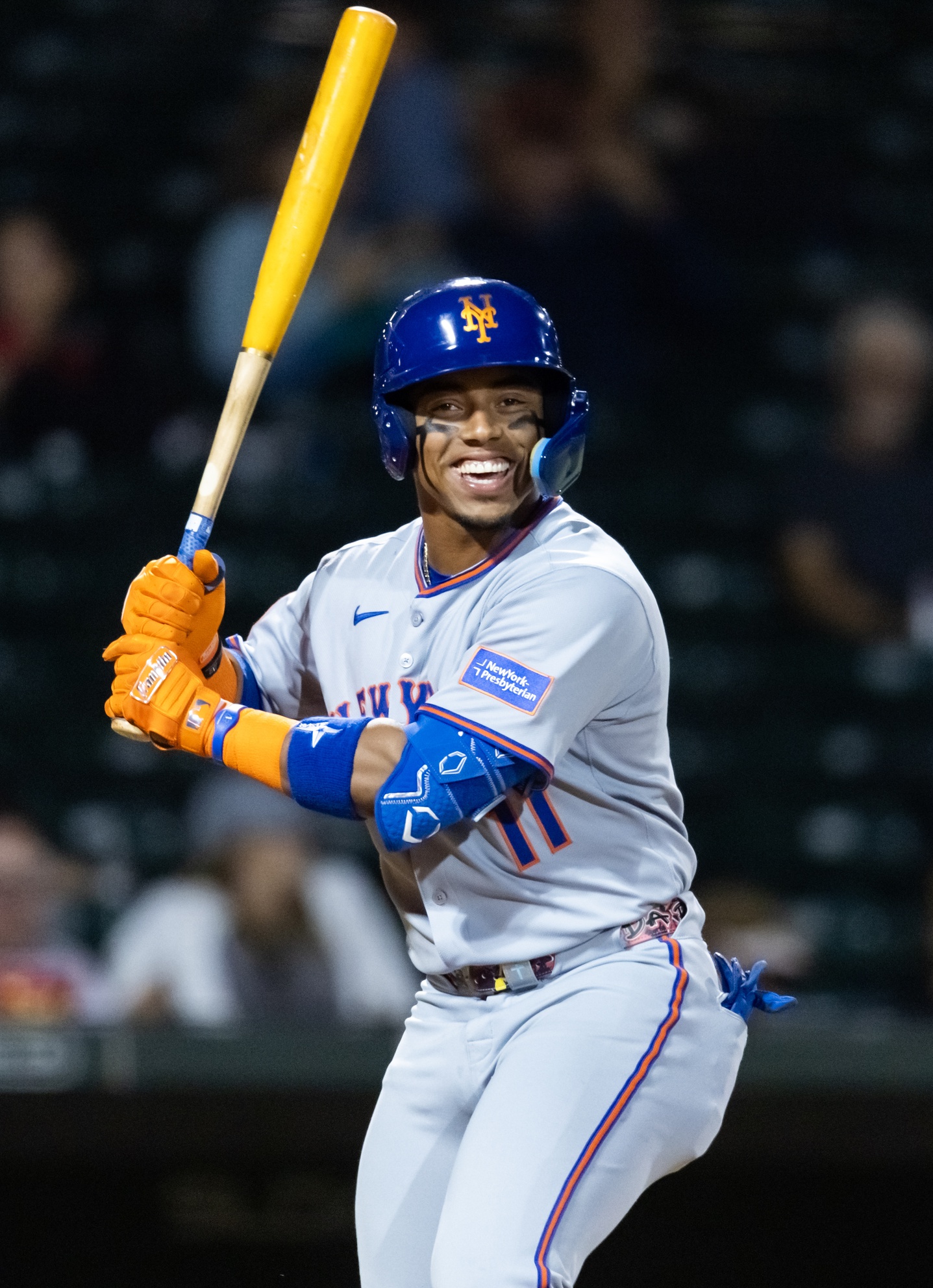
Chris Suero. Photo Credit: Mark J. Rebilas-Imagn Images
What’s next for Suero in 2026?
Ultimately, the strikeout rate needs to come down. Yes, its rise corresponded with a rise in his overall offensive production, but a 29% strikeout rate is unsustainable in the long run. The next step for Suero will be to see if he can bring down his strikeout rate, even if only by a few percentage points, without sacrificing the power he gained in 2025. If he can do that, there will be nothing standing between him and an MLB debut sometime in 2027.
Francisco Alvarez is locked in as the Mets’ catcher, but Luis Torrens is a free agent after 2026. Suero could be in line to replace him as Alvarez’s backup in 2027. Even if the Mets retain Torrens, Suero could still make the roster as the third catcher while also providing depth at first base and the corner outfield spots. His presence would also give the Mets more freedom to DH Alvarez when he’s not catching, as they would still have a catcher available to replace Torrens without sacrificing the DH if necessary.
He’s started hot in 2026, hitting .286/.448/.810/1.258 with three home runs and a triple in 29 plate appearances, but that has also come with a 38% strikeout rate. It’s six games into his season, so it’s obviously way too early to draw any conclusions about anything good or bad, but the early returns look similar to last season.
Suero continues to find himself in the company of some of the best prospects in baseball offensively, and he offers a unique blend of defensive versatility that very few players can. A utility player who can catch can help a team win in a lot of different ways. That toolset should get him to the big leagues at some point. The only question is when.