About two months post-draft, a handful of the Mets’ selections have already made their professional baseball debut. Not everyone plays—most pitchers and high school players don’t—but the Mets have had eight of their draft picks make their debuts.
It is important to emphasize that these initial debuts don’t mean much, especially for an organization so skilled at developing players, because the players who are active are going straight into games before any long-term development by the Mets can have an impact. However, how they are doing is still, at the very least, interesting to look at.

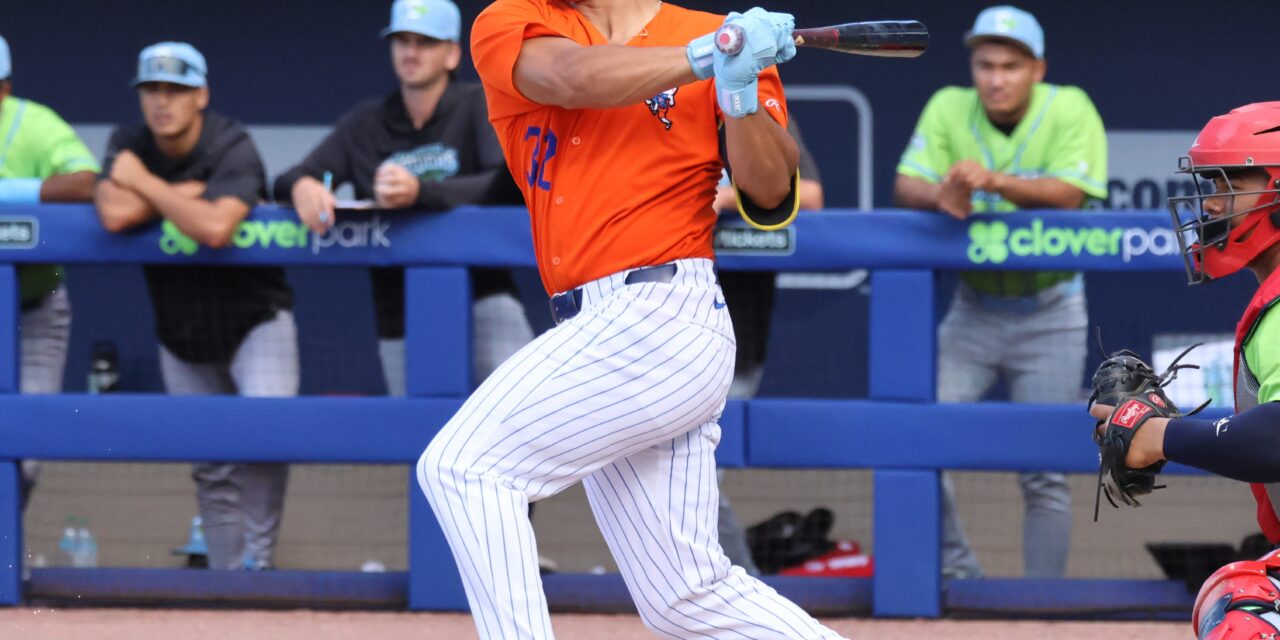
Mitch Voit — INF — 1st round
A first-round pick at No. 38 overall, the Michigan University Product played in 22 games for Single-A St. Lucie to begin his professional career. He didn’t have a ton of success at the plate, hitting .235/.343/.294/.637 with one home run and two doubles. He did play better in his final 11 games than his first 11 games, hitting .302 with an .842 OPS with all three of his extra-base hits to close out the year.
What he did do well was steal bases, swiping 20 in 21 tries, an absurd number for just 22 games. He also made his fair share of defensive highlights and spent time at three spots in the infield. He mainly played second base, but got a handful of games at shortstop and one at third base. He also played some outfield in college, and his athleticism could help provide some big-time defensive versatility to his game.
Voit was a two-way player through his sophomore year of college, and has only focused exclusively on hitting for one season. In that season, he significantly improved at the plate. The hope is that, with more time devoted solely to hitting, he can unlock more of his potential, similar to how Nolan McLean and Carson Benge have elevated their game after dropping two-way status.
Antonio Jimenez — INF — 3rd round
The Mets didn’t have a second-round pick, which makes third-rounder Anderson their second selection of the draft. A significant underslot signing, Jimenez’s best trait coming out of the draft was his potential to hit for power at a middle-infield position. As is the story with many, there were some contact concerns to go with it.
In his first 26 games at Single-A, it’s oddly been the opposite. Jimenez only struck out 13.6% of the time, a well-above-average mark, while also running above-average contact rates. However, he didn’t hit the ball very hard, and didn’t elevate it much when he did. He produced just a .011 ISO, a product of one extra-base hit in 110 plate appearances.
Jimenez played mostly shortstop but also played a handful of games at third base, and has the arm strength and glove to stick at either spot.
Tyler McLoughlin — RHP — 10th round
For pitchers, especially in small sample sizes, stats like ERA don’t really matter. McLoughlin is the perfect example: he gave up two earned runs in 2 and 1/3 innings. That’s a 7.71 ERA! Ugly. But in such a small sample size, rate stats like ERA are far from relevant.
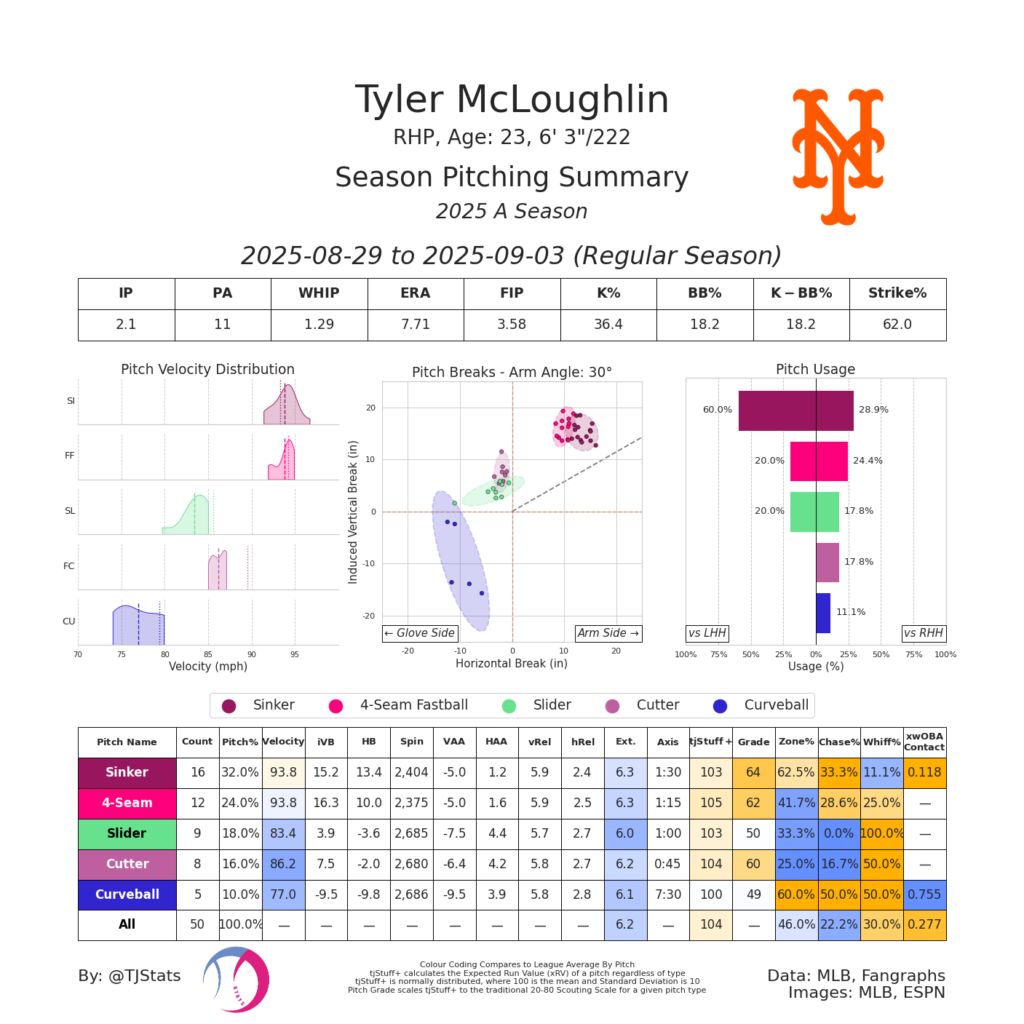
Instead, look at the stuff—it looked really solid. All three variations of his fastball looked good, and the slider and curveball looked good enough for this point in his development. There are things to work with here.
Truman Pauley — RHP — 12th round
Saying ERA doesn’t matter in small sample sizes cuts both ways. Pauley was great statistically, giving up one earned run in 4 1/3 innings, a 2.08 ERA. He actually never gave up a hit, but walked four.
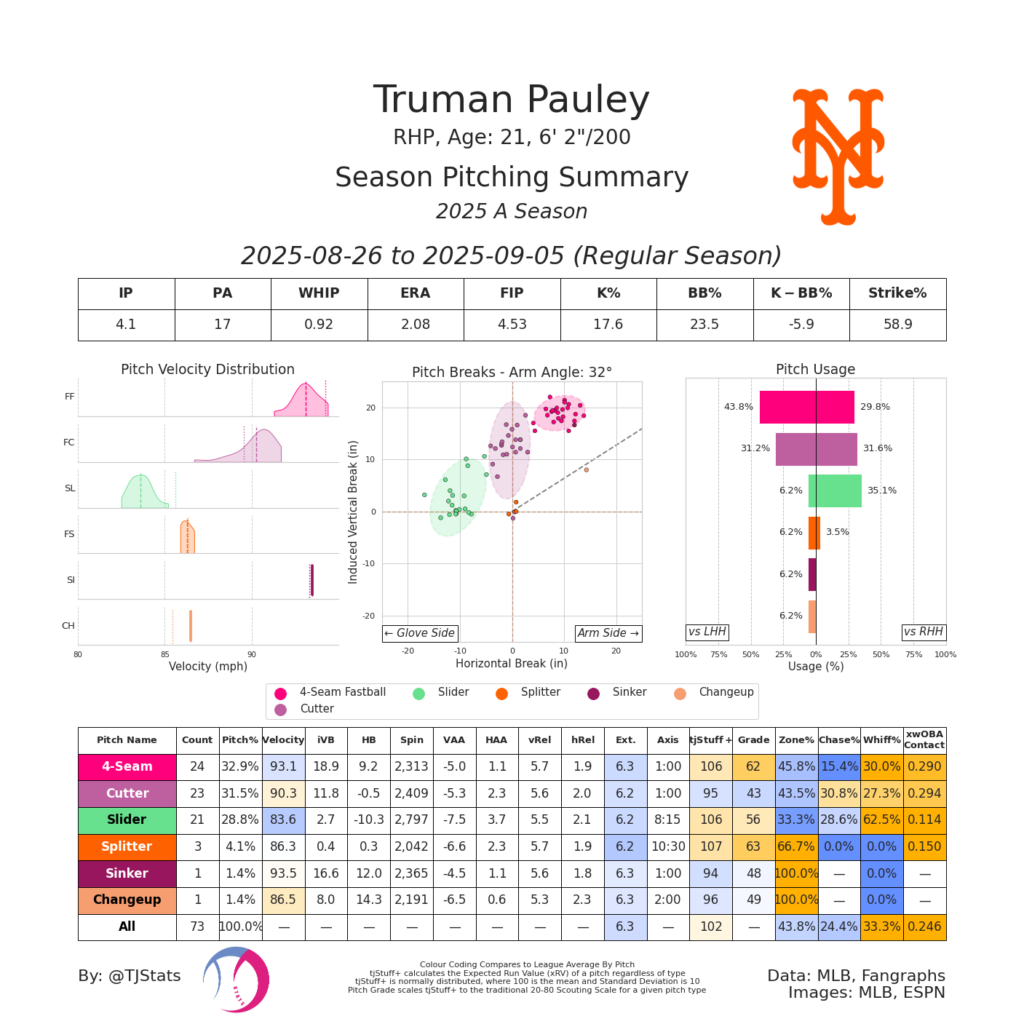
Pauley’s stuff also plays. He got 18.9 inches of IVB on his four-seam, a plus number, and got good results from it. His slider also looked good, and it looks like he tested out a handful of other pitches too (or they were just tagged wrong). He just didn’t throw a lot of strikes.
Zack Mack — RHP — 16th round
Zack Mack, what a great name. He threw 1 1/3 scoreless in two games for St. Lucie and allowed just one baserunner on a walk.

His stuff didn’t jump off the page, and it looks like he’d be better served leaning into a sinker or cutter instead of the underwhelming four-seam. He also hit the IL at the end of the season.
Sam Robertson — INF — 17th round
Sam Robertson struggled in his cup of coffee with the St. Lucie Mets, no other way around it. He hit .172 with a .466 OPS and zero extra-base hits while striking out over one-third of the time. He drew a handful of walks, but other than that, there wasn’t really anything redeeming about his 20 games. The only thing to say, really, is it’s just 20 games.
Joe Scarborough — RHP — 19th round
Joe Scarborough pitched to a 27.00 ERA—yikes! In other words, he threw 2/3 of an inning and gave up two earned runs. He had walk troubles, issuing three free passes in his lone outing, but the stuff looked good.
He has a quality sinker. Yes, that’s basically all he threw, but the handful of other pitches he tossed looked solid. For a 19th-round pick, even one plus pitch, like that sinker, is a big win.
Garrett Stratton — RHP — 20th round
Stratton made it into one game this season and threw a clean inning, which (of course) is never a bad thing.
He only threw 10 pitches, and none of them were breaking pitches, so there’s really not much to go on here. For a pitcher making their professional debut, though, it’s not uncommon to see them just come throwing darts and only darts. We’ll get a look at the rest of the arsenal next year.