Since mid-July Mets pitching prospect Jonah Tong has put up impressive results, and in his most recent start carried a no hitter into the seventh inning. As that was part of a Triple-A double header, those seven scoreless innings Tong pitched amounted to the entire game. Across eight starts beginning July 18, Tong has a 2.20 ERA and 1.15 WHIP with a 26% strikeout rate and 11.8% walk rate across 41 innings pitched.
So, what is he doing differently, what has he improved, and what does this mean for the future?
Tong’s Breaking Pitches
One of the biggest throughlines of Tong’s season was whether or not he would be able to develop a good horizontal breaking pitch. He still has not really done that. His curveball does move close to seven inches on average but at 79.1 miles per hour with -12.3 inches of induced vertical break. He needs that pitch to either be faster with more spin, have more depth, or break further glove side, closer to 10 inches or better.
He has started to work in what looks like a gyro slider which over this stretch moved between three- and four-inches glove side at roughly 86 miles per hour. That is fine but not spectacular. It does tend to bleed into his cutter which comes in at 90 miles per hour with just shy of two inches of horizontal break. The cutter also profiles as a below average pitch.
What he has done well over the last eight starts is show consistency in the shape of these pitches. While none of the shapes are truly strong, that consistency has helped caused more separation between them. They are starting to look like three distinct pitches, not a blend of one-to-two pitches.
Personally, I question if Tong truly needs a plus breaking pitch to be effective as a major league starter at the major league level. We saw in his first major league start this season that increasing his curveball to 82 miles per hour helped elevate his other pitches. Naturally increasing the velocity also increased the spin rate. A faster curveball would lessen the speed differential between that pitch and his fastball making it more difficult to lay off that pitch, an issue he has faced even during this dominant stretch.
Currently, the curveball seems to exist just to make hitters see a different look at a pitch. If he threw it harder, it could turn into a pitch that is harder to read out of the hand in conjunction with his other pitches, elevating his entire arsenal.
In the meantime, though, his improved consistency with his breaking shapes has allowed him to better locate those pitches which has contributed to his success.
His Arm Angle Seems to be Back
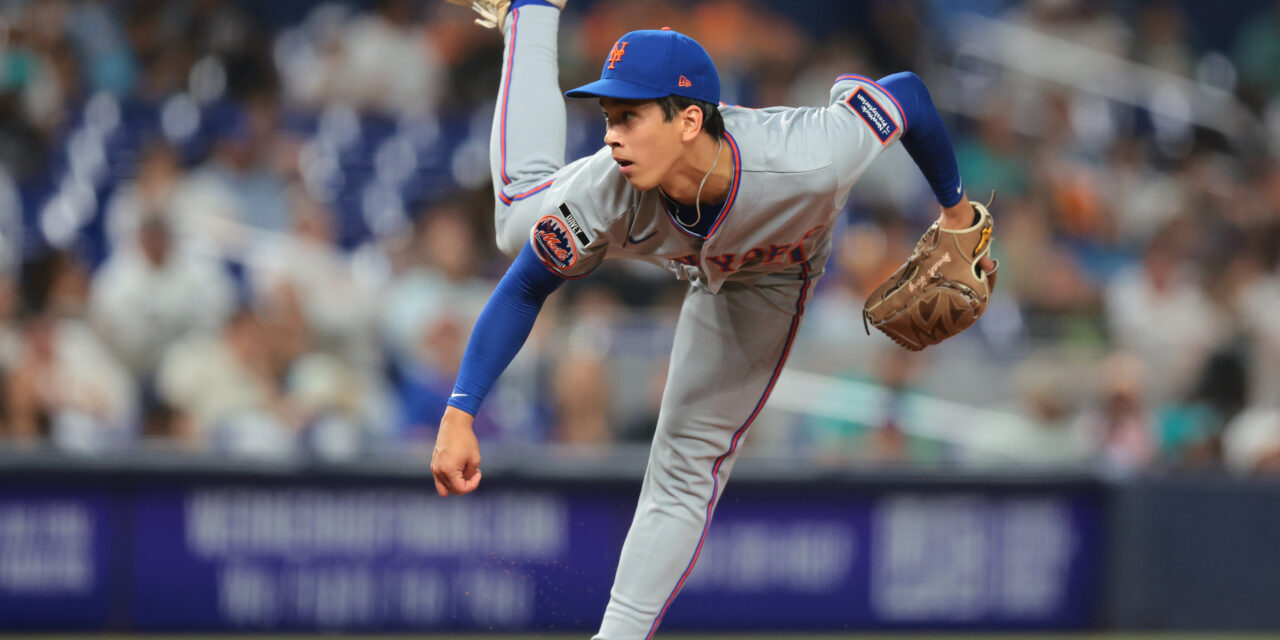
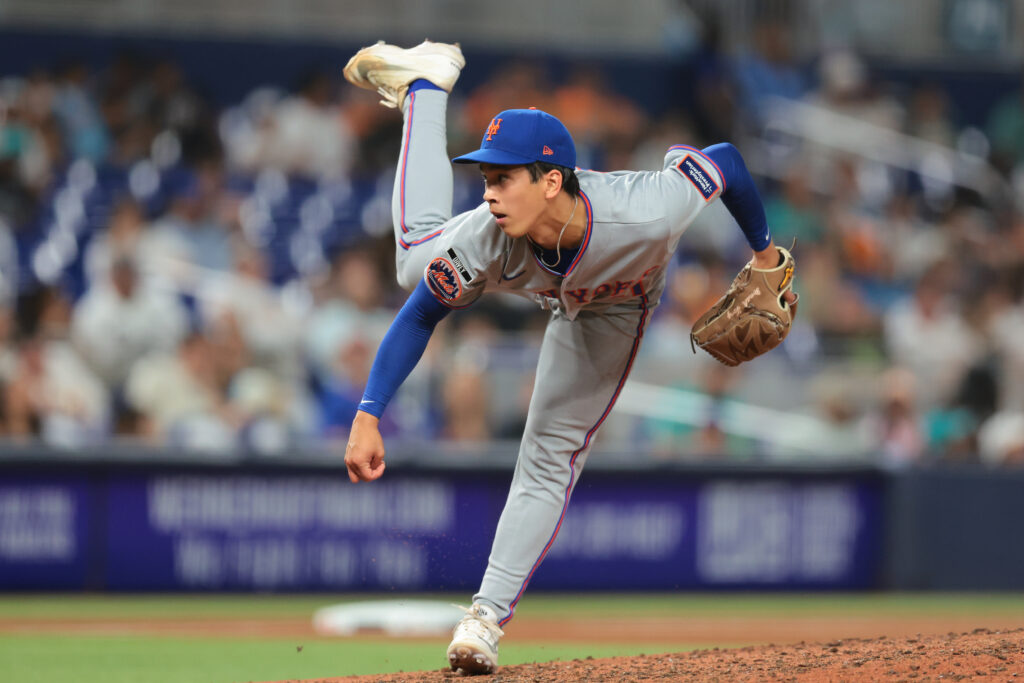
Much was made of the fact when Tong returned to the majors his arm angle was much lower than in 2025. Steve Gelbs of SNY later revealed on a game broadcast that was not intentional. This drop in arm angle also lessened the movement profile and effectiveness of his fastball. I do not have exact arm angle readings for this recent stretch, but his release points seem to show that it is much closer to where it was in 2025 than in his 2026 major league stint.
With this arm angle return, his movement is back up on his fastball with it sitting near 19 inches of IVB in most of his starts. This has helped him run a 27.3% whiff rate on the pitch alongside a 39.8% whiff rate on his changeup. The whiff rate on both pitches are roughly 5% better than they were heading into this stretch.
Despite throwing from a higher arm angle, he still has the horizontal movement across all of his pitches that he was flashing when his arm angle was lower. As mentioned above, none of his glove side movement is amazing, but it is still an improvement from where it was in spring training.
Sam Navarro-Imagn Images
What Has Gone Well and What Hasn’t?
Obviously, the results in terms of ERA and WHIP are great across this stretch. FIP does not like him sitting at 4.91 though the high walk rate is likely a large reason behind that. That walk rate is significantly ballooned by two outings where he walked four batters. In every other start he walked two or fewer. Across his last three starts Tong ran a better but still not great but better 9.5% walk rate which led to a 3.51 FIP.
Tong’s 29.8% whiff rate across his last eight starts sits in the 72nd percentile while his 31.1% called strike plus whiff rate sits in the 82nd percentile. He excelled at limiting contact in the zone with a 75.6% zone-contact rate (87th percentile), limited hard contact with a 27.5% hard-hit rate (88th percentile) and he attacked the zone with an above average 48.7% zone rate.
He did struggle to keep the ball on the ground with only a 31.4% ground ball rate (13th percentile). When batters did make hard contact, it was typically in the air which led to an 8.8%-barrel rate (18th percentile). He struggled to generate chase with only a 21.6% chase rate, though that does make some sense with how much more he attacked the zone. His 11.8% walk rate was in the 44th percentile.
What Does This Mean for the Future
We may not need to wait long to see Jonah Tong back in the majors to see how these changes stack up against major league hitting. You can find a large spectrum of analysis and thought on how these changes will translate to success or struggle from the fine folks at Baseball Prospectus, to analysts like Lance Brozdowski, as well as recent breakdowns from Baseball America.
My take is that Jonah Tong right now looks like he could be a backend starter that should not see the lineup a third time through. What is unclear is if this is a largely developed version of Tong, or a new foundation for him to build on. If he could get that velocity and spin up on his curveball, could he turn into more of a mid-rotation starter? Now that he has started to create some separation between his cutter and slider could he start to get more glove side movement? Is there another velocity jump coming in the offseason that raises the entire arsenal? As it stands, I would not be surprised to see Tong as a low four ERA starter the remainder of the season with natural small sample variance baked in.
The big questions the Mets will have to ask themselves to revolve around what Tong’s realistic ceiling is, and how that compares to his ceiling as a reliever. Say he only had to face one inning worth of batters and could gas his velocity up to 97-99, working as largely a two-pitch pitcher between his fastball and changeup. Could that be a legitimate leverage arm, potentially even a future closer? Is that more valuable than what he can do as a starter? This is likely something the Mets will want to determine sooner rather than later if they want him to make an impact on the 2027 team, so he has the entire offseason to prepare. Otherwise, they may find themselves utilizing his second option in the spring and facing these same questions in a year.
At the least while Tong has not yet taken the big step forward that we would have hoped to have seen by this point in the season, he has undoubtedly made improvements. He is finally showing some separation and consistency with his secondary pitches and is doing so without losing the profile that made his fastball so exciting. He should be in the majors soon to put all of this to the test.