It is very easy to quickly call a top prospect a bust, especially when the New York Mets have seen their fair share. Lastings Milledge, Amed Rosario and Fernando Martinez are just a few. When determining what the line is for bust or not it is easy to look at where the prospect ranked on top-100 lists.
The Mets in recent years have seen many top-50 prospects debut. Some had immediate success like Nolan McLean and Carson Benge. Some did not. This article will focus on two consensus top-30 prospects many Mets fans may have already written off, Brett Baty and Francisco Alvarez.
Process Behind This Analysis
This article utilized top prospect lists from MLB Pipeline, Baseball Prospectus, Baseball America and ESPN from 2011-2026. For the metrics in the created graphics, Statcast, Fangraphs and Baseball Prospectus’s Rob Orr’s Streamlit App were used.
The average across the lists was taken for both Baty and Alvarez and they were compared to the players who averaged seven spots above or below them.
For Francisco Alvarez it is technically three spots before and seven after as he averaged the fourth-best prospect.
For both Baty and Alvarez this article compares their careers so far vs the careers of all the players. The last two years are compared to the same points in the careers as their peers by plate appearances.
So where do they rank among their peers?
Brett Baty
In terms of results it is clear even looking at the last two seasons Brett Baty has underperformed his prospect status. Offensively, he should be at least a 109 WRC+ to be in line with his peers. By fWAR he should be averaging 2.8 fWAR. It should be noted that is roughly describing his 2025 season where he put up a 109 WRC+ and a 2.7 fWAR/162.
Under the hood there are reasons to have some degree of optimism he could come closer to the average for the draft pick when compared to players who have had similar playing time to him. He hits the ball very hard and has plus bat speed. He does not make elite contact, and he has too much swing-and-miss but it is usable.
He ended 2026 strong and will have 2027 to show that the start of 2026 was just a blip. Baty is one year older than his peers at this point in their careers, but he was also an older draft pick that lost a year due to there being no 2020 season as a result of the COVID-19 pandemic.
Francisco Alvarez
For Francisco Alvarez the bar is arguably higher than it is for Baty because he was a true blue-chip prospect.
He has had his moments, and for his career he has technically put up above average value by fWAR. But an injury-plagued 2026 drags down his recent seasons. It is hard to truly call him a bust when he averaged 2.8 fWAR per 162 over the last two seasons, but it is absolutely reasonable to be disappointed based on prospect pedigree.
It should be noted that while Alvarez is in line with top prospects overall at the same point in their careers, Alvarez is roughly four years younger when compared to catchers at this point in their careers. Adley Rmustchman was still a rookie at the same age Alvarez was in 2026.
Like Baty, Alvarez hits the ball very hard. He does not make near as much contact as a top-five prospect would be expected to make, has significantly more swing and miss and chases too often. With his aggression, Alvarez could benefit from pulling the ball in the air more and truly capitalizing on his plus power.
Alvarez still brings significant value as an above average hitting catcher. There is some reason to think that being further removed from his knee and hand surgeries his defense could bounce back to at least some degree. There were signs of that in the second half of 2026. He is still young and could develop more on both sides of the game.
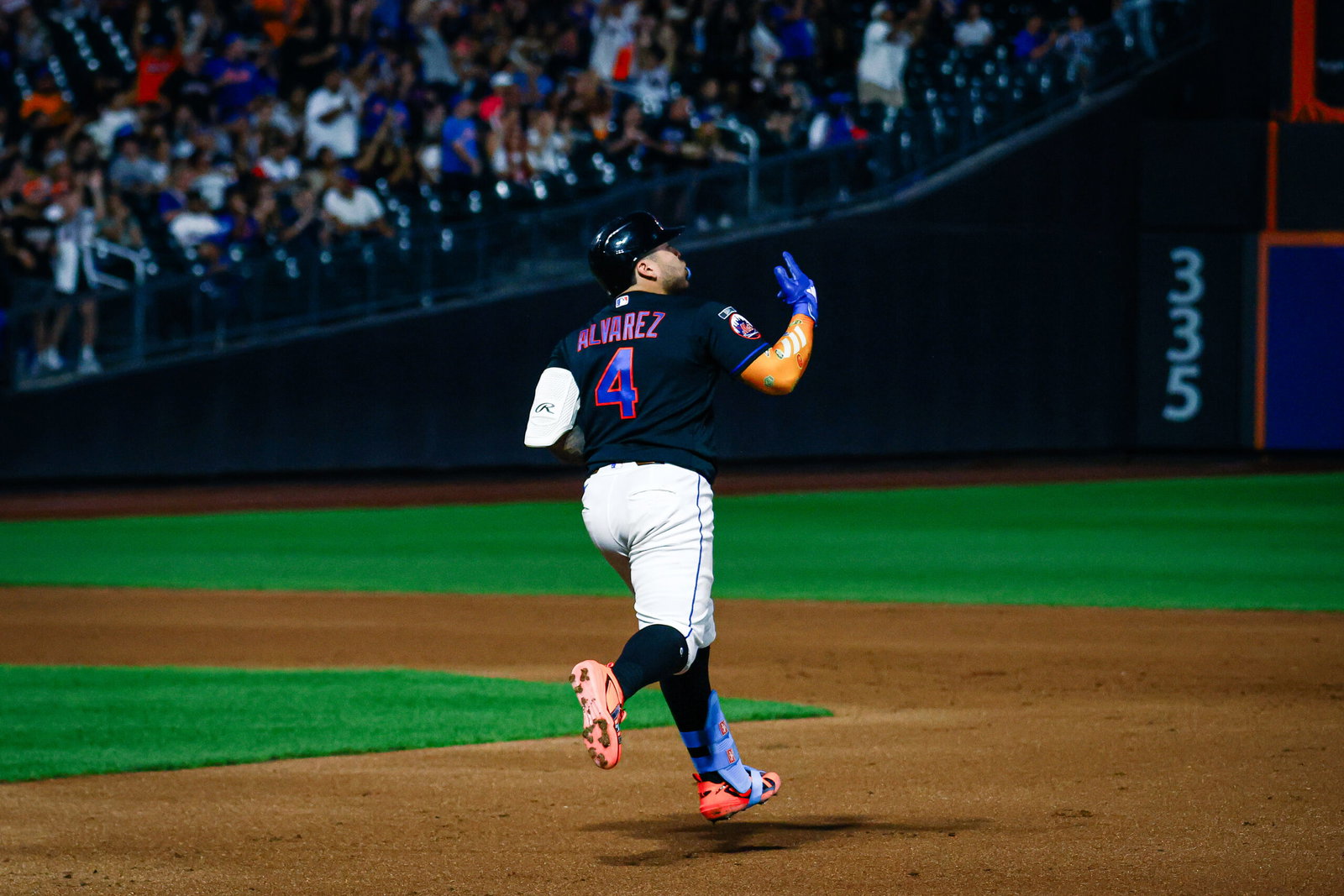
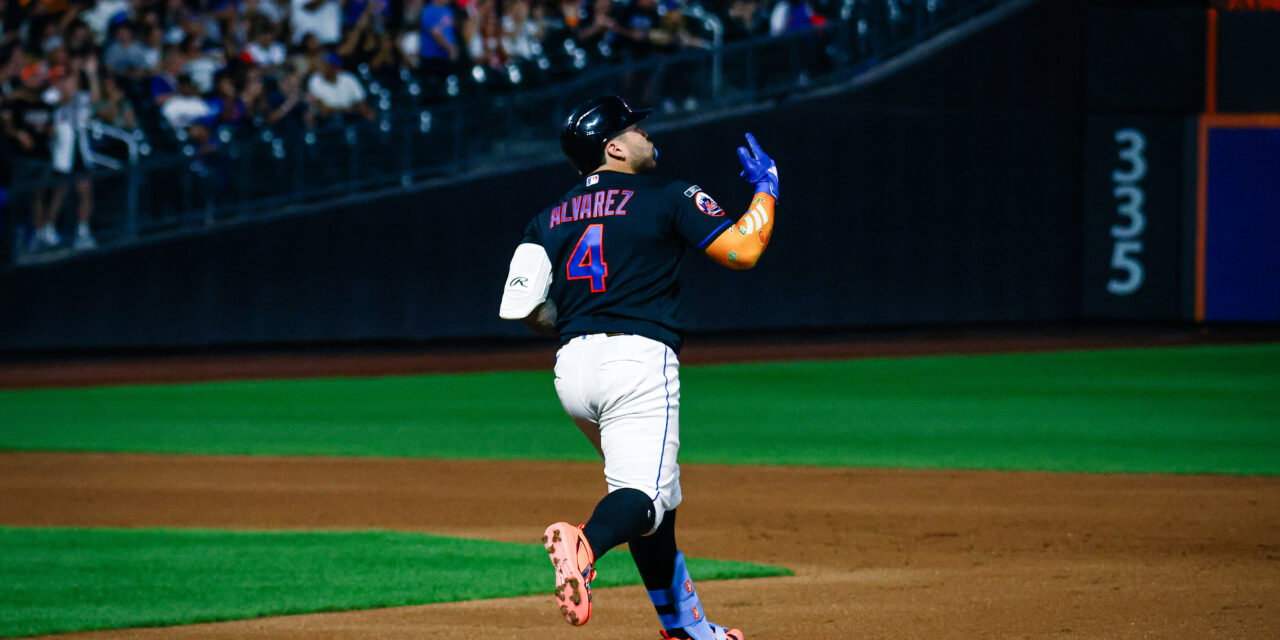
Francisco Alvarez by Berto Carlo
What Can We Learn From This?
There are two main takeaways from this: expectation setting and timeline setting.
Timeline setting is straightforward: it can be frustrating to not see prospects produce immediately. How exciting was it seeing Nolan McLean and Carson Benge compete for the 2026 rookie of the year? But, many top prospects take time to adjust to the majors.
Dansby Swanson put up a 75 WRC+ across his first three seasons and 1,229 plate appearances. He only put up 2.2 WAR across those three seasons. More recently, CJ Abrams was a negative WAR player his first season and was not an above average hitter until his third season int he majors. he did not truly break out until year four.
A top-30 prospect sounds like they should be expected to be a superstar but over the last 15 years across their careers they averaged a 98 WRC+ and a 1.2 fWAR per 162.
For a top-10 prospect it is a 109 WRC+ and a 3.1 fWAR per 162.
Even when prospects are rated this highly many still do not succeed. Becoming an average player, while a disappointment for the pedigree, is still arguably a good outcome.
Final Thoughts
Baty and Alvarez, while disappointments compared to their prospect pedigrees are by no means busts. They are both valuable players to have on the roster, but unless they take a step forward neither is likely to be a long term solution for the team.
One other thing this shows is that the floor for prospects at this level tends to be quite high, especially for top-10 prospects. For the top-10 prospects only eight of 52 have averaged less than 2.0 fWAR per 162, only seven have averaged less than 1.0 fWAR/162, and only two averaged negative WAR (Nick Senzel and Jesus Montero).
For the top,30 prospects, 22 of 32 averaged less than 2.0 fWAR per 162, 13 of 32 averaged less than 1.0 WAR per 162, and only four averaged negative WAR (Noelvi Marte, Lewis Brinson, Mike Olt and Carter Kieboom).
If you by the same point in the players’ careers as Baty and Alvarez for the top 30 prospects only 8 of 20 players averaged less then 2.0 WAR 162 and only three averaged less than 1.0 fWAR per 162. For the top-10 10 of 46 averaged less than 2.0 WAR per 162 and 8 of 42 averaged less than 1.0 fWAR/162.