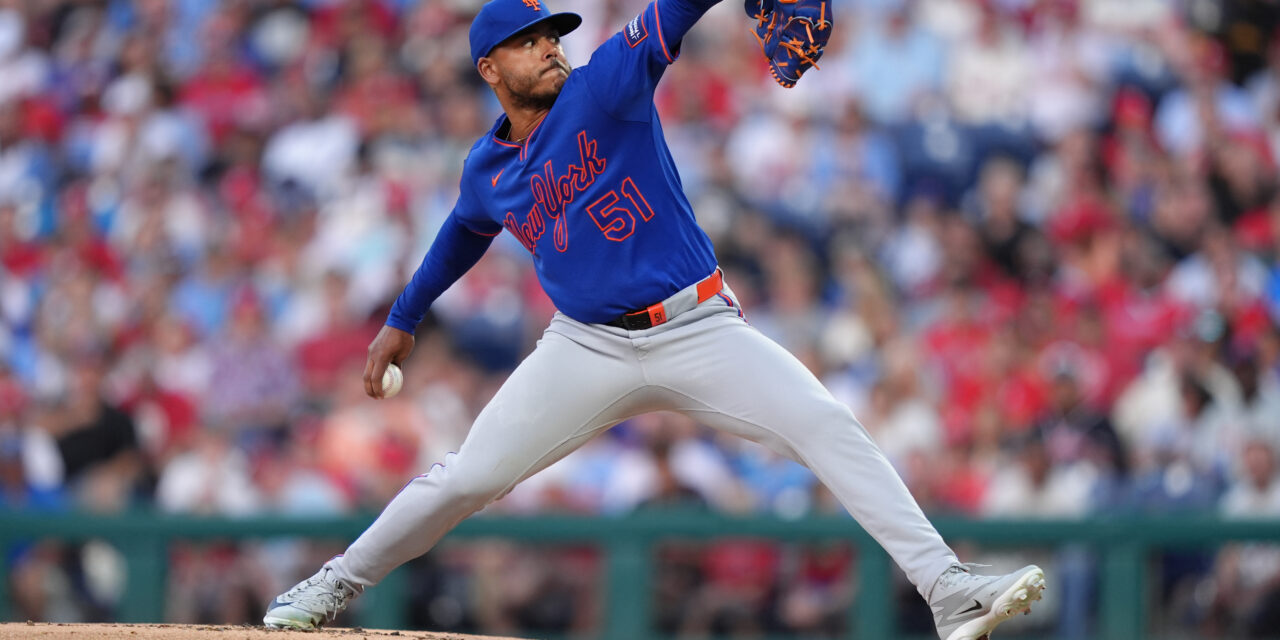
Freddy Peralta, SP
Position: Starter
Bats/Throws: R/R
Age: 30 (June 4, 1996)
2026 Traditional Stats: 20 GS, 104.1 IP, 4.66 ERA, 1.44 WHIP, 104 SO, 44 BB
2026 Advanced Stats: 90 ERA+, 22.3 K%, 9.4% BB%, 3.82 xERA, 4.38 FIP, 4.25 xFIP, 0.2 bWAR, 1.2 fWAR
Contract Status: Free Agent, $8 million 2026 contract
Rundown
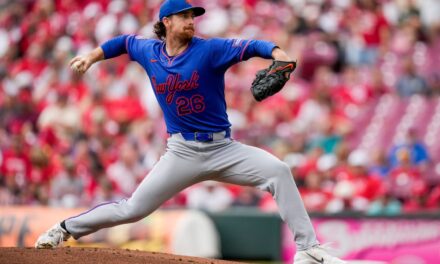
At the start of June, Freddy Peralta had a 3.63 ERA and 1.32 WHIP. Across his next 23 1/3 innings and five starts, he put up an 8.49 ERA and 1.71 WHIP. Peralta has had ebbs and flows in his career, but this is the worst stretch of his career. He did have a better performance in his second start of July, where he called his own pitches and worked around multiple errors and a weird outing following that. In some ways it is somewhat of a bounce-back, pitching to a 3.00 ERA across nine innings in those two starts, but at best it is really just a potential course correction in progress.
Peralta has had a weird season. He dropped his arm angle again (it has fluctuated season to season), and this has led him to generate less extension. Until he started calling his own pitches, he threw his sweeper and slider less than previous years despite them being among his best pitches the year before. That may have also been why he decided to take control and call his own pitches.
Under the hood, his pitches do not look radically different than the year before. He is actually throwing his fastball with slightly more spin and is also getting more horizontal movement due to the lower arm angle with roughly the same drop. Recently, he has also started throwing it harder than last year, and from a pure “stuff” standpoint, it is a better pitch because of that, but it is generating fewer whiffs.
He is also throwing his curveball harder with more spin and movement, which has led him to increase his whiff rate on that pitch by 1% and his chase rate by 7.9%. It has been his best-performing pitch and has been his put-away pitch, but he does not throw it in the zone, so it has not been as effective at getting that third strike as his sweeper was in 2025.
A lot of his issues seem like they could be from sequencing and pitch mix. Peralta’s worst outings have come when he has thrown his fastball repeatedly in quick succession. This has been part of how Luis Torrens in particular has called games this year, with him calling the fastball roughly 6% more than Francisco Alvarez does. Alvarez calls his breaking pitches at a higher rate than Torrens, and when Peralta called his pitches in his second start in July, he threw his breaking pitches more than any other start. He threw his sweeper 20% more (ten times more) than his season average and his fastball seven percent less. He also threw his changeup half as much while keeping his curveball usage roughly the same.
The differences in the start he called:
- Four-seam Fastball – 52.6% to 45.6%
- Changeup – 21.9% to 11.7%
- Curveball – 12.5% to 15.5%
- Slider – 8.3% to 1.9%
- Sweeper – 2.9% to 22.3%
- Slow Curve – 1.6% to 2.9%
In his next start, the results were not as good as he struggled to find the zone – issuing five walks and allowing two runs in 4 1/3 innings – but there were some things to like. He continued to throw his curveball and sweeper at a higher rate, and across the board he saw some of the best whiff rates of the season so far. Peralta ran a 42.5% whiff rate and a 33.3% chase rate this start. He only threw in the zone 34.8% of the time, though, which contributed to the five walks.
A short start with five walks may not seem like a step in the right direction, and in some ways it could be viewed as two steps forward and one step back, but showing a strong ability to generate whiffs is something buying teams will want to see. This start alone brought Peralta up from the 65th percentile in whiff rate on the season to the 73rd percentile among qualified pitchers.
So if the issue is how and when Peralta was using his pitches, that should be an easy fix and one that could make teams more bullish on his second half potential. His last few starts before the deadline will put this to the test.
POTENTIAL LANDING SPOTS
Teams typically weigh more heavily what their model says when trading for a starting pitcher than what their ERA is because they are buying that pitcher’s future and not their past. If teams think that Peralta is largely the same pitcher he has always been they may still hope to get some discount, but not to the level fans may think when looking at his stats.
Two trade comparisons are:
- 2017 Yu Darvish (4.01 ERA) for INF Willie Calhoun (#82 prospect), RHP A.J. Alexy, and RHP Brendon Davis
- 2016 Andrew Cashner (4.76 ERA) for 1B Josh Naylor (previous year first-round pick) and RHP Luis Castillo
A prospect in the back quarter of the top 100 prospect lists and another younger prospect with upside is probably within the range the Mets would expect to get back for Freddy Peralta.
What also helps the Mets is Peralta’s salary. While Tarik Skubal would move most teams into the next luxury tax bracket, Peralta would not, which could help get more teams to bid for him.
1. Chicago Cubs
The Cubs are desperate for pitching. They recently traded Cole Mathis for David Peterson and that need is not much less after that trade. They have been heavily linked to Peralta for weeks and would make sense as a trade partner. The Mets already have clearly had trade dialogue in general since they traded David Peterson to them. A return could look like INF Pedro Ramirez and RHP Mason McGwire. Or maybe SS Jefferson Rojas and RHP Kaleb Wing if the bidding is strong enough. The Mets would probably love OF/1B Josiah Hartshorn, but I do not see the Cubs moving him.
2. Toronto Blue Jays
The Toronto Blue Jays have made it clear that they want starting pitching. They are already over the top luxury tax threshold so they may be a fit for Tarik Skubal. But if they do not trade for him, Peralta could fit their rotation well just behind Dylan Cease. The dream would be to acquire Arjun Nimmala, but he is likely part of the Blue Jays’ 2027 plans. Maybe starting pitcher Johnny King with a younger prospect like Juan Sanchez could make sense. If the bidding is high enough, maybe they could get JoJo Parker back.
3. Atlanta Braves
The Braves have never shied away from having big trade deadlines, and it is no secret that they need starting pitching if they want to have a chance at holding their ever-shrinking division lead. While the Braves have been linked to Tarik Skubal, his remaining salary would push them over the next level of the luxury tax, so they may prefer to trade for someone like Peralta who is much cheaper. A return of JR Ritchie may sound steep, but there is usually a tax for trading in division. If the Braves do not want to trade from the major league depth, maybe Cam Caminiti and Tate Southisene if the bidding gets high enough.