Six days after the worst start of his career, Kodai Senga had an outing that was nearly as bad on Friday.
It’s hard to rub a wound much deeper than giving up four runs in the first inning when you’ve already lost eight in a row.
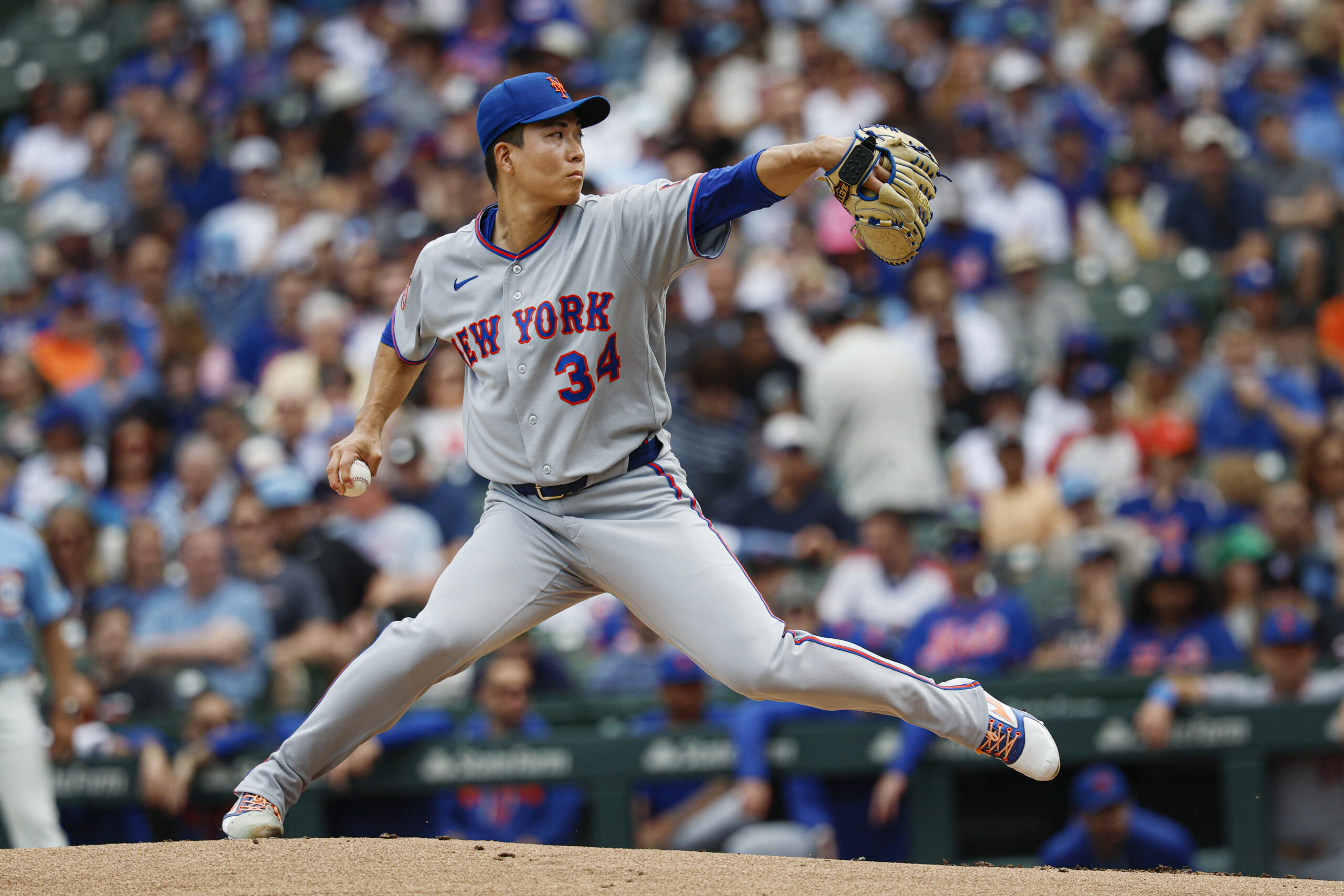
Kamil Krzaczynski-Imagn Images
The Mets’ offense, which has been the main culprit of this losing streak, didn’t fully flesh — but it wasn’t the main factor on Friday. They scored four runs on 14 hits, with a three-run second inning briefly cutting the deficit to one.
But Senga gave up two more runs in the bottom of the second. He allowed seven runs — six earned — overall. Before this week, he’d never allowed more than five runs in a start. He has now done it twice.
Also before this week, Senga had never given up a three-run homer in the majors. He’s also done that in each of his last two starts.
Senga made it through 3 1/3 innings this time, as opposed to 2 1/3 in his previous outing. That makes 13 earned runs allowed over 5 2/3 innings between his last two starts.
Senga threw a wealth of cutters on Friday. He threw it 38% of the time as opposed to his season mark of 21%. He got five swing-and-misses with the pitch, but he also surrendered a back-breaking three-run shot to Moisés Ballesteros with it in the first inning.
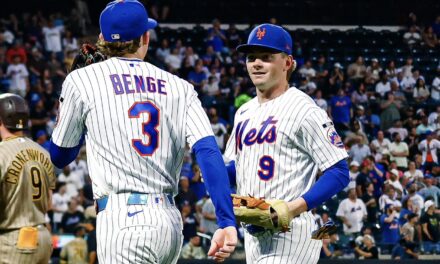
A frustrating aspect of it is that Senga was on his way to navigating through the inning. Alex Bregman ripped one down the line, but Carson Benge got to it quickly and held Bregman to a single. Senga got Ian Happ swinging with the forkball — which has still been an effective pitch this season — and the Cubs had two on with two out. Senga was a batter away from throwing a scoreless first.
Seiya Suzuki‘s go-ahead RBI single was a 78.2-mph floater that died in shallow right field. It could be fairly described as an unlucky hit against Senga. But then he got crushed by Ballesteros, and the outing had gotten away from him before he could hardly settle in.
The Mets, to their credit, didn’t fold right away. They rallied for a three-spot in the second to get within one.
But Senga couldn’t keep them in it. He allowed a two-run homer to Nico Hoerner, this time on a fastball up and in.
Senga got through the third inning unscathed, inducing a double play to get around a pair of baserunners.
Senga was ultimately pulled after allowing a one-out hit in the fourth.
Senga’s season, which got off to a promising start in his first two appearances, has taken a rapid spiral. Even last year’s second-half struggles weren’t this bad all at once. The last two outings have ballooned Senga’s ERA to 8.83.
It’s the first time in Senga’s MLB career that he’s failed to complete four innings in back-to-back outings.
If you’re looking for positives, Senga’s four-seam fastball and forkball have still been good. His fastball velocity is up slightly from last year.
His cutter and sweeper, on the other hand, had opposing batting averages of .500 entering Friday. The expected batting averages on those pitches were significantly lower but still ugly, in the mid to high .300s.
Senga’s strikeout and walk numbers aren’t that far off his career norms; he’s averaging about one extra of each in the early going.
But the home run numbers definitely stick out. Senga is averaging one home run per start and 2.08 per nine innings. As mentioned, two of those have been big blows recently, as the first three-run homers Senga has ever allowed in the majors.
The reality for Senga is that it doesn’t seem like he’s ever fully found a rhythm since his fantastic rookie season in 2023. He missed nearly all of 2024, and he had a dominant stretch in 2025 but was derailed by a midseason injury. Now he’s back, and he appears to be healthy, but he’s not the reliable pitcher that he was three years ago.
The velocity and forkball effectiveness are signs that Senga may not be a lost cause this yet. But these last two starts have been alarming, especially in relation to how generally good Senga has been in his MLB career.