With the 2025 season in the rearview window, everything is pointing to the 2026 Mets and how they can get to the postseason. 2025 was one of the more disheartening and disappointing seasons in recent memory, and surely, Steve Cohen and company will want to act swiftly to analyze and address what exactly went wrong and fix it.
The editors at MMO will be brainstorming their own offseason plans, taking the reins as GM and putting together our ideal offseason for a successful 2026 season. With Steve Cohen as our owner, the world is our oyster. The Mets will once again hit the luxury tax threshold in 2026. With that, here is the first MMO offseason plan.
Starting Rotation
At the end of the day, the rotation was the downfall of the 2025 Mets. After the first month of the season, Mets starters had the best ERA in baseball (2.24), allowed the fewest earned runs (39), home runs (six) and struck out the fifth-most batters (165). Post-All-Star break, everything changed. The Mets had the fourth-worst rotation ERA in baseball (5.31), walked the fifth-most batters (125) and had the second-worst BB/9 rate in all of baseball (3.67). They limited the long ball, but in the end, walks plagued them.
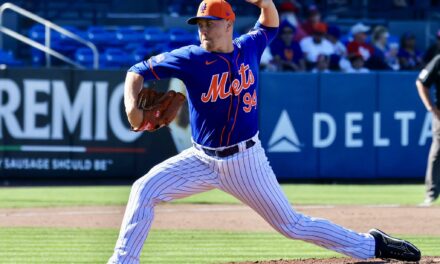
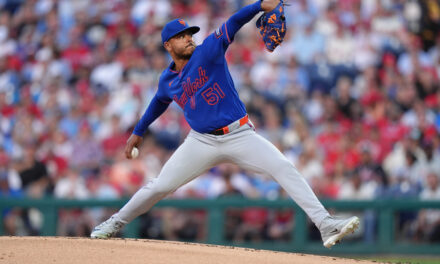
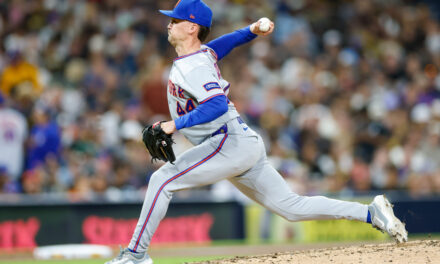
Of course, the injury bug hit hard as well. Sean Manaea and Frankie Montas were out for good chunks of the year, with Manaea a shell of his 2024 self. Montas, meanwhile, posted a 6.28 ERA in nine games for New York before his season ended with a UCL tear. He will miss all of 2026, too. Tylor Megill also will miss 2026, while David Peterson, Clay Holmes, Kodai Senga and Nolan McLean are the presumed starters entering the season. Brandon Sproat, Jonah Tong and Christian Scott would be the next men up.
So, where do the Mets go from here? Well, the free agent market for starters is thin, headlined by Dylan Cease, Shota Imanaga, Michael King, Ranger Suárez, Framber Valdez and Zac Gallen. All six received qualifying offers, meaning if the Mets signed them, they would forfeit a draft pick.
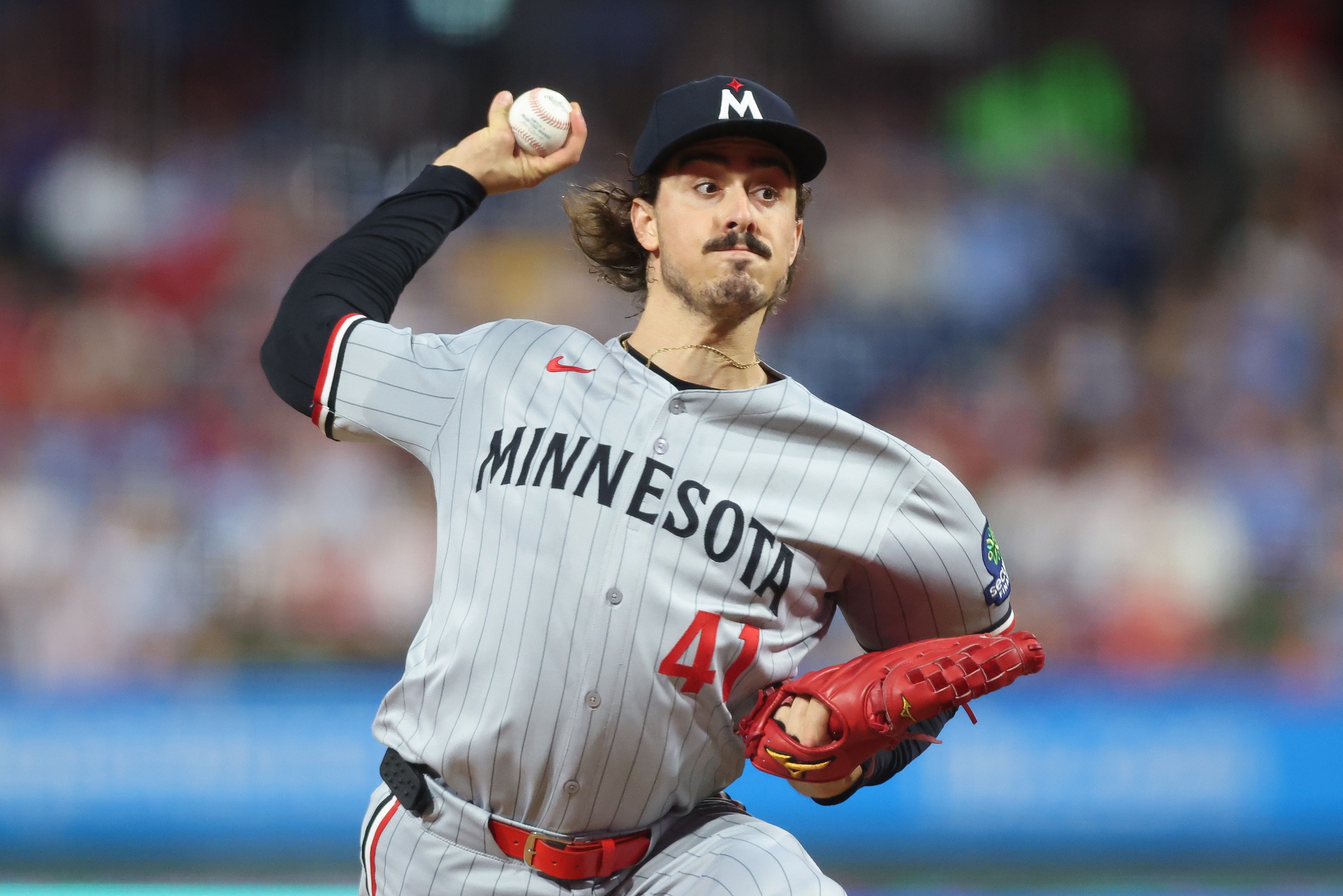
Joe Ryan. Photo Credit: Bill Streicher-Imagn Images
Minnesota’s Joe Ryan has been a name on the hot stove since the Twins’ Trade Deadline fire sale. He would slot in as an immediate upgrade to the Mets’ rotation, providing them with an ace and reliable number one, while their youngsters like McLean continue to develop. Ryan is under contract through the 2027 season and owns a career 3.79 ERA across 641.1 innings pitched. He’s struck out 719 batters in his five years with the Twins, walking just 148. For reference, Clay Holmes gave up 66 walks in 2025, while David Peterson gave up 65, a little less than half of Ryan’s lifetime walk numbers. Ryan walked just 39 in 2025. His 5.7% walk percentage in 2025 landed in the 87th percentile, while his fastball run value was in the 93rd percentile.
For a team that struggled with walks, Ryan would be a breath of fresh air in 2026. A possible trade could look something like this:
Twins Receive:
UTIL Jett Williams (MMO’s No. 1 prospect)
RHP Brandon Sproat (MMO’s No. 5 prospect)
3B Mark Vientos
Mets Receive:
SP Joe Ryan
You can never have enough starting pitching, so extending a short-term deal to RHP Zack Littell (10-8 between Rays and Reds in 2025, 3.81 ERA in 186.2 innings pitched with 130 strikeouts and 32 walks. While he’s a contact pitcher, he ranked in the 98th percentile in walk percentage in 2025, 94th in 2024, and 100th in 2023. Only Spencer Schwellenbach of the Braves and Nathan Eovaldi of the Rangers had better walk percentages than Littell in 2025 amongst starters.
Rotation:
RHP Joe Ryan
RHP Nolan McLean
LHP David Peterson
RHP Clay Holmes
LHP Sean Manaea
RHP Zack Littell
Bullpen
The bullpen was a revolving door for the Mets in 2025. However, while the rotation was shaky, the bullpen kept the team in games more often than not. When they faltered, it was mostly due to overuse. Mets relievers pitched the third-most innings in 2025 and posted a 5.6 fWAR. However, it’s a bit of an empty slate entering 2026, with Reed Garrett, Danny Young and Dedniel Núñez out for either all of the season or most of it.
First and foremost, re-sign Edwin Díaz. Give the man whatever he wants to be happy and call it a day. The summer additions of Ryan Helsley, Gregory Soto and Tyler Rogers were hit and miss. However, Rogers was excellent, posting a 2.30 ERA for the Mets in 28 games, and should garner a contract in the free agent market from New York.
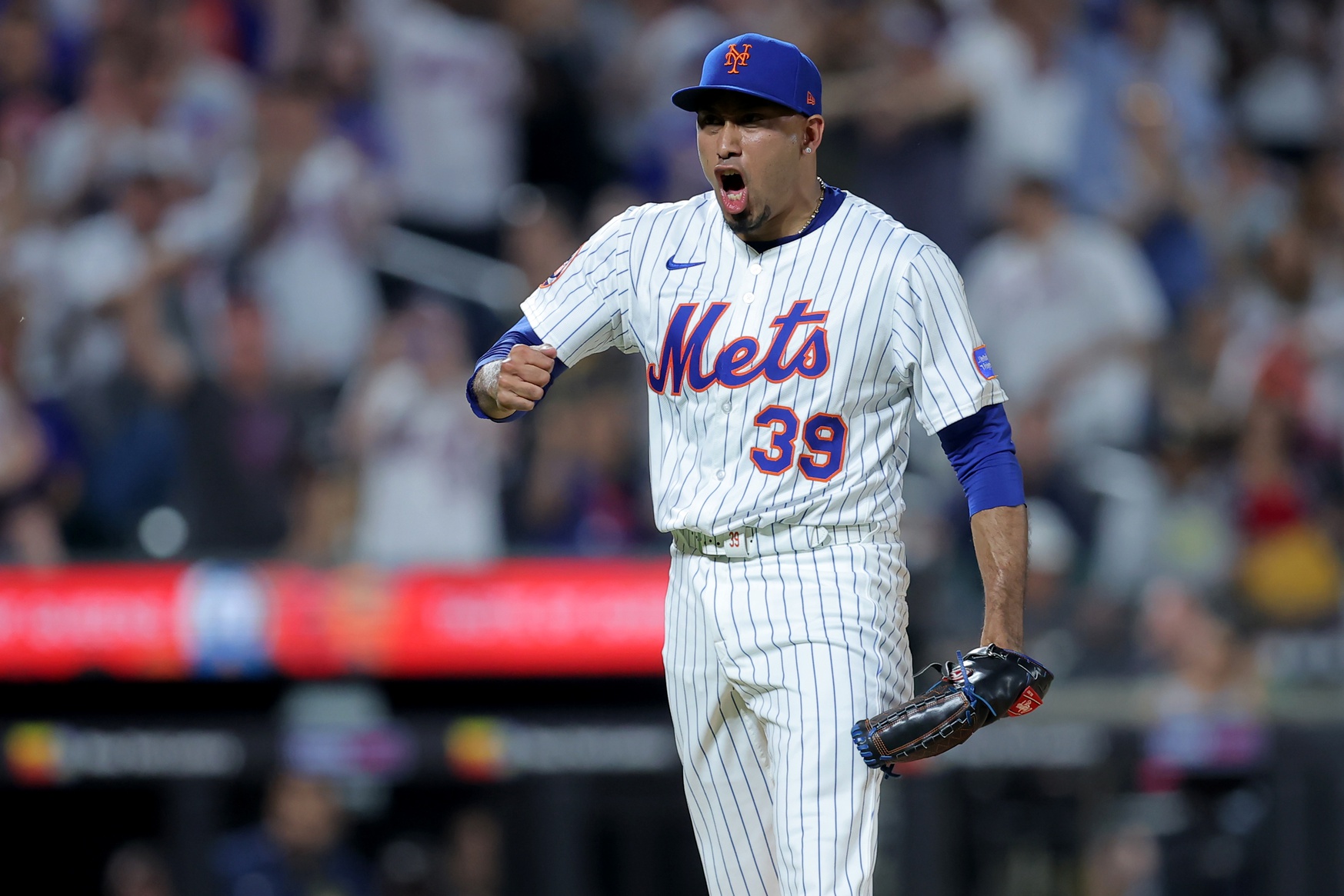
Photo Credit: Brad Penner-Imagn Images
Kodai Senga’s struggles in 2025 post-injury with command and stamina point to a move to the bullpen. Look at how things turned out for Roki Sasaki and the Dodgers when they moved their rookie there in 2025.
Bullpen stability has always been one of the bigger questions surrounding the Mets, so solidifying the seventh, eighth, and ninth-inning arms is crucial. Figure Rogers to enter the seventh, and Díaz to close out the game. However, for the bridge in the eighth, Kyle Finnegan is the man. Finnegan struggled with the Nationals in 2025 (4.38 ERA in 40 games) before being traded to the Tigers, but flourished when not used as a primary closer. In 16 games with the Tigers, the 34-year-old posted a 1.50 ERA.
Bullpen:
RHP Edwin Díaz
RHP Kyle Finnegan
LHP Brooks Raley
RHP Tyler Rogers
LHP A.J. Minter
LHP Sean Newcomb
RHP Kodai Senga
Offense
Re-signing Pete Alonso is the first order of business for the Mets. Outside of Alonso, center field has been one of the question marks hovering over the team’s head, but tendering Tyrone Taylor a contract and letting him man the position until prospect Carson Benge is ready makes more sense than signing a player in free agency. After all, he has a chance to win a spot on the roster this spring.
This is where things get interesting now. To take the offense to the next level, the Mets must sign a player who can not only DH, but also play first base and some third as well. That’s where Kazuma Okamoto comes in. You all know about Munetaka Murakami, but Okamoto owns a career .277/.361/.521 line over 11 seasons in the NPB, where he hit 248 home runs and 212 doubles. He offers more defensive versatility than some other players this free agency. In addition, he might even command a lower price because of the uncertainty around him and how he will adapt to MLB pitching (particularly velocity, which he has struggled with).

Kazuma Okamoto. Photo credit: Darren Yamashita-Imagn Images
For an offense that posted baseball’s fourth-best fWAR in 2025 (29.0 — they tied with the back-to-back world champion Dodgers), not much needs to change. They could use an additional power bat, which Okamoto takes care of. Outside of that, Starling Marte returns on a team-friendly one-year deal, more comfortable in his part-time duties, while the team dips into the farm and minor league deals to round out the bench with returning backup Luis Torrens.
Key Additions: DH Kazuma Okamoto (three-year, $43 million), SP Joe Ryan (trade), SP Zach Littell (two-year, $24 million), RP Sean Newcomb (two-year, $8 million), RP Tyler Rogers (two-year, $14 million), Starling Marte (one-year, $10 million)
Key Subtractions: SP Brandon Sproat (trade), UTIL Jett Williams (trade), 3B Mark Vientos (trade), RP Drew Smith (free agency), RP Ryne Stanek (free agency), RP Gregory Soto (free agency), RP Ryan Helsley (free agency), OF Cedric Mullins (free agency), OF Jesse Winker (free agency), SP Griffin Canning (free agency)