

Despite a rough start Monday night during the Mets’ 3-1 loss to the Boston Red Sox, Kodai Senga rebounded to throw six strong innings for the Mets.
On Monday, Senga surrendered three earned runs on five hits, striking out five and walking three batters. The right-hander struggled out of the gate, allowing all three of his earned runs in the first two innings. Jarren Duran pounced on the ace for a double (later scoring) in the first inning and an RBI triple in the third. Walks remained present in Senga’s start, issuing two over the first two innings. But as Senga settled down, so did his walks.
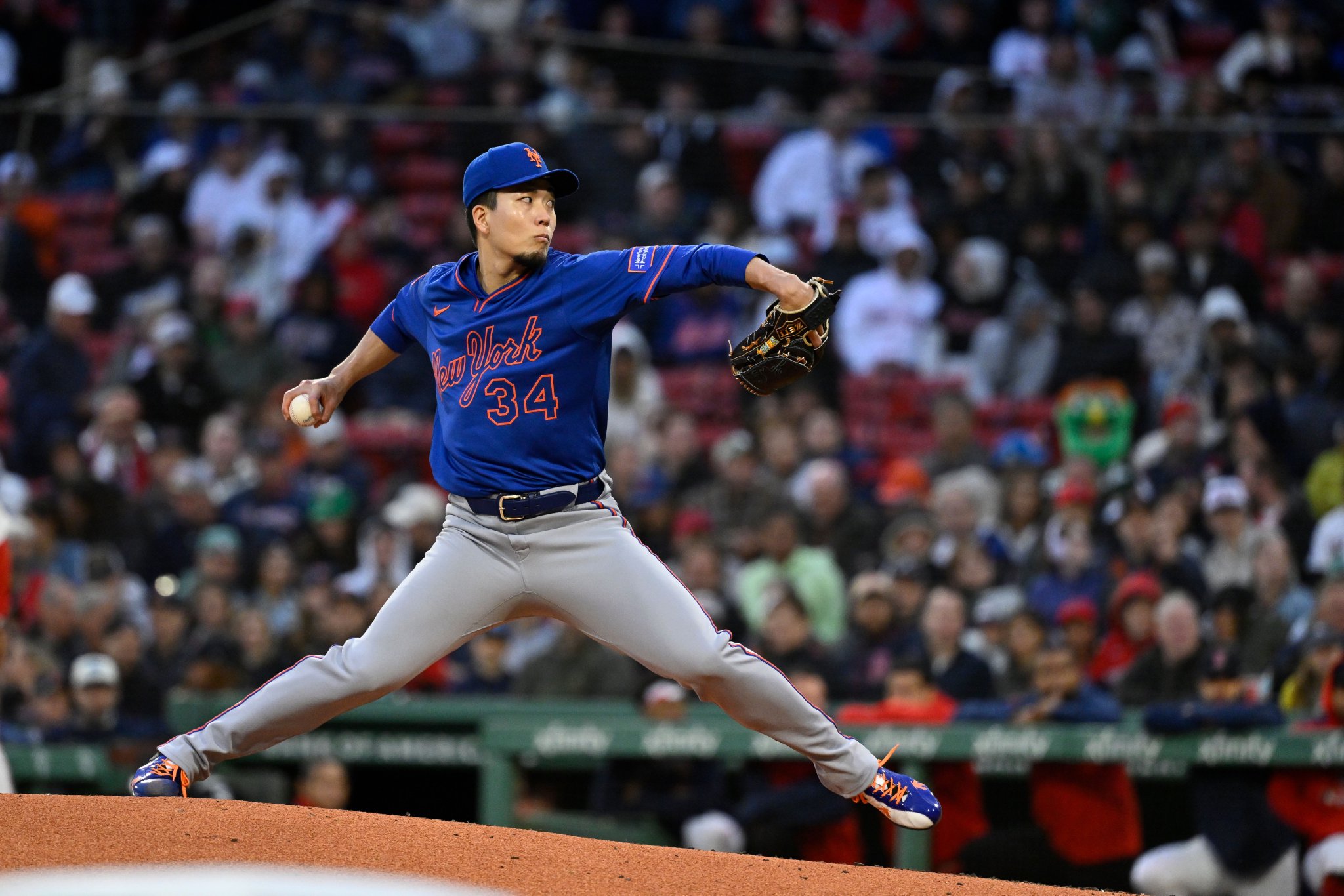
Kodai Senga. Credit: Eric Canha-Imagn Images
Ending his 1-2-3 fifth inning, Senga clearly wanted one more inning as he appeared to implore skipper Carlos Mendoza to let him back out for the sixth. Mendoza did, and Senga closed his outing with a nine-pitch, 1-2-3 inning. He set down the final seven batters he faced after a rocky start.
“I want to get as many outs as possible for the team,” Senga said after the game to interpreters. “I felt pretty confident with the feel I had out there,” so he asked for one more inning.
Throughout the 2025 season, Senga has thrown 50 1/3 innings, with a 4-3 record and a stellar 1.43 ERA.
Senga’s underlying metrics back up his dominance this season.
Opponents are hitting just .210 against him, and his expected batting average (xBA) sits at .226, suggesting his results are sustainable. He owns a 5.2% barrel rate and an 89.2 mph average exit velocity against, both strong indicators that hitters aren’t making quality contact.
While his 10.8% walk rate remains elevated, Senga’s ghost fork has been nearly untouchable, generating a 41.4% whiff rate. His overall whiff percentage ranks in the 65th percentile league-wide, helping him strike out 47 batters across 50 1/3 innings.
Despite dealing with shoulder fatigue in spring training, Senga has bounced back to become one of the most effective starters in the National League. He has allowed just one home run all season and has surrendered three earned runs or fewer in every start. With his pitch mix clicking, the 32-year-old remains a stabilizing force atop the Mets’ rotation.
Even on a night the Mets came up short, Senga’s gritty, battle-tested performance reinforced his status as the rotation’s anchor and one of the toughest competitors in the National League.