Much was made of the Mets’ pitching lab that opened in June 2023, but less attention was paid to the fact that it doubles as a hitting lab, too. The lab, according to an article posted Wednesday in The Athletic, is helping a number of hitters see better results.
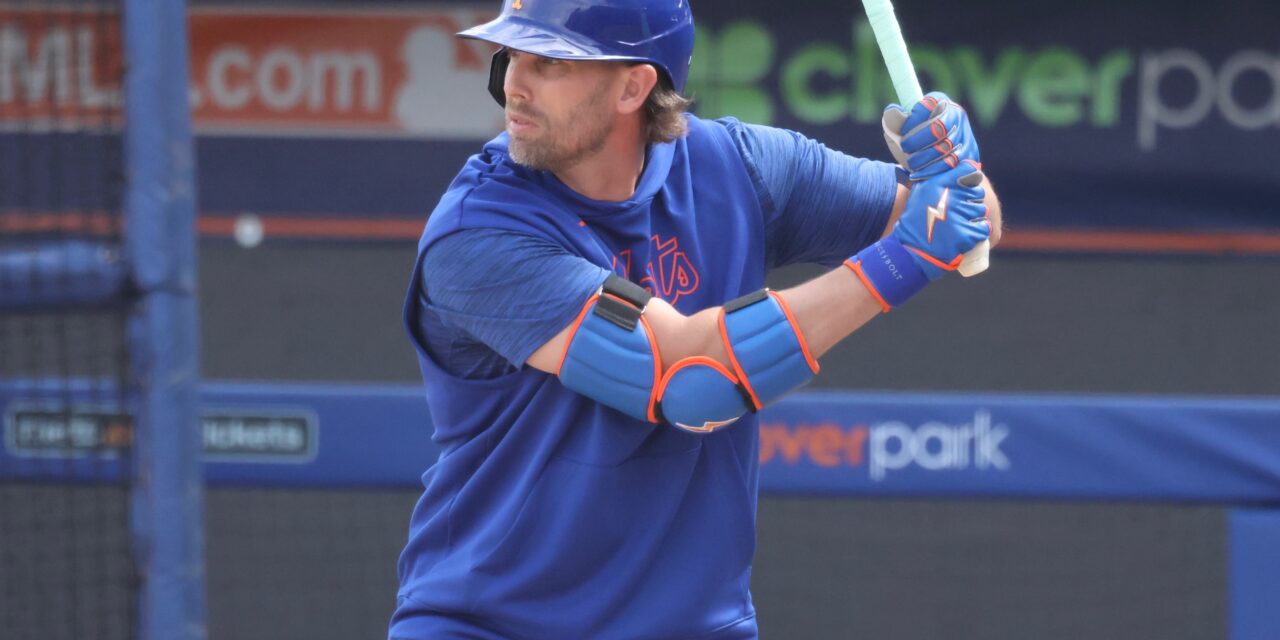
“It’s kind of incredible,” Jeff McNeil told The Athletic, who adjusted his hips to improve his swing after a recent lab visit. Hitters stand on force plates and are recorded by cameras all around them.
MLB teams installed pitching labs first for several reasons, according to The Athletic. One was that information learned at hitting labs can’t be applied universally the way pitching data generally can. While a jump in velocity is almost always a plus for a pitcher, there are conflicting views on whether the same is true for bat speed. Also, because a hitter must respond to a pitch, his swing isn’t repeatable like a pitcher’s delivery. To use a tennis analogy, the pitcher is serving and the hitter is returning.
“We’re now getting to the point where our knowledge is catching up to the technology,” co-hitting coach Jeremy Barnes told The Athletic. “We threw a lot of technology at everything real quick, and now we’re catching up and making sense of it all and blending it into the application.”
Brandon Nimmo, who hit .190/.277/.319/.596 after the All-Star break last year, spent a lot of time in the lab this winter, The Athletic reported. He has cut down on his leg kick.
“It’s small things, but we’re trying to find small differences that hopefully lead to more consistency,” Nimmo told The Athletic. “It’s the small things that really make the difference up here.”
Barnes said the lab could help find areas hitters need to change quicker than in the past, suggesting that the development of Brett Baty, Mark Vientos and/or Ronny Mauricio may have been sped up.
“The Juan Sotos are going to be the Juan Sotos, but how can you capture the next tier?” Barnes told The Athletic. “How can you capture the guy who’s going to really help our team win ballgames who without making that one big change was never going to be a contributor? Those guys can go out in trades, those guys can help our team. Having that depth of guys who can play in a big-league game creates a huge competitive advantage for an organization.”
Catcher Kevin Parada, a 2022 first round pick who hit 13 homers and posted a .663 OPS at Double-A Binghamton last season, said the lab helped him.
“My data showed I’d leg kick, but when I’d go to land, I’d be crashing into my front side,” Parada told The Athletic. “So I’d be putting way too much force during a short period of time instead of having control. So they found that that would give me issues with my bat path because that would throw off my body.”
Jett Williams, a shortstop/center fielder selected three picks after Parada in the same draft, showed promise in 2023 (.876 OPS, 13 home runs, 45 stolen bases across three minor league levels) but dealt with injuries last season and hit .215/.358/.298 in 33 games.
“It’s real nice to be able to see and just compare and contrast what ’23 was and what in ’24 was going wrong,” Williams told The Athletic. “For me, I love to look at swings – when I’m going good, when I’m going bad, putting them side by side to see the difference. For the most part, the data at the lab goes more in-depth than just video.”