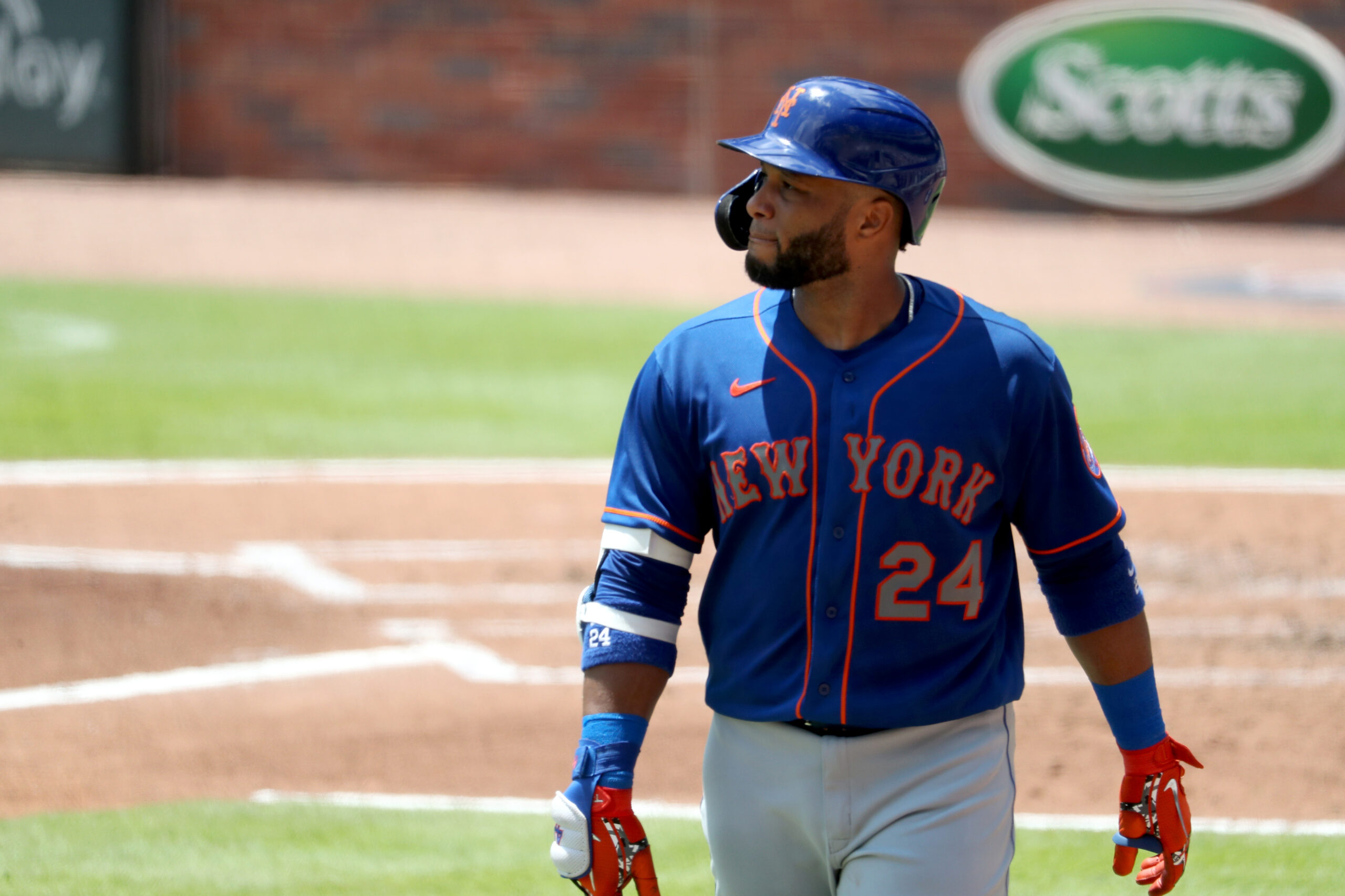
Credit: Jason Getz-USA TODAY Sports
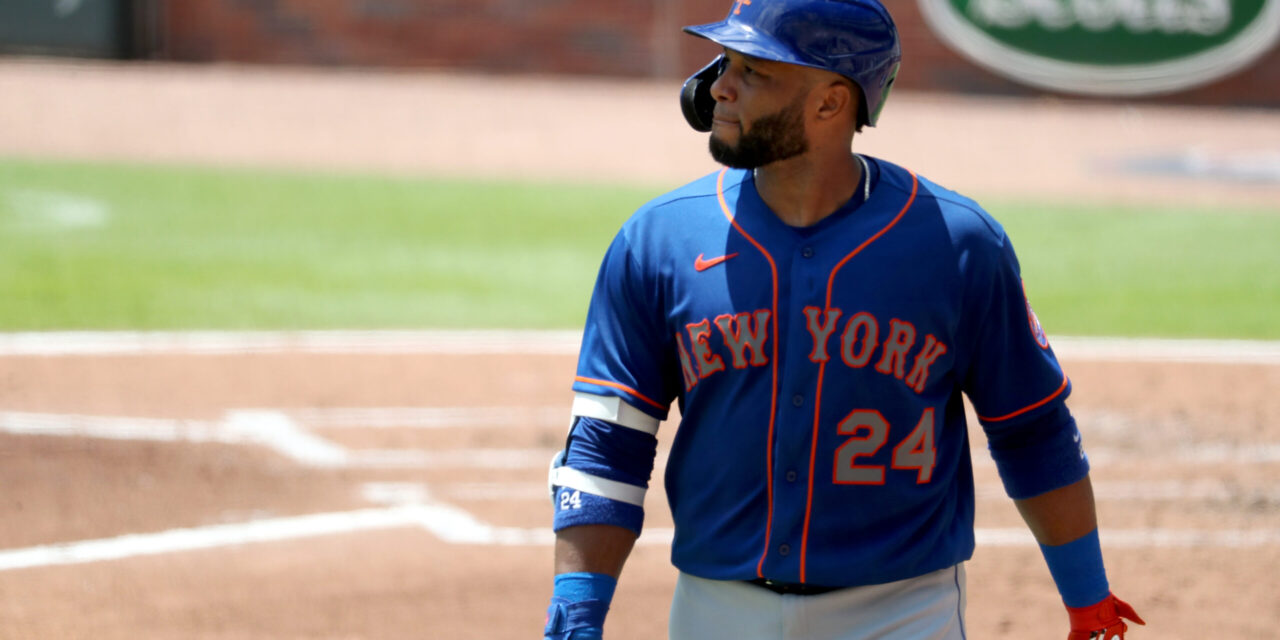
In the top of the seventh inning Saturday, with the Mets looking to rally down 4-2, Robinson Canó arrived at the plate for the third time that game. He didn’t hit the ball out of the infield against starter Humberto Castellanos, a journeyman who has found ways to stifle the Mets twice in seven days.
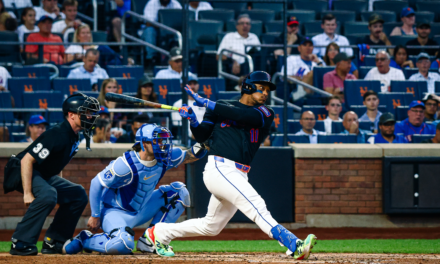
This time, Canó faced reliever Kyle Nelson. After a ball landed in the dirt, the 39-year-old chopped a cutter and a slider foul. He reached outside of the strike zone to chop another foul after that. Another slider–the fifth pitch of the at-bat–was coming in high and outside, but Canó swung. He made contact, albeit weak, and the ball rolled along a vacated hole on the left side of the infield.
It was his seventh hit of the year. It was the fifth that didn’t leave the infield.
That at-bat was a microcosm of Robinson Canó’s year with the Mets so far. He is, statistically speaking, one of the worst hitters in the league at swinging at pitches outside of the strike zone (he does it about 50 percent of the time), per FanGraphs. It’s a career-high for him. When he swings at pitches outside of the zone, he’s making contact under 60 percent of the time. That’s a career-low for him. He’s also swinging and missing at pitches at a rate more than double his career rate (16.1% vs 7.3%).
Despite all the swinging outside of the zone, his first hit on a pitch outside the zone came Saturday night, per Statcast.
And finally, when he makes contact with pitches, he’s hitting the ball on the ground more than he ever has before (58.3% ground-ball rate), and he’s hitting it weaker than he has since Statcast has started recording exit velocities in 2015.
All of this has culminated in a .206 batting average (.243 expected) and just a .544 OPS (his expected slugging is .411–more than 50 points below his career average). He has one extra-base hit–one of the lone fly balls he hit landed over the left-field wall in Citi Field–and he’s walked twice. He’s at 36 plate appearances this season, similar to the sample size from when his various winter ball adventures this offseason, and the results are the same.
How much longer will the Mets trot out Canó in the lineup?
His power is just no longer there. Over his last 107 plate appearances spanning this season and winter ball, he has four extra-base hits. Even if his bat speed is still there (it’s hard to track down if that’s even true), his eyes aren’t. He’s in the first percentile in chase rate in the league.
J.D Davis and Dominic Smith are the main losers of at-bats when Canó plays, especially when he gets run at designated hitter when the Mets have all three primary outfielders healthy and Jeff McNeil playing second base. Davis and Smith–Davis especially–has shown far greater success in recent history than Canó, both from a power standpoint and an ability to not chase pitches and get on base.
Luis Guillorme hasn’t performed much better offensively than Canó, but you’ll take Guillorme’s well-above-average defense at second base over Canó’s well-below-average defense (by outs above average and defensive runs saved) if you’re going to get a similar offensive output.
You don’t root for a player to fail. But you also don’t ignore reality–in significant sample sizes at that–when it comes to Canó’s performance. If he’s going to remain on the Mets because of his salary ($24 million each of the next two years with the Mariners paying about $4 million each year), he has to do it in a role that will negatively impact the team the least. It’s hard to envision how Canó will positively impact the team on the field right now.
You want to look at Canó and believe he can pull of something like Albert Pujols did in the second half of last year and into this season. But you’re banking on a 39-year-old somehow improving on numbers he thus far hasn’t. He was a solid player in 2019 when the Mets first traded for him, but he didn’t play 2020 clean. He didn’t play at all in 2021. It’s been three years since the real Robinson Canó has played for the Mets. It’s showing.
Buck Showalter asked, “What are we supposed to do, not play him?” when answering a question about the morality of playing Canó after a second positive performance-enhancing drugs test.
While Showalter reasonably stood by his player when pressed about why Canó was even on the team, it’s time for Buck (and the front office) to see if they’re ready to confront the real answer to that question. It might be “no.” It might be “not unless we have to.” It might be “only twice a week.” The answer certainly isn’t to keep hitting him sixth in the lineup.
In a largely bright start to the 2022 season for the team, Canó’s performance has been able to subside scrutiny because batters both before and after him (Mark Canha, Eduardo Escobar, Jeff McNeil) have all performed well. But what happens when some or all of them cool off a bit and Canó needs to step up and produce above-average results? Is there confidence that will happen?
It seems Canó will keep getting chances. But even this week, Canó sat against Carlos Rodon, then sat again the next day against righty Anthony Desclafani. Those chances may be dwindling. If the results don’t come, the next step will be the front office–namely Steve Cohen–analyzing if it’s even worth rostering him anymore.