Mandatory Credit: Wendell Cruz-USA TODAY Sports
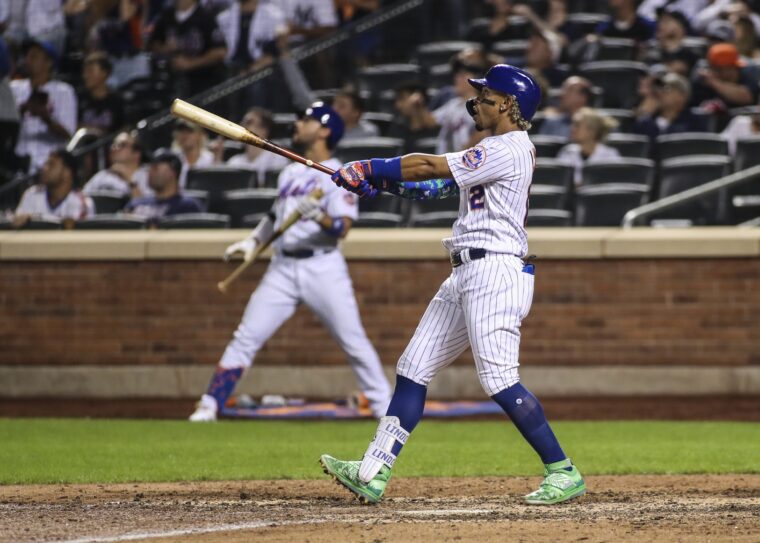
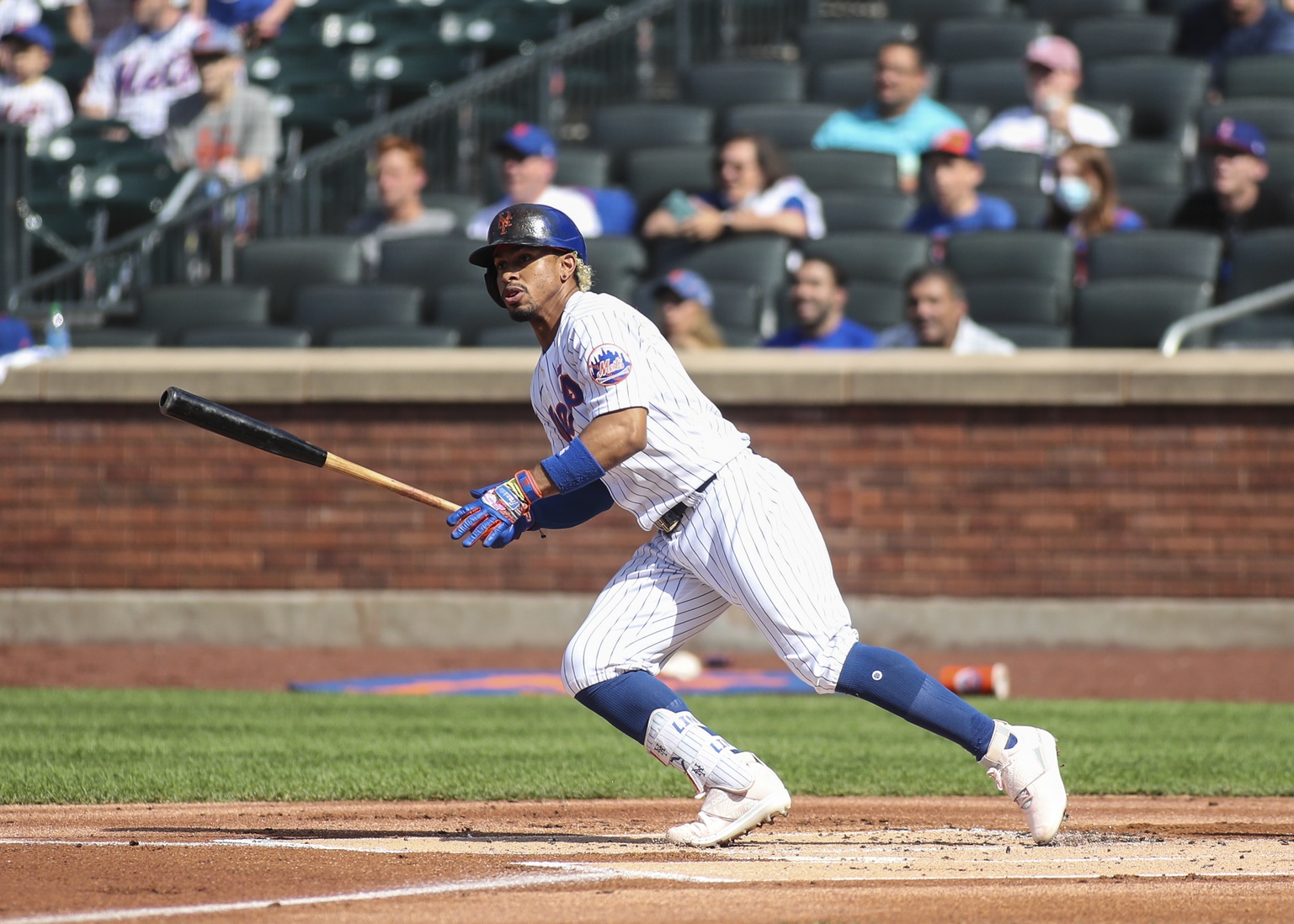
No matter how you slice it, Francisco Lindor‘s first season with the New York Mets didn’t play out how anyone expected it to — both individually and collectively as a team.
And of course, Lindor’s 10-year, $341 million contract extension that he signed on the eve of Opening Day doesn’t actually kick in until this upcoming season. Unsurprisingly, the whispers of, “Can he make it in New York?” and “Can he live up to his superstar contract?” are constantly being floated around in various places. Lindor probably knew those questions would be coming as he finished with a .230/.322/.412 line with a 103 wRC+ in 524 plate appearances.
All those numbers, along with his 2.7 fWAR, are all single-season career-worst marks for the 27-year-old shortstop over a 162-game schedule. As Lindor progressed through his first season in Flushing, I couldn’t help but look at his numbers, his contract, and the expectations associated with it all and not think about Carlos Beltrán.
The Acquisition and High Expectations
These two players were acquired by the Mets in different ways, as Beltrán was brought in via free agency and Lindor came to New York via trade. But still, the sheer magnitude of their respective contracts and what they represented are very similar.
For Beltrán, it was a seven-year, $119 million contract, which at the time was the largest deal in franchise history. The high-water mark for this category was re-set on a few different occasions, and it was most recently done by Lindor’s $341 million pact.
There’s a large gap between these numbers, but they each signified the same thing. Signing Beltrán was just one of many moves New York made prior to the 2005 and 2006 seasons, and it meant a new era was starting in Queens. Beltrán even said it himself during his introductory presser, calling them the “New Mets”.
Lindor’s deal was the biggest splash of what was an active offseason for the Mets under new owner Steve Cohen. After years of penny-pinching from the previous regime, this was proof that New York not only had the money to pay premium players, but they actually gave it to them.
Falling Flat in the First Year
When looking at the entirety of his Mets career, Beltrán is easily the most productive center fielder in franchise history. It didn’t start that way, though — he was likely viewed as a bust after his debut season with New York in 2005. Overall, the Mets had an encouraging year by posting an 83-79 record under first-year manager Willie Randolph, which was their first winning season since 2001.
Unfortunately, it was anything but an encouraging year for the team’s new superstar player. What’s interesting is how similar Beltrán’s overall stats from ’05 look to what Lindor just did when they’re put next to one another.

Outside of the big difference in batting average, these two had very similar debut seasons for the Mets on offense. If we dig in a little more, though, how they arrived at these numbers varies greatly.
Mandatory Credit: Wendell Cruz-USA TODAY Sports
Where the Difference Lies
Beltrán could just never really get it going in 2005. His first-half wRC+ (97) was nearly identical to what he did in the second half (95). Even if we break down his production on a month-by-month basis, his best streaks were only slightly above average (outside of May). From April to September, his wRC+ progression looked like this: 101, 116, 65, 103, 108, and 88.
Beltrán also hit 10 of his 16 homers in the first half, as his OPS dropped from .754 to .731 and his ISO went from .168 to .124 when looking at pre- and post-All-Star Game production. He most definitely didn’t end the year on a high note, which is the opposite of Lindor.
April and May were disastrously bad for the shortstop. He slashed .194/.294/294 with nine extra-base hits (five doubles, four homers), 11 RBI, and 22 runs scored in 200 plate appearances, which sussed out to a 70 wRC+. However, the rest of the year was pretty much on target with his career norms — Lindor’s final 324 plate appearances included a .252/.340/.482 line with 30 extra-base hits (11 doubles, three triples, 16 homers), 52 RBI, and 51 runs scored, which was good for a 124 wRC+.
A lot of this production came over the season’s final month, as the nine homers and 25 RBI he collected were the most he’s done in any month of his career. So, unlike his fellow countryman, Lindor conceivably got stronger as the season wore on.
What’s Next?
We’ll have to wait to make more comparisons between these two. Hopefully, some of it will continue, as well as going beyond what Beltrán accomplished (like, having a deep run into October that ends with hoisting a trophy in the air). Either way, I hate seeing some of the opinions that Lindor is going to be a drag on the payroll for the next decade because his season-long stats don’t look how they have in the past.
Sure, his first two months were horrific. He would’ve had to have gotten white-hot for a month or two in order to erase that from his overall stat line, which didn’t happen, but Lindor certainly returned to form for the majority of the season. By looking at how he finished the season, it seems like he’s comfortable in New York and capable of being successful. Even if he didn’t finish the year strong, past players like Beltrán have shown us that a one-year performance isn’t a good predictor of someone’s potential to thrive in any particular market.
This year didn’t go how Lindor wanted, but there were plenty of moments where we saw the player we hoped the Mets had acquired last winter. And, as Beltrán proved, there’s still plenty of time to change the overall perception of his tenure in Queens following a poor initial campaign.