The 2004-05 offseason was one of major transition for the New York Mets. Following their 2000 National League pennant were four consecutive disappointing campaigns, including unsuccessful tenures from people like Roberto Alomar, Mo Vaughn, Jeromy Burnitz, and Art Howe.
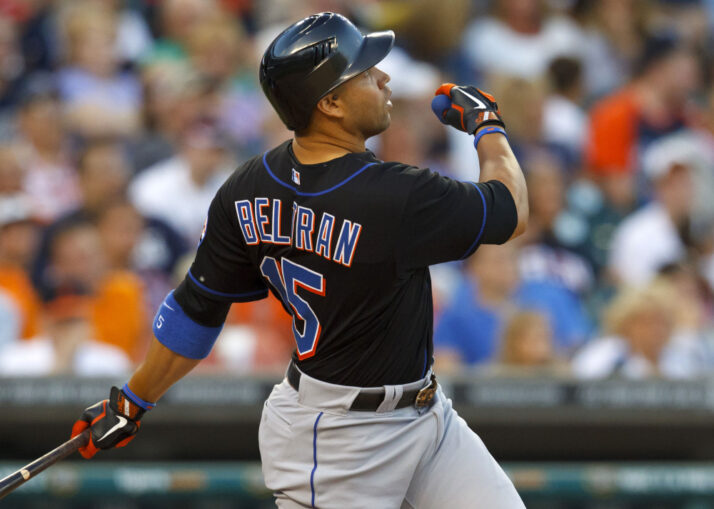
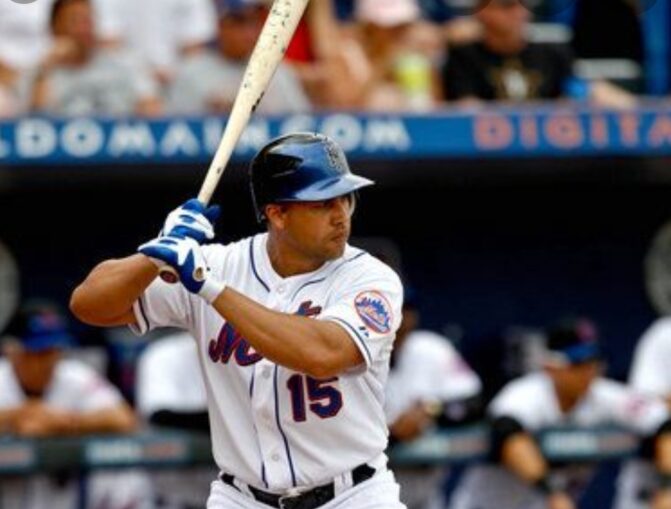
This transition started in November 2004 when Omar Minaya tabbed Willie Randolph as the organization’s next manager. Then, there was the big splash of landing Pedro Martinez right after he finished celebrating a World Series title with the Boston Red Sox. The white whale came in January 2005 when New York landed Carlos Beltran on a monster (at the time, at least) seven-year, $119 million deal, which included a no-trade clause.
Thus, the “New Mets” were born as the front office attempted to build around a couple promising stars in Jose Reyes and David Wright. There were a number of moves the franchise was hoping would propel them back in the direction of contending, but Beltran was easily the biggest piece, being dubbed the King of Queens before the ink dried on his contract.
Let’s not forget, while he was a dynamic player for a number of years at that point, this is partially because he was fresh off an insane postseason with the Houston Astros. In 56 plate appearances, Beltran slashed .435/.536/1.022 with eight home runs, 14 RBI, and 21 runs scored. Heading into his first year with the Mets, though, he had produced four straight seasons of at least 5.4 fWAR, 24 homers, 100 runs scored, 100 RBI, and 30 stolen bases.
A lot of changes were coming for the outfielder, but it wasn’t unreasonable to expect something similar to that production since the track record was there. And if we’re being honest, his 2005 campaign wasn’t awful — it’s not like underperformed to the degree Jason Bay did or anything — but with such high expectations, almost anything that didn’t resemble the prior years would’ve been a disappointment.
In virtually all other scenarios, a .266/.330/.414 line with 16 home runs and 78 RBI to go along with a 96 wRC+ and 2.3 fWAR would be the definition of decent production. Just not this one.
We’ve seen this kind of movie — to varying degrees — many times before. A successful/accomplished ballplayer comes to Queens, isn’t able to perform, and gets run out of town…to then usually return to their pre-Mets level of production elsewhere. Beltran had only played in smaller markets at this point in his career (Kansas City and Houston), carried the weight of a then-franchise-record contract for a team with high expectations of competing while playing in the sport’s biggest media market.
An unassuming first year of this long contract wasn’t what anyone had in mind, and it’d be easy for any ballplayer to not ever get himself right without experiencing a change of scenery. Not Beltran, obviously, as the three years that followed are the biggest reasons why he’s generally regarded as the best center fielder New York has ever had.
From that tough start, Beltran then rattled off two of the top-10 single-season performances in Mets history when using fWAR as the determining factor. The one that didn’t land in the top-10 still placed 34th overall. Here’s a quick reminder of how those stats looked:

To put this in perspective, Beltran accumulated 67.9 fWAR during his 20-year MLB career. This three-year stretch accounted for just a shade under 30.0%.
Beltran experienced productive spurts at times between 2009 and getting traded to the San Francisco Giants in 2011, but it was nothing like the above three-year stretch. He played 81, 64, and 98 games during his final three years with the organization, generating 2.9, 0.7, and 3.2 fWAR, respectively. Combining health with production was a challenge at times during the second half of his contract, but it’s hard to argue the kind of value he produced for the Mets from 2006-08.
If we want to put numbers to it, FanGraphs’ Dollars metric pegged his performance during this span to come in at $111 million. So, in essence, Beltran proved he was worth that large contract in less than half the time he spent with the club.
There will be many who will only remember him for striking out to end the 2006 NLCS, or more recently, view what he accomplished as tainted because of his role in the Astros’ sign-stealing scandal. Regardless of those things, I’ll remember him as being the sign that a new — and pretty fun, outside of the collapses — era in Mets history that successfully transitioned from the Mike Piazza years.
After his first year in Queens, Beltran could’ve easily gone down as a tremendous bust based on everything laid out earlier. Instead of retreating further into those struggles after 2005, he found a way to stand tall enough to likely forever be mentioned whenever someone wants to discuss Mets center fielders.