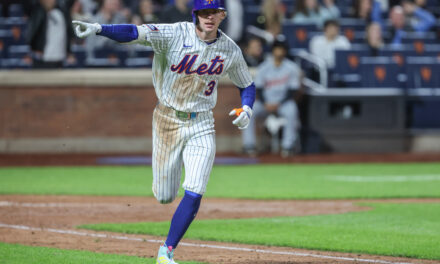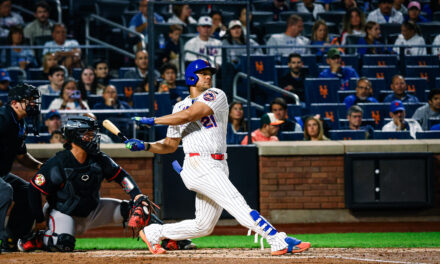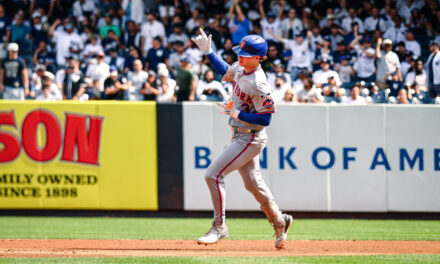
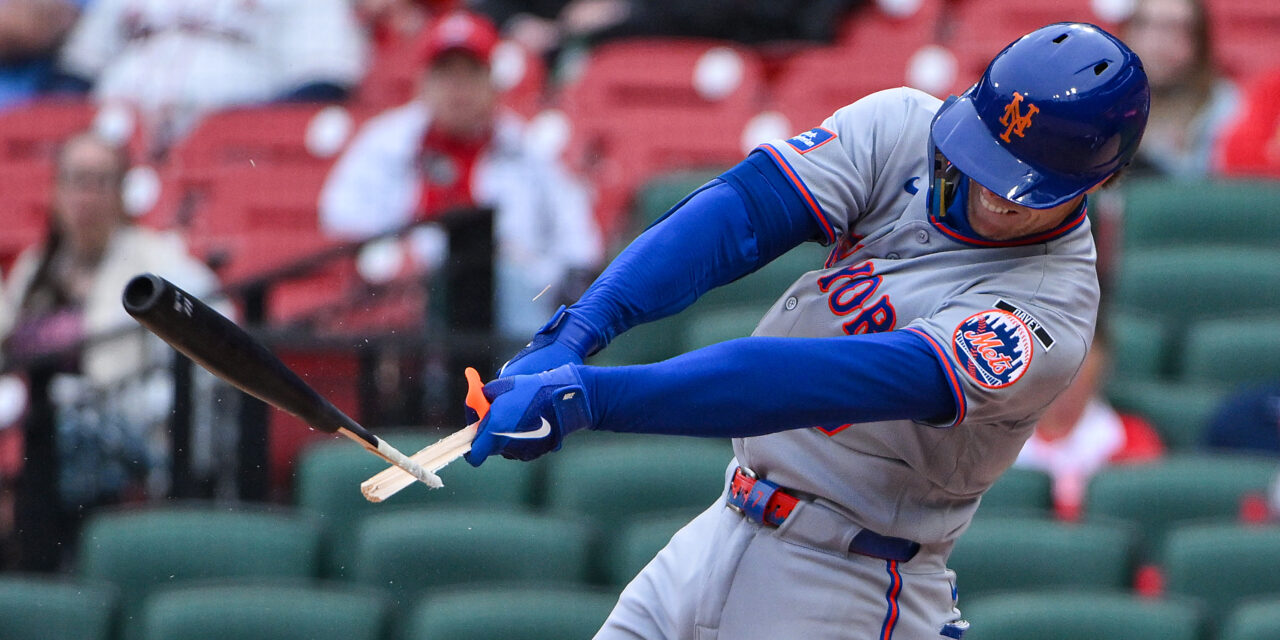
Brett Baty looked like he broke out in 2025. He took the ball deeper to combat his pitch recognition issues and utilized his plus bat speed to drive the ball. He traded contact rates for power and no longer focused on pulling the ball in the air, letting his plus exit velocities make up for going the other way. After a small swing adjustment in mid-April to prevent dropping his barrel, Baty slashed .265/.328/.459 across 119 games.
So far, he’s slashed .203/.197/.288/.485 across his first 16 games in 2026. He has yet to walk once.
Is this largely small sample size bad luck? Did he change anything with his swing? Or was last year largely just batted ball luck?
Let’s take a deeper look.
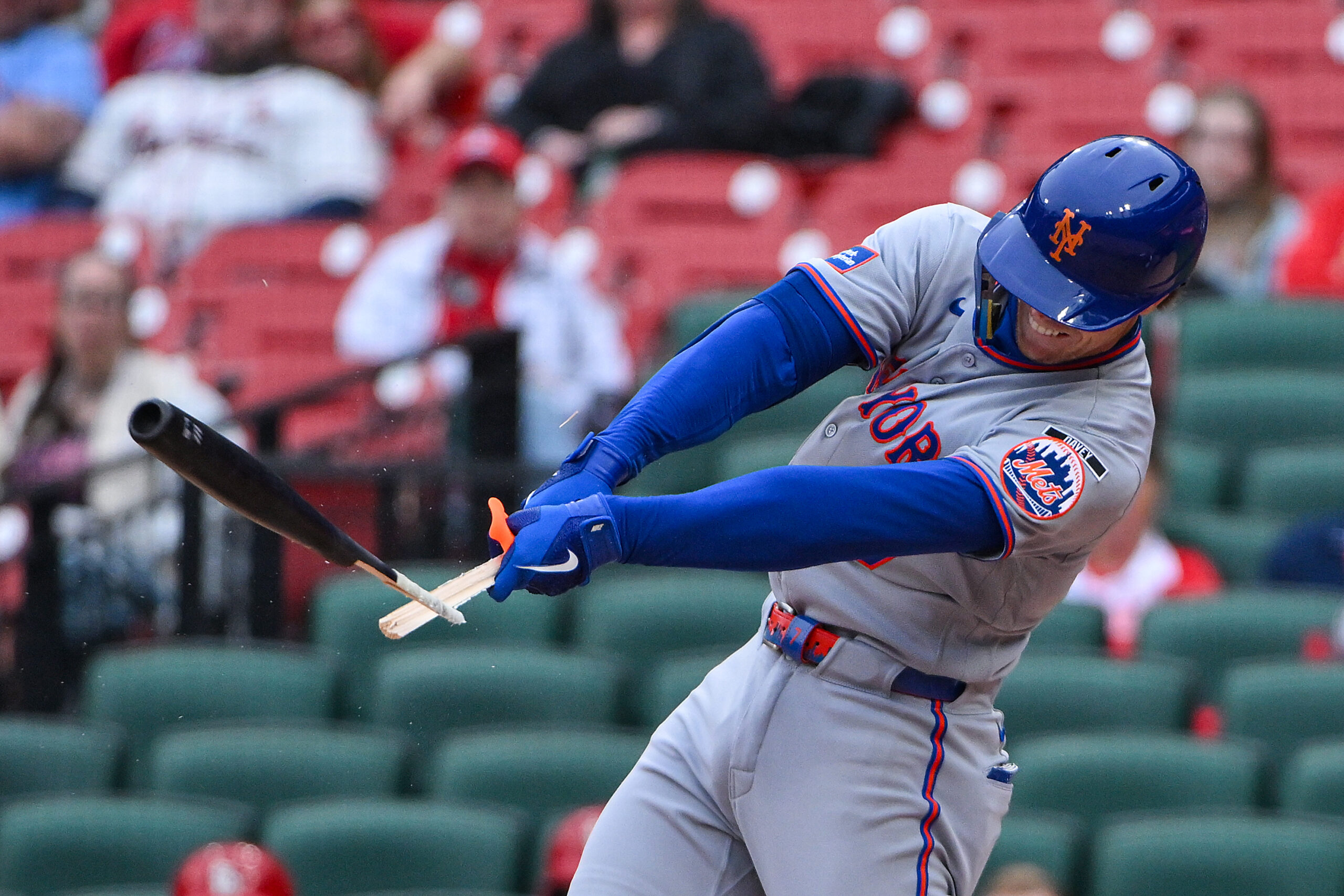
How Real Was 2025
From mid-April onwards, Baty showed off plus power metrics:
- 115.6 miles per hour Max Exit Velocity (91st percentile)
- 13% Barrel Rate (83rd percentile)
- 107.2 miles per hour 90% Exit Velocity (80th percentile)
- 90.5 miles per hour Average Exit Velocity (67th percentile)
- 46.8% Hard-Hit Rate (65th percentile)
He utilized this power to make up for his poor 80.1% zone-contact rate and below-average pull fly ball rate of 12.2%. While Baty did whiff more than you would like, he ran a well above average 23.9% chase rate.
Alongside his plus damage rates, Baty ran plus selectivity rates, including an 81st percentile 27.9 SEAGER (Selective Aggression Engagement Rate). He also performed well against fastballs, hitting .278 with a .459 SLG and he overall attacked hittable pitches.
Baty 2025underlying metrics seemed to largely match with his 2025 results. There may even be arguments that his SLG should have been even higher based on his damage rates.
So what changed in 2026?
2026 Damage Rates
So far in 2026, Baty has not been hitting the ball hard. Look at the same metrics from 2025:
- 110.6 miles per hour Max Exit Velocity (67th percentile)
- 7.3% Barrel Rate (46th percentile)
- 103.4 miles per hour 90% Exit Velocity (35th percentile)
- 89 miles per hour Average Exit Velocity (49th percentile)
- 36.6% Hard-Hit Rate (22nd percentile)
Part of Baty’s issue is that while he is still hitting fastballs well, he is struggling heavily against secondary pitches with his whiff rate climbing from an 27.9% to a well below average 37.7%
Baty is also pulling the ball in the air even less than he was in 2025, going from a 12.2% pulled fly ball rate to a 4.9% pulled fly ball rate.
Overall he is doing significantly less damage than he did last year when he makes contact, and he is not making enough contact for his poor damage rates.
Swing and Stance Change
Brett Baty has changed his stance since 2025. He is far less open going from 26.1 inches and 8 degrees from mid-April 2025 onwards to 23.3 inches and 2 degrees so far in 2026. In 2025, Baty’s highest whiff rates were on the outside part of the plate as well as the top of the zone. This stance change has helped in those areas, but it does not seem like an overall offensive improvement. He is striking out more than 2025, chasing more, and doing less damage. Baty also moved closer to the plate, likely also to try to cover the outer half better.
Typically a more open stance makes it easier to track pitches. It made sense in 2025 for a player like Baty who has plus bat speed but not plus pitch recognition to open his stance while taking the ball deeper because he could use that plus bat speed to still pull the ball when he wanted to.
But Baty moved his intercept point from -3.4 inches to +0.7 inches out in front of the plate. He is not taking the ball as deep in the zone as he did in 2025. This type of change is typically done to increase a player’s pull rate, the opposite of what his closed stance should do.
In theory, these changes should close some of the holes in the zone for him and increase his power output. But these changes typically need to go hand in hand with a level of pitch recognition that I cannot say with confidence Baty has.
Can Baty Turn it Around?
Through this date last year Baty did look worse under the hood in many important areas than he does right now.
2025 vs 2026:
- 76.1% vs 79% Zone Contact Rate
- 31.9% vs 28.9% Whiff Rate
- 41.9% vs 32.8% Strikeout Rate
- 0% vs 7.3% Barrel Rate
- 107.1 vs 110.6 miles per hour Max Exit Velocity
- 22.2% vs 29.3% Launch Angle Sweet Spot
Baty did pull the ball slightly more at this point last year – expected with the swing change – and had a better hard hit rate, though the sample size is small enough that the difference is not as meaningful as it looks at first glance. His chase rate is about the same and his walk rate of 0% is the same.
Baty showed in 2025 that he can address issues with his swing and fix them in season. In mid-April 2025, he opened his stance more, changed his attack angle, adjusted his bat tilt, moved his intercept point back, and swung harder overall. These all seem like changes that could help Baty again in 2026.
Maybe his swing changes to start this season will work and just need time for him to settle into them. Maybe he makes a mid-April swing change similar to 2025. Or maybe the Mets need to utilize his final option and send him to Syracuse to work through these issues, similar to what they did to fix the swing Francisco Alvarez created before the 2025 season with J.D. Martinez and his coaches at Maven.
It is too early to give up on Brett Baty for the 2026 season, but there are definitely reasons for concern. Ideally though, the step forward for him could be a swing adjustment away.