Shortstop is one of the more specialized positions in all of baseball, though there’s no shortage of clean hands, quick footwork, and moderate hitting ability in the NL East. Even at the bottom of the bin, there’s still potential to be realized, though there’s far more talent towards the top – in some cases, more than a general manager could ask for.
The Mets are spoiled for developing talent up the middle, though the benefits smooth out at the more advanced levels. It may be another year or two before the organization can more wholly enjoy the prospects making their way up. Though at a position that has never gotten a legitimate dose of both offensive and defensive prowess (save for Jose Reyes), the future is a lot brighter. Here are the divisional rankings at the shortstop position, starting with number five:
5. Atlanta Braves
Chances are the Atlanta Braves run away with this division in 2020 thanks in large part to an offensive core spearheaded by Freddie Freeman, Ozzie Albies, and Ronald Acuna Jr.. The addition of Marcell Ozuna and imminent arrivals of prospects Austin Riley and Cristian Pache add to the excitement, but at the shortstop position, the value is almost exclusively defensive.
Former first-overall pick Dansby Swanson has compiled a 2.4 dWAR and 12 DRS across his last two seasons, and he’s slowly managed to sneak his OPS above .700, but he’s had trouble balancing productivity and health, and his struggles upon returning from a foot injury (.194/.307/.245 in 114 PA) don’t match a potential that is slowly withering.
In the event Swanson still can’t crack it in his age-26 season, the Braves have defensive wiz Adeiny Hechavarria and pinch-hit king Charlie Culberson on reserve. Neither player has really fared any better in an everyday role, though, and their best middle infield prospect, Braden Shewmake (ranked ninth in the organization by MLB Pipeline), has only 14 games in Double-A to his name. Until Swanson can make it to 140 games and/or bring his OPS+ above average (88 since 2018), the Braves are relying on a year of solid defense at shortstop, and not much else.
4. Philadelphia Phillies
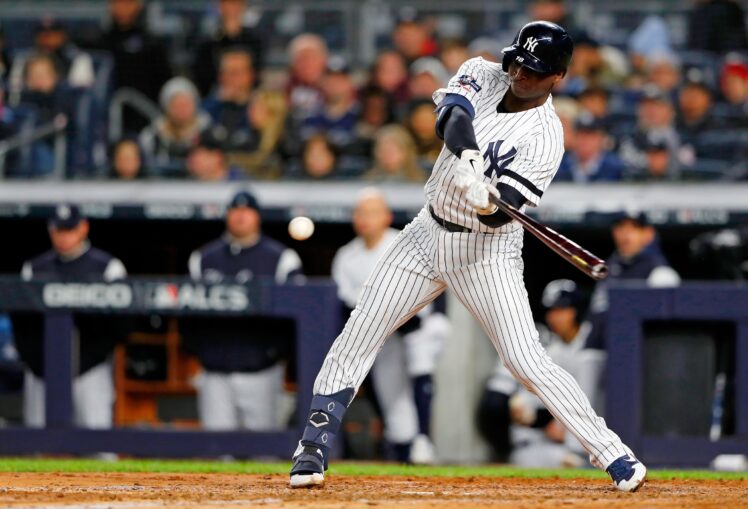
Philadelphia probably got more credit than it deserved after signing Didi Gregorius, who has had trouble maintaining production at the plate while staying on the field since the second half of 2018. His -10 DRS in just 80 games at short with the Yankees last year is also troubling. Luckily, they do have two experienced options at their disposal.
Jean Segura, currently stationed at third base to accommodate the acquisition, could certainly see more action up the middle if times get desperate. There’s also 26-year old Scott Kingery, who, despite balancing his time between center and three infield positions last year, can still pick it with relative ease. Like Swanson, Kingery has yet to put together a consistent season with the bat (.689 OPS from July on after starting the year at .948), but there’s also more room to experiment.
It’s difficult to track how the Phillies would effectively fill the holes left behind by either player leaving his post, with infield prospects Alec Bohm and Bryson Stott both so far away. At least in the short term, however, shortstop is a position that Philadelphia can expect reasonable offensive production out of, perhaps with a side of passable defense.
3. Miami Marlins
Miguel Rojas may be one of the more underrated players in the division, though the 31-year old, like many second-tier shortstops, gets by primarily on his merits with the glove. Making the 90th percentile for his position in outs above average and the 31st percentile in exit velocity, Rojas fits snugly in the eighth spot of that Marlins’ lineup.
Speedster Jonathan Villar could also be moved from his current spot in center field to absorb innings along the middle infield, though he’s much better suited for second base if Isan Diaz turns out to need more seasoning in the minors. The Marlins also have utilityman Jon Berti, though we have yet to see how his tools translate in a full big-league season.
In all likelihood, Rojas probably holds down the fort at a replacement-level quality beneath that of Dansby Swanson for Atlanta. What keeps Miami a step ahead is the fact that Rojas’ spot will go to a top-flight prospect, and shortly, in Jazz Chisholm. Currently ranked at 33rd overall by FanGraphs – sixth among shortstops – Chisholm is expected to arrive either late this year or early next year. He had reached base nine times with two extra-base hits in his first 18 plate appearances this spring.
2. New York Mets
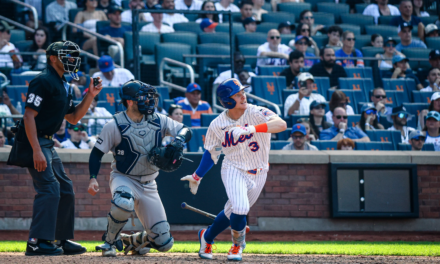
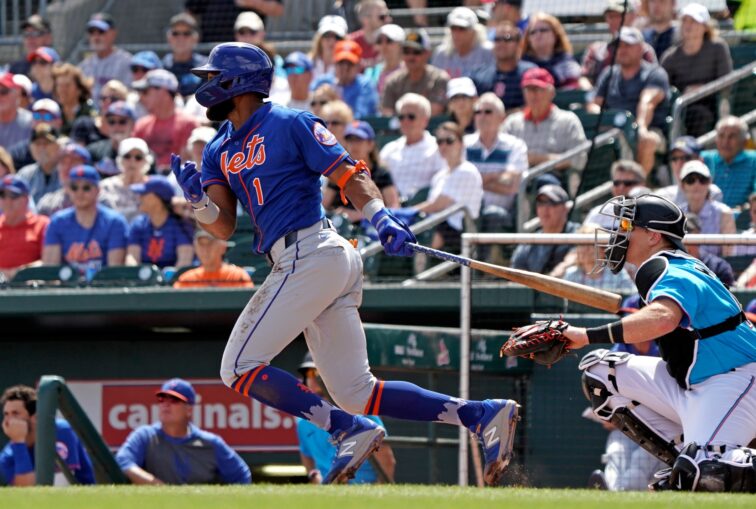
There’s more information on the table for me, since I write more about the Mets than any other team in the sport, so I will try my best to keep things in perspective. Amed Rosario has a cleaner bill of health (knock on wood) than any of the aforementioned regulars in the division, and he’s steadily grown as a hitter in the last two seasons. Just one of two shortstops in the NL East to post a wRC+ of at least 100, Rosario has a bright future, and his month-by-month growth as a defender is something to keep an eye out for heading into 2020.
With that in mind, I’d argue that it’s not so much Rosario’s strides as a player that give the Mets a competitive advantage at shortstop as it is the options waiting in the wings. While Amed has evolved under the tutelage of Robinson Cano and longtime coach and current skipper Luis Rojas, he’s still a work in progress in the on-base percentage department, and his speed remains grossly underutilized. As promising as he is, he remains a distant second among shortstops in the division. Luis Guillorme makes for a passable, glove-first backup, but not as a backup plan altogether.
Andres Gimenez and Ronny Mauricio may make matters more interesting in the coming years. Gimenez ranks 84th among MLB Pipeline’s top 100 prospects, and could see action towards the end of the season if he can turn the offense up a notch in Triple-A Syracuse. Mauricio profiles more similarly to Jazz Chisholm as a dynamic athlete trying to make more contact, but already ranks confidently on prospect lists for Baseball America (66th), MLB Pipeline (62nd), and Baseball Prospectus (48th). He turns 19 the first week of April.
1. Washington Nationals
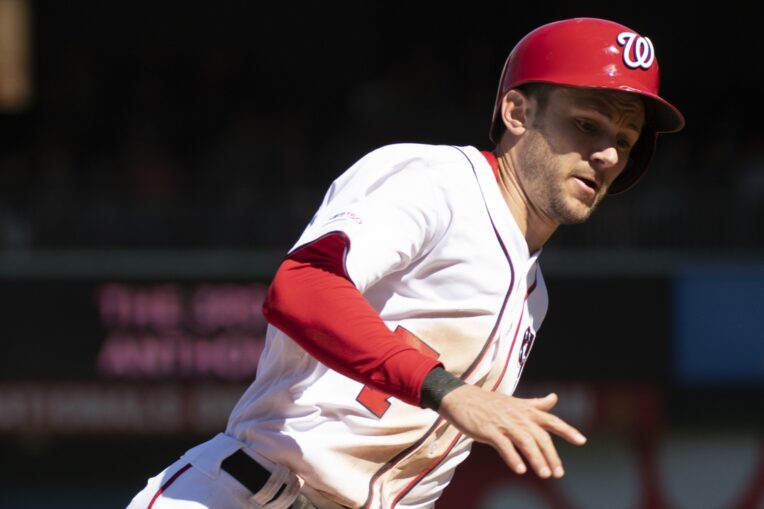
It may come as a surprise to (very) few that Trea Turner is a (very) good shortstop. Per Statcast, he’s in the 84th percentile in outs above average, 66th in hard-hit rate, 72nd in exit velocity, and 100th in sprint speed. Though he only played 122 games last year, he still managed an .850 OPS with 35 steals (only caught stealing five times). Turner also tied a career-high from 2018 with 19 homers in nearly 200 fewer plate appearances. He’s easily the best shortstop in the division, and arguably one of the most formidable runners in the majors.
Washington’s contingency plan behind Turner is pretty solid in its own right. Neither Starlin Castro nor Asdrubal Cabrera profiles well on the defensive side of the ball, but as depth options, they’re the safest bets among any bench player anywhere to recover whatever offensive production is lost to a Turner injury.
In the event that either veteran struggles at short, the Nationals still have the luxury of switching young talent Carter Kieboom off of third base and giving him reps at his natural position. The 22-year old hit just .128 in his first 43 plate appearances at the big-league level last year, but he remains one of the best shortstop prospects in all of baseball, as Baseball Prospectus ranks him as high as 11th on their list of the top 101 prospects. His .902 OPS in Triple-A Fresno last year suggests he’s close to finding his niche, and getting a stab at his regular spot on the infield could go a long way.
Even with Trea Turner in the mix, there’s a real chance, if things go right, that the Nationals emerge with more value at the shortstop position than most teams in baseball.