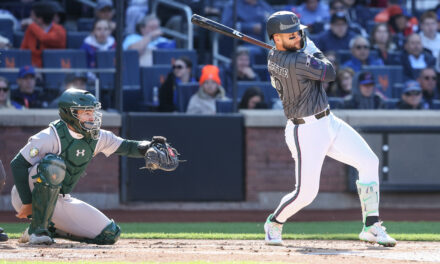

Mickey Callaway spent most of his 43rd birthday yesterday fielding criticisms over a handful of questionable decisions in the Mets’ 4-2 loss against the Philadelphia Phillies. One of the more notable calls he made involved pulling starter Jacob deGrom after just one inning of work.
Fresh off a stint on the 10-day disabled list, deGrom tossed one of the most bizarre, frustrating innings of the young season. Although he struck out two batters and didn’t allow a run, deGrom needed 45 pitches, walking his first three hitters and only generating four swings-and-misses. Callaway immediately replaced deGrom with Robert Gsellman at the inning’s conclusion. (The record for most pitches thrown by one pitcher in one inning while allowing zero runs was 50 set by Ken Patterson on September 1st, 1990. DeGrom’s 45 that inning (with no runs scored) is second most all-time.)
An argument can be made that this maneuver taxed a bullpen that was already largely responsible for the squandered finale. However, it’s important to remember just how reliable the current squadron is in terms of endurance, especially compared to last year. Between Gsellman, Paul Sewald, Seth Lugo, and (to a lesser degree) Corey Oswalt, Callaway has been blessed with a batch of reliable long relievers, none of whom have been worked particularly hard across a week that has been littered with off-days. Covering for deGrom into the seventh inning was certainly feasible, and, from the second to fifth innings, had its benefits.
In terms of health itself, deGrom, in his first start since hyperextending his elbow a week ago against the Atlanta Braves, had no business playing hero after such a laborious inning. The risks of pushing one of the team’s most consistent starters on a wet, cold day after a rain delay greatly outweighed the benefits. If the 2017 season has taught us anything, it should be that losing an ace early in a season can cripple an entire pitching staff. Callaway would have had to go into hiding if he had stuck by deGrom who then incurred a more serious elbow injury.
It should not bother fans knowing that pulling deGrom when he was clearly getting pressed early on, even if it put the Mets in an early hole, is infinitely better than sticking by him, winning the game, and potentially aggravating an injury they can’t afford to deal with. The Mets had eight innings to put runs together and stymie Philadelphia bats by the time this matter had been handled. Blaming the manager, although convenient, holds very little water in deGrom’s case.