This morning, Adam Rubin of ESPN New York reported that the Mets plan to reconfigure the dimensions of Citi Field. By “reconfigure,” it’s likely that Rubin means that the Mets want to bring in the outfield fences. The idea is, make the distance from home to the right-center field gap shorter and you would thereby increase home run potential. The two hitters that would seem to benefit most would be the two highest paid and worst performing players this season – David Wright and Curtis Granderson. It seems like a simple fix, right?
Well, let’s see if moving the fences in would really help Curtis Granderson. From 2011-2012 Granderson hit 84 home runs. Thanks to the intelligent people at Hittrackeronline.com and specifically Greg Rybarczyk, we can see where each one of those home runs landed. These are his 2011 results:
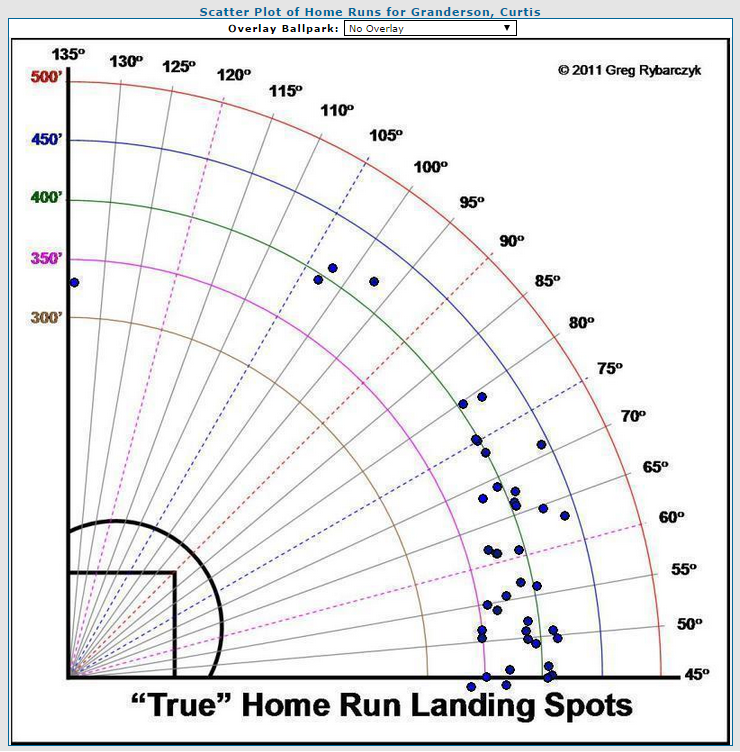
Granderson’s 2011 average home run distance was 389.1 feet. Only 9 of these 41 home runs were close calls. The other 32 would have gone out in nearly every ballpark in the major leagues. His 2012 home runs looked similar. The 43 Granderson belted that season averaged a distance of 383.2 feet. Only 10 of these were close while the other 33 would have gone out anywhere. So the older, post-injury Curtis Granderson is probably not hitting the ball as far, and moving the fences in will help, right?
Here is the spray chart for Granderson’s 2014 home runs:
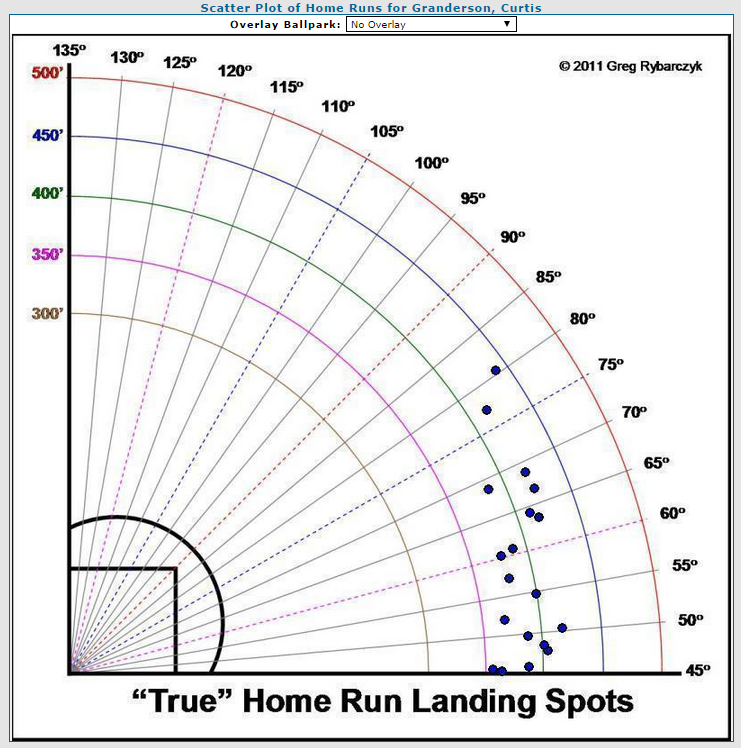
I found this great graphic from the Katron Batted Ball Tool. It seems that Granderson has not really used the part of the outfield where the fences would most likely be moved in most – right around that “375”. If the entire right side of the outfield were to be brought in, he’d be looking at something closer to 25 home runs.
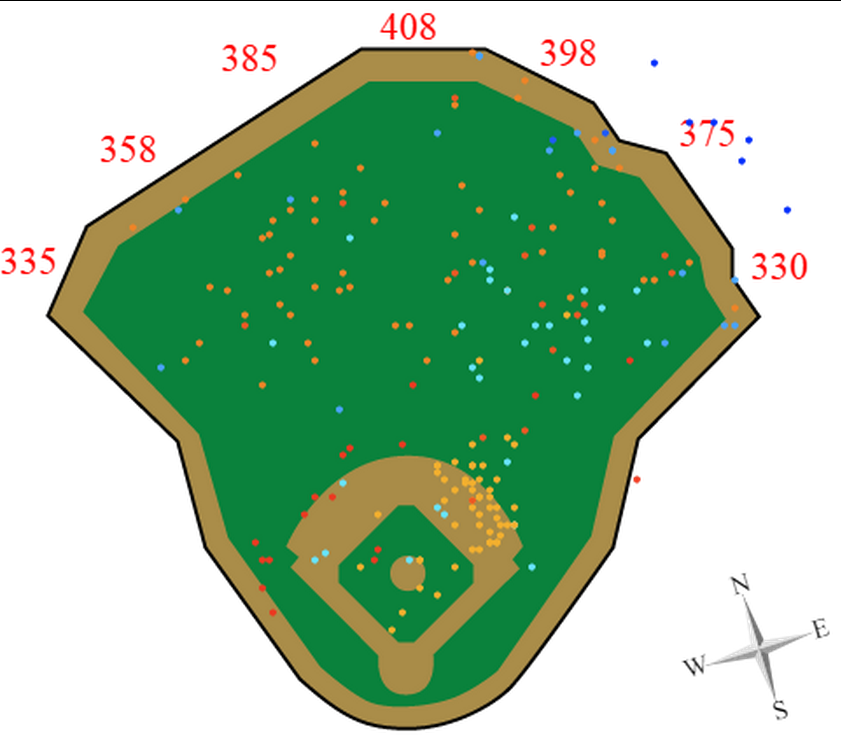
Moving the fences in may not help Granderson’s power numbers all that much. It seems that his lack of pop has come more from lack of consistent quality contact and propensity to strikeout, than the distance of the outfield fences.
As The Metropolitans correctly pointed out, taking the averages themselves does not show the full picture. The average distance of Granderson’s 19 home runs in 2014 is inflated due to the fact that the shorter home runs he had hit in 2011 and 2012 are no longer included.
According to Baseball Heat Maps, Granderson is averaging 201 feet on batted balls in 2014. He is averaging 271 feet on his fly balls in 2014. In 2011, he was averaging 285 feet on fly balls.
In conclusion, it would appear that moving in the fences would, in fact, help Curtis Granderson’s power output. However, the potential improvement may not be as great as some suspect, as reflected in the final graphic of Granderson’s batted ball data at Citi Field.