In a vacuum, the surface optics of the New York Mets decision to acquire Robinson Cano and Edwin Diaz from the Seattle Mariners this offseason aren’t great at the moment.
Top prospect Jarred Kelenic looks like a future star (.315/.400/.537 through 170 plate appearances with Single-A West Virginia) and Jay Bruce has 12 home runs already (and a .185/.255/.496 slash line, but that’s another story altogether).
Edwin Diaz has been a pleasure to watch (2.30 ERA, 14.36 strikeouts and 2.87 walks per nine innings, respectively, through 17 appearances; 15.2 innings), but the scales aren’t tipping in the Mets’ favor at this point in time.
Nevermind the fact that the Mets already had a more than serviceable second baseman in Jeff McNeil, but I digress.
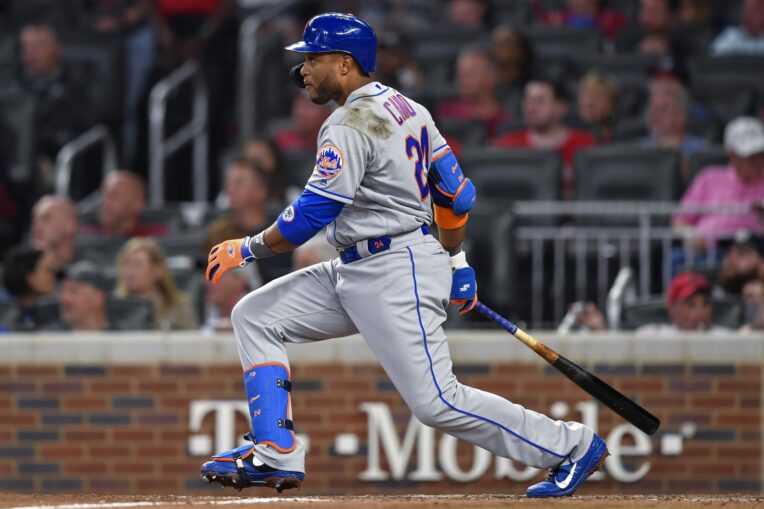
After a ridiculously-hot but cruelly-misleading spring, the 36-year-old second baseman began the 2019 season on the wrong foot, going 6-for-65 with five extra-base hits, eight RBIs, and an alarming 16 strikeouts from Opening Day through April 15.
He turned things around for a brief stretch, slashing .429/.474/.629 with six strikeouts in 38 plate appearances from April 16 through the end of the month. But the good times did not last long.
Cano was playing through a surely-barking right wrist after being hit by an Andrew Miller pitch on April 21 and seemed to be unaffected, but has looked wholly lost during the month of May.
Over 60 plate appearances this month (14 games), the 36-year-old is hitting .228/.267/.316 with no home runs, five doubles, two RBIs, and 12 more strikeouts.
Whether his recent underproductivity can be attributed to that Miller HBP is — and will likely remain — unknown. What is known is that in order for the Mets to succeed, they need one of the players they’re relying on to be a big contributor to, um, contribute.
Cano’s sudden, violent offensive downturn shouldn’t be compared to what we saw when another Hall of Fame-bound second baseman — Roberto Alomar — came to New York in 2002 and saw his production level collapse, but there’s certainly reason for concern.
Over his 15-year MLB career, Robinson Cano owns a 12.5% strikeout rate and hadn’t exhibited a ton of deterioration in that area of his game, putting up a 13.5 percent mark in 2018 with the M’s.
Over 348 plate appearances during his suspension-shortened campaign last year (80 games), Cano struck out 47 times. Through 168 plate appearances this season, he’s already been punched out 34 times. That’s not a great sign.
Friday night’s rally-killing baserunning gaffe in the Mets’ 8-6 loss to the lowly Marlins was definitely ugly, embarrassing, and costly, but Robinson Cano shouldn’t be blamed for Jacob deGrom‘s off night and the offense’s early ineptitude.
Cano didn’t dig the Mets into a 7-1 hole. That was a team effort.
For the New York Mets to succeed, they will need consistent contributions — on a daily basis — from guys one-through-twenty-five on the roster. As weak links appear, reinforcements are applied — a la Keon Broxton out/Carlos Gomez in. Best 25, right?
Slumps will happen, but these unspirited, listless stretches of baseball — especially when the Mets’ pitching staff owns a 3.32 ERA in May, eighth-best in MLB over that span — fall directly on the shoulders of the folks in charge of motivating these players.
Poor showings from Wilson Ramos, Brandon Nimmo, Todd Frazier, Juan Lagares, among others, have kept this Mets squad from taking advantage of a meandering National League East.
MLB managers don’t have half of the responsibilities they did just 10 years ago, but if Mickey Callaway can’t get the most out of his players — one-through-twenty-five — maybe it’s time to make a change.