

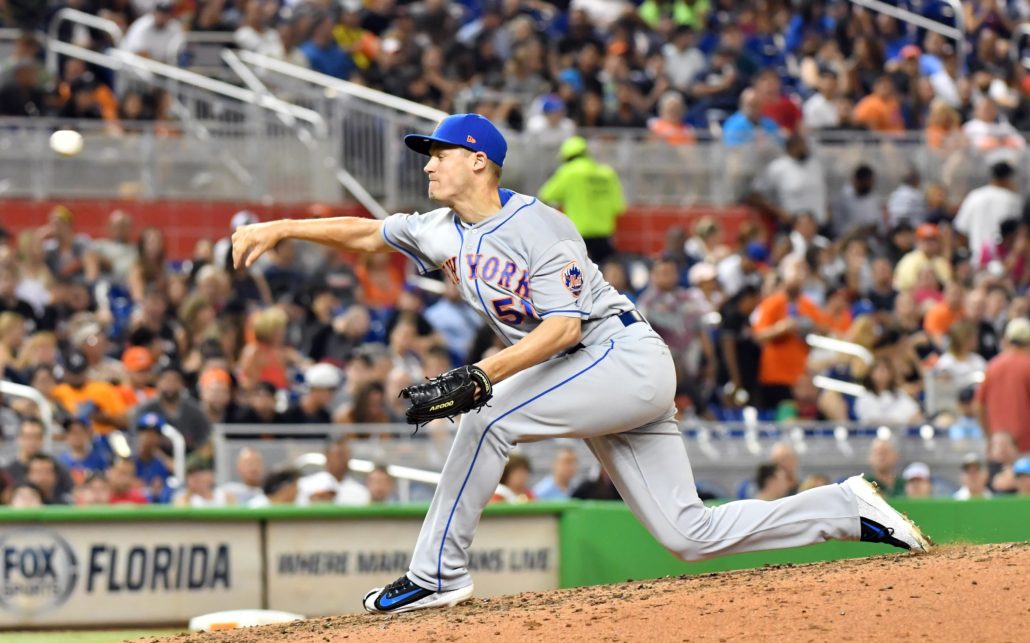
After Robert Gsellman left the game after only 3.0 innings pitched last night, it seemed like another day the bullpen would be used to its fullest. Thanks to Paul Sewald, however, the Mets were able to stay in the game until the 7th inning having used only one reliever.
Coming in for the fourth inning, Sewald pitched 3.0 scoreless innings, allowing only two hits and striking out three. He lowers his season ERA to 4.45 in 32.1 innings, however don’t let that fool you as he’s been far more effective than that number suggests.
A much more telling number is his 2.95 FIP or fielding independent pitching. That basically represents what his ERA would be if his defense made all the plays behind him. Unfortunately, the Mets defense is pretty bad so his ERA is a point and a half higher than what it would otherwise be. Another telling number is his WAR, which is 0.2 according to Baseball Reference and 0.4 according to Fangraphs.
Sewald, 27, does not walk a lot of people. His WHIP, which currently sits at 1.361, would surely be lower if he had an infield behind him with more range. His game is to produce weak contact and have the batters put the ball in play, which is unfortunate. While he does his job well, his defense does not, and he suffers for it.
Relievers usually are the ones to make the most important pitches of the game, and they must be able to survive under pressure. So far this season, that’s what Sewald has done. With runners in scoring position, he has held opposing batters to a .226 batting average in 31 at-bats. Further, with runners in scoring position and two outs, he’s held opposing batters to a minuscule .125 batting average in 16 at-bats. Again, how many of those hits would have been saved with a better defense?
The baseline fact is that Sewald has been one of the Mets best relievers to date, stepping up when the Mets need him most. He is able to provide long relief as he did last night, and he’s able to pitch in late-game high-pressure situations. With plenty more time under team control, he should remain an effective reliever for the Mets for years to come – especially once Amed Rosario is called up and the Mets can put a better defense behind him.