Photo by Westchester County Journal News
The greatest trade in New York Mets history wouldn’t have been so great if his stay in Queens lasted four months.
Keith Hernandez — already with a batting title, an MVP, and several Gold Gloves decorating his resume — was sent from the defending champion St. Louis Cardinals to the perennially downtrodden Mets in June 1983 for reliever Neil Allen and starter Rick Ownbey. And it sent the star first basement to contemplate his future in baseball. Retirement even entered his mind.
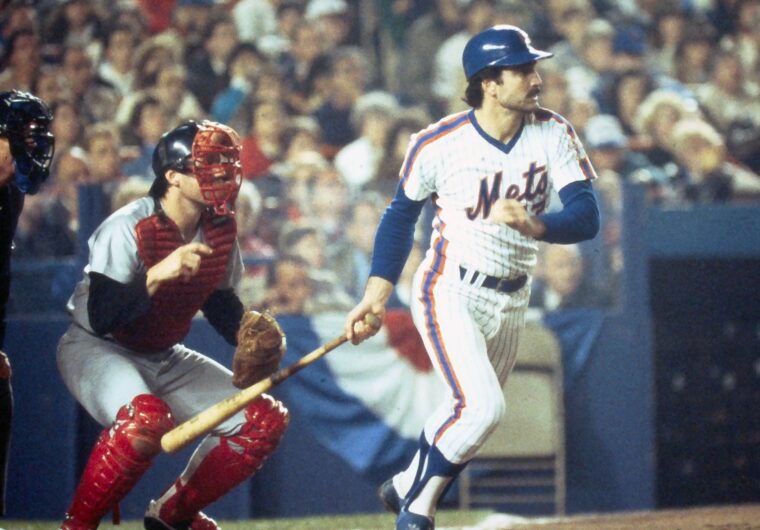
If Hernandez had a bad attitude about playing with New York, he didn’t show it for the remainder of ’83. Even though the Mets couldn’t find their way out of the cellar, Keith batted .306 over 95 games, maintained his Gold Glove streak, and cemented himself as a team leader.
But the team’s fifth last-place finish in the last seven seasons did little to convince Hernandez to stay as he headed into free agency. He had plenty of influential people in his ear: his father, GM Frank Cashen, and veteran Rusty Staub. They each spoke to him about the long-term benefits of being on the Mets — and specifically about the talent coming soon.
Keith stayed — agreeing to a five-year, $8.4 million contract that made him one of the game’s highest-paid players.
The Mets, in turn, further benefited from Hernandez’s brilliance. That incoming talent needed guidance to grow into its potential and Keith was the ideal pilot. He possessed a force of personality and awareness of his surroundings that established confidence in his teammates, often conferencing with pitchers on the mound or lending advice to hitters in the dugout. From this confidence eventually came respect from opponents and a winning attitude that hadn’t been felt in Queens for almost a decade.
He was a meticulous hitter who dissected at-bats. Such diligence didn’t go without reward as Keith had the highest batting average among Mets hitters with at least 3,000 at-bats, and drove in at least 83 runs each year from ’84 through ’87. But what distinguished him among first basemen was the way he expanded the capabilities of the position. He would end up with 11 consecutive Gold Gloves.
Hernandez’s intangibles could be measured — specifically in how the Mets improved in 1984. The swift attitude adjustment he fostered took effect that year. As runner-up for NL MVP, he batted .311, hit 15 homers, 31 doubles, and drove in 94, often using his cerebral knowledge of the strike zone to generate a key hit at will. New York kept pace with the division-winning Cubs into September and ultimately ended with 90 victories — 22 more than in 1983.
It was the start of a six-year stretch in which the Mets averaged 96 wins — a World Championship included — all of them with Keith at first base.