

As New York Mets owner Steve Cohen preaches patience — while simultaneously dropping some life advice — waiting can be hard. Especially after we know what he, Sandy Alderson, and the rest of the new regime wants to accomplish in the coming years.
You know, like becoming a consistently competitive and iconic franchise, with the expectation of winning a World Series within the next three-to-five years. Those are some lofty goals, and while 2021 is sure to be interesting because of the anticipated investing of players that will eventually happen, we all know Rome wasn’t built in a day.
It’ll surely be disappointing if next season doesn’t involve the Mets participating in October baseball, but that won’t be the only indicator on how I’d evaluate the upcoming year (although it’ll still be a significant one).
It takes time to not only raise the performance level of an on-field product, but to also change the entire culture of an organization. And, in many cases, that includes completely rebuilding certain aspects after tearing the existing structure down to the ground.
Whether New York finishes next season watching the World Series on the couch or hoisting that hunk of metal after the final out is made, 2021 will serve as the ultimate platform year. From the internet snooping I’ve done, it’s not exactly something the Mets are unfamiliar with when it comes to their most successful stretches of competitive baseball in franchise history.
Reviewing Some Past Platform Years
There have been four different times when New York has strung together at least four consecutive winning seasons:
— 1969-73
— 1984-90
— 1997-01
— 2005-08
In each instance, there was a platform year that helped propel the organization toward being consistently competitive. The only real outlier among the above time periods is the initial one, since New York’s first winning season in franchise history also coincided with them winning the World Series.
Even in that instance, you could sense progress being made in 1968. Sure, it was still below .500, but posting a 73-89 record was significant because prior to that point, they had failed to break the 70-win plateau during a single season. A couple of hurlers by the name of Tom Seaver and Jerry Koosman lead the way in that respect.
While there were no playoff appearances from 1984-85, the Mets recorded consecutive 90-win seasons for the first time as a franchise (90 in ‘84, 98 in ‘85). The 1984 campaign was a crucial platform year because the club had endured seven-straight losing seasons after dealing Seaver in 1977.
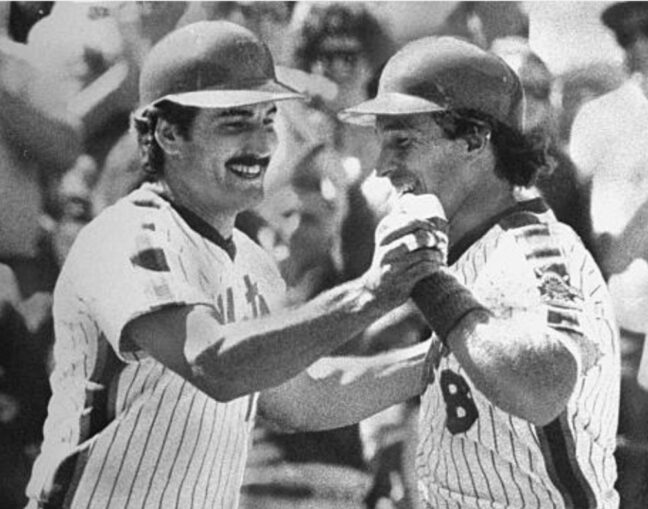
The culture started changing when Keith Hernandez was acquired in the middle of 1983, as he helped New York win 90-plus games in ‘84 for the first time since 1969. Then, Gary Carter arrived for the 1985 season to help bolster the on-field leadership, and the rest is history.
Once this stretch was over, New York once again dealt with six-straight losing seasons before getting on the right side of .500 in 1997 during John Olerud’s first season in Flushing. The 1998 season yielded an identical 88-74 record in addition to a late-season denial of a Wild Card spot, but it helped pave the way to trade for and eventually sign Mike Piazza to a long-term deal, along with signing Robin Ventura that winter.
Similarities to the “New Mets”
The one time period in Mets history I’ve thought about the most since the new regime has been put in place is 2005-08. It’s partially because it was the last one, but I can also see some similarities.
After a couple terrible years with Art Howe at the helm, Willie Randolph came in as a rookie manager prior to 2005, with the agenda of changing the clubhouse culture. It was the first full year we watched David Wright and Jose Reyes on the left side of the infield, and general manager Omar Minaya signaled to the rest of MLB this was a new era of Mets baseball by opening up the pocketbook to sign Pedro Martinez and Carlos Beltran.
Heck, remember when Beltran referred to the club as the “New Mets” at his introductory presser?
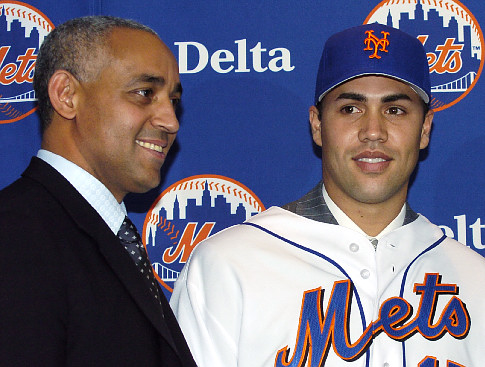
That’s a sound bite I’ll remember until the end of time because I was so excited about what was to come. What did come was just one playoff appearance, a couple collapses, lots of disappointment, and a whole lot of what if’s. But still, it’s hard to ignore this period because of how consistently competitive they were — New York just couldn’t get themselves over the hump (and in the most excruciating of ways, of course).
In my eyes — because, you know, I’m writing this — the 2021 season is the most important campaign the franchise has seen in a long time because of this transformation we’re expecting and the transition that’s currently going on. Before the Mets can ascend to becoming an annual powerhouse and an iconic franchise like the Los Angeles Dodgers, that first step must be taken to level up.
It’s time to set the tone, which is something New York has done enough in the past. The biggest issue, though, is it’s been too few and far between. As the culture, environment, and aura of this organization continues shifting over the coming months, it’ll be important to translate all the positive energy to the field.
And once that happens, it’ll be awesome to see upper-level management give people the tools to maximize the length of this period of competitive baseball, instead of it being more of a short window of opportunity to contend.