
Mandatory Credit: Neville E. Guard-USA TODAY Sports
Another regular season is in the books for the New York Mets, and unfortunately, it’s another one that doesn’t include postseason play. Despite that, there are still positives to take from 2021 for everyone (even if it’s really hard to find).
I did that last week with Mets hitters, and that’s what I’ll be doing today with the pitching staff — we’re going to find at least one encouraging statistic from this season for each hurler. In order to be included below, players had to finish the year on New York’s roster (whether they were active or on the injured list). Starters need at least 50 innings pitched, while relievers need 20-plus frames under their respective belts.
The Starters
Jacob deGrom was well on his way to having a truly historic season before hitting the injured list in July. And, prior to “struggling” to a 3.21 ERA over his final 14 innings, his first 78 frames led to a ridiculous 0.69 ERA (nice). Of all the amazing stats to choose from, the one I’ve enjoyed following is how his K-BB rate continues to improve. Here’s how it’s progressed each year since 2016: 17.7%, 21.8%, 26.7%, 26.2%, 32.1%, 41.7%
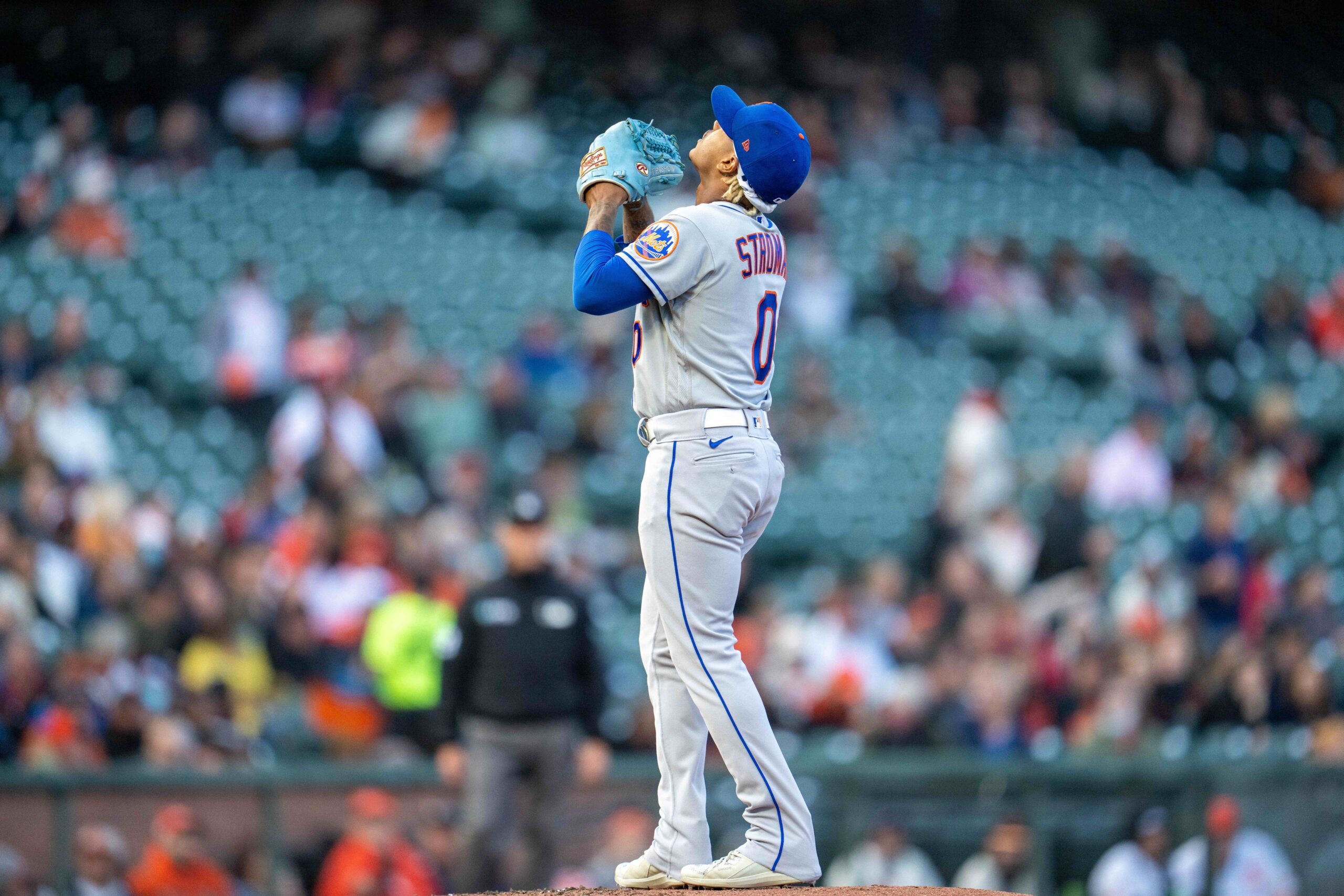
Marcus Stroman bet on himself last winter by accepting the qualifying offer, and man, it’s about to pay off handsomely as he prepares for free agency. He compiled 3.4 fWAR in 179 innings, which was the fourth time he’s generated at least 3.0 fWAR while pitching 175-plus innings since 2016. He was New York’s most consistent starter, tossing at least 25 frames and never posting an ERA higher than 4.00 in any month this year.
After earning his first All-Star Game selection, Taijuan Walker‘s second-half looked much different than his first half. But still, the 159 innings he pitched is the second-highest single-season total of his career, and it’s the first time he’s gone over 100 since 2017. In the three seasons prior to 2021, Walker tossed just a total of 67 1/3 innings. Having that base workload heading into 2022 will be something to build upon.
Rich Hill gave the Mets exactly what they were looking for from a starter in the backend of their rotation. Out of his 12 starts with the club, he went at least five innings on 10 occasions, and he allowed more than three runs in just one appearance (four runs against Cincinnati on July 31st).
August and September were a struggle for Tylor Megill after posting a sparkling 1.04 ERA through 26 innings in July, but we’re going to keep things simple here. Before not pitching at all in 2020, he tossed just 71 2/3 frames in 2019 between Single-A, High-A, and Double-A. He began 2021 with Binghamton and ended up posting a 4.52 ERA in 89 2/3 big-league innings. That’s pretty dang good.
David Peterson fought with inconsistency during his short time on the mound this season, but he did make some positive strides. Through 66 2/3 innings, he induced more ground balls (44.4% to 49.2%) and fewer fly balls (36.3% to 27.4%) while increasing his strikeout rate (19.5% to 24.0%) and decreasing his walk rate (11.7% to 10.1%).
Carlos Carrasco‘s curveball was easily his most effective pitch this year (as it has been in years past). This offering produced a 0.0% walk rate and a 40.0% strikeout rate, along with a -100 wRC+. The only problem is he used it just 4.8% of the time, so hopefully, that number will increase in 2022.
Credit: Gregory Fisher-USA TODAY Sports
The Relievers
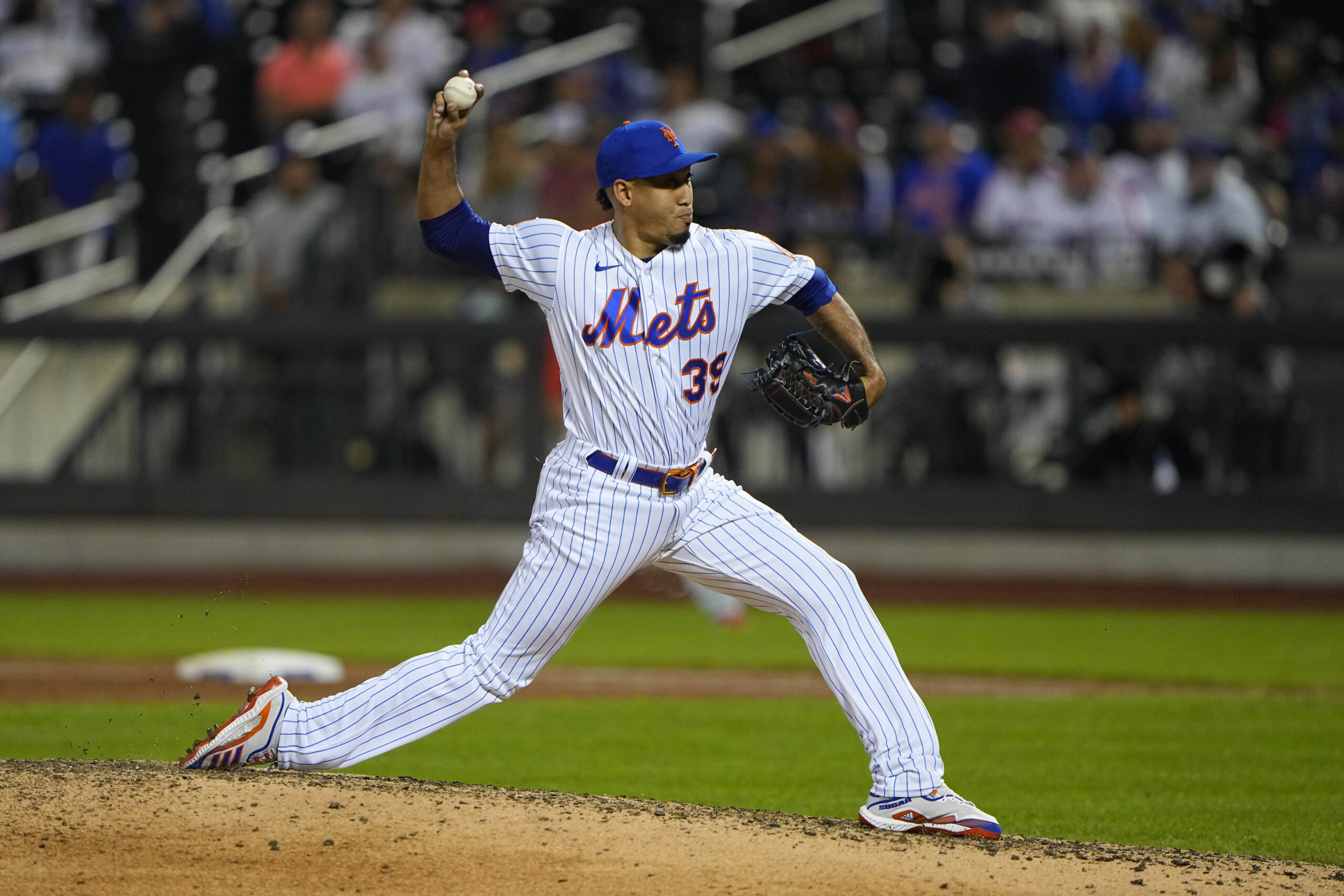
Edwin Díaz posted 2.0 fWAR this year, which was the highest in the Mets’ bullpen for the second straight season. That total also has him among the top-10 relievers in baseball for this past year. After posting a career-worst 48.1% hard-hit rate allowed in 2019, he limited it to a 25.0% clip in 2020 before lowering that to 21.3% in 2021.
There aren’t enough Busch Lights to accurately describe just how good Aaron Loup was for the Mets this season. With just a 1.01 ERA in 53 2/3 innings, he was as close to automatic as it got out of the bullpen. Loup only struggled in May, where he posted a 4.70 ERA in 7 2/3 innings. He didn’t allow a run in three different months (April, June, September) and had an ERA below 1.00 in the other two (0.87 in July, 0.82 in August).
Trevor May got increasingly more stingy as situations became more important with him on the mound. His FIP progressed from 4.07 with the bases empty and 3.32 with men on base, to 2.25 with men in scoring position. His wOBA allowed also went in a similar direction (.317, .268, .196).
After going on a three-year decline, Seth Lugo‘s curveball usage was back up in 2021. He tossed it at a 28.5% clip, and this offering continues to be a powerful weapon for the right-hander. When throwing his curveball, Lugo produced a 0.0% walk rate and 24.0% strikeout rate. The .451 OPS and 22 wRC+ allowed are both single-season career-best marks, too.
The start of 2021 was much stronger for Miguel Castro than the end, but he still showed some general improvement from years past. One area was in his called and swinging-strike percentage (CSW%). After posting a 25.6% mark in that department for the Baltimore Orioles in 2017, it’s increased each of the last four years: 25.9%, 27.6%, 29.1%, and 30.2%.
Jeurys Familia entered the season on a three-year streak where his strikeout rate (27.5%, 23.0%, 19.2%) and his walk rate (9.3%, 15.3%, 15.8%) were going in the wrong directions. He righted that ship in 2021, as his strikeout rate settled in at 27.5% and his walk rate finished up at 10.3%.
Drew Smith put together a 2.92 ERA through 24 2/3 innings in the first half, but he finished his final 16 2/3 frames with a 1.62 ERA. A decrease in walk rate likely had something to do with this (11.8% to 6.3%), which helped his WHIP go from 1.14 to 0.96 over these two periods of time.