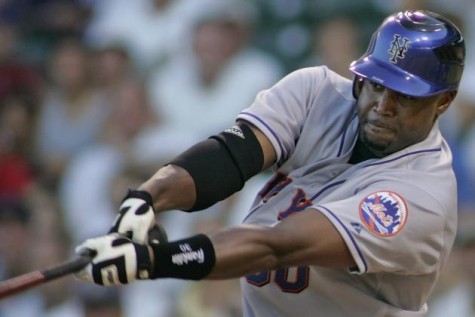
Where Are They Now? Cliff Floyd
Baseball players tend to disappear after retirement. Without the spotlight of national media, or admiration of thousands of fans, they fade back into mainstream society. They leave only memories, and their absence from the game makes it easy to forget that these guys we watched on TV are still real people. My mission is to make fans remember these forgotten players by having them talk to us and answer our burning question, “Where are they now?”
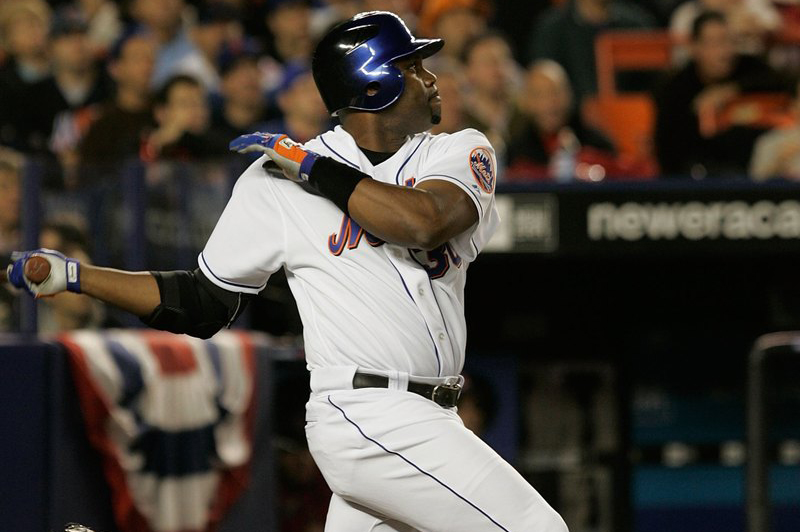
Today I chatted with former Mets outfielder Cliff Floyd to hear his take on the 2006 playoffs, what he’s doing now, and his thoughts on the current Mets team.
I am also kicking off a podcast to accompany the transcribed interview that you can listen to here, let me know what you think!
Noah: So you played on the Mets for the greater part of four seasons, what was your proudest moment while on the team?
Cliff: Well it goes back to ’06 and the postseason and you know we had, in my mind, the team that was destined to win the World Series and unfortunately it didn’t happen. But that was one of my proudest moments; being able to see the fans go crazy. You know, to see Shea Stadium swaying back and forth. You couldn’t go through a day without thinking about it. I was so stuck on getting that team to the World Series and winning it for those fans in Queens. And it didn’t happen, that actually still haunts me to this day.
Noah: The Mets were really mediocre before that 2006 season. What aside from the acquisitions of Carlos Beltran and Carlos Delgado really took that team to the next level?
Cliff: For me, it was more that we understood what accountability was. I think that when you look at the team we had, it was a bunch of veterans that just played the way we were supposed to play (the game). When you have that, I don’t care who the manageer is, you just flow together, and we had a good bunch. We really did. Everybody knew exactly what their roles were, and it helped so much mentally, just to be able to come to the park knowing that “even if I might not get it done today, we are going to get the win regardless.” Every once in a while we took the loss, and we also knew how to bounce back from those as well.
Noah: So was there any one player that shaped you as a player or as an individual during your time with the team?
Cliff: Man, I had so many different ones, Jerry Manuel was there, Rick Downs… But I could relate to Jerry because he was with me back in my Montreal days. He had managerial experience, coaching experience; he knew how to “keep the mind right” while allowing you to go through those trials and tribulations of a season. Especially in New York City too, playing on that stage while trying to figure out how to be successful and also deal with the fans and deal with the media, things like that. But on the field, he was always watching everything, critiquing my swing and things like that in addition to helping me just stay mentally focused. So I would say probably Jerry Manuel.
Noah: Just going back to the 2006 NLCS, Endy Chavez played left field for you when you were injured. And he really wrote his name into Mets lore with that tremendous catch to rob Scott Rolen of a home run. Now tell me honestly Cliff, if you were playing, do you make that catch?
Cliff: (Laughs) Nah man, I’m not making that one! You know, I was dealing with that Achilles injury, and in my mind, I woke up that morning around 6:00 and went to the doctor and got a shot in my calf muscle. I thought that it was gonna work itself down to the point where I could play. That’s what made me feel like we were going to the World Series. Because Endy Chavez made that catch, I knew I couldn’t have made that catch, that’s a home run for anybody in most situations. Your left fielder’s not catching that ball because most times your most versatile player’s usually in center. And in addition, with me being hurt, I definitely wasn’t gonna make that catch. Endy Chavez- athletic as he is -, was there in the right place at the right time.
Noah: You mentioned that you were injured during the series, but you were still called upon to pinch hit in the ninth inning of that game against Adam Wainwright who was really dealing. Looking back on it – I know you struck out in your at-bat against him – How would you have approached that at-bat differently?
Cliff: I think I would’ve just cut down a little bit on my swing. Knowing that I felt good, and I could hear the fans- and I never really heard them- when you focus and you’re in the moment, you never really hear them, but on deck I could hear the fans going “take us to the promised land, c’mon Cliffy, you can do this.” Everybody stood up when I walked to the dish to take that at bat. I probably wouldn’t have swung as hard as I was swinging. He threw me two fastballs, literally right down the middle. When you miss your pitches in this game, you’re succeptible to getting thrown the out pitch, and for Wainwright, the out pitch was that curveball. The rest was history.

Noah: Yeah, Mets fans definitely know that. So, moving to the next part of the interview, what have you done since moving on from professional baseball, and as the title of this series says, Where are you now?
Cliff: Where am I now? I guess I’m all over the place. I’m fortunate enough to be able to stay in the game. MLB Network has been tremendous, allowing me to give my expertise and knowledge on what I’ve learned playing this game, give our viewers an opportunity to get a different perspective on the game. It’s been great, the fans have been great. Also being able to do MLB radio on Sirius XM has been awesome. I do a show from 2:00 to 5:00 with Casey Stern, three days a week. It’s great, it keeps me going, keeps me in the moment as well, it keeps me updated on all these new players. Once you leave the game, the players that you played with- a few of them are still left- but most times, the game does evolve, it comes full circle, and you get new players. So, I’ve had to adjust to that, but I’ve invented a ball cap liner to go underneath the hats of young baseball players to protect them and keep safety first. We just launched that last month.
So, I’m doing a lot of this and a lot of that, family is first and foremost important. I’ve got my son who’s playing baseball now, my two daughters and my wife. We’re down here in south Florida. I’m really busy, but really thankful that I had the opportunity to live that first part of my life (as a player) and now have a chance to still stay in the game and stay relevent. When people say “hey aren’t you on TV?”, I’m like “yeah.” So people do know that I’m still doing my thing.
Noah: Is that recognition something that made you choose to become an analyst after your playing career?
Cliff: That’s a great question. I don’t know. I don’t think I’ve really thought about that at a particular time. If it falls in your lap, it just happens that way. You don’t really think that you can just go on TV, have this earpiece in your ear and have your producer talking to you, and you have the chance to speak your mind. My mind never worked like that. I was just keen on getting that fastball and doing something with it, that’s what I did for 18 years. So you don’t think that the opportunity is ever going to present itself, and when it does, you have to jump all over it or you’re gonna miss the boat. So you jump in, you don’t know if you’re any good. You ask questions, but you have to be careful when you ask people things like “Have you watched me? Am I good?” Because of course they’re gonna say “yeah keep doing your thing” Nobody will say you sound like crap, so you have to be careful, and you have to do your homework and do all the other things you need to do to be successful.
Noah: So you’re still around the game a lot, do you ever miss playing?
Cliff: Oh yeah. I miss playing 100 percent. I would be lying if I didn’t say that I missed my check more than I miss playing, but I think they go hand in hand. And those days of being around your boys in the locker room, getting to the stadium at 2:00 and getting some work in, that’s what I miss more. The laughing and the camraderie of being in the locker room, being on the team plane, and doing all the things you want to do, those are the things that I’ll always miss; and I can never get that back. For the most part, being able to go to the (MLB) network gives me that chance to be around my boys. When I got there, I swear, it was like being back in the dugout or the clubhouse, that’s how much fun we have.
Noah: As an analyst, you know I have to ask you this question. What do you see in this current Mets team, and how far do you see them going this year?
Cliff: Well I think that Sandy Alderson did a great job this offseason, I think when you look at what they had to upgrade – I don’t think it was much – bringing back Cespedes was huge, we saw enough last year in the second half of the season that made this a mandatory type of signing, the offense was absolutely horrific in the first half.
Getting some guys healthy, like Travis d’Arnaud – who’s coming to camp healthy this year – and David Wright. Sandy’s plan on how to play him makes a lot of sense, limiting him to about 130 games or whatever it may be depending on how strong he comes out of camp.
And then adding a lefty down in the bullpen for (Jeurys) Familia in Antonio Bastardo, he had a great year last year. They needed a lefty to come in and get some tough outs. All around, I think they did a great job. I hope Sandy recovers and gets back to 100 percent health wise, he did what he needed to do to make sure this team is ready to win the NL East.
Then fixing up the middle defense, you have guys like Neil Walker and Asdrubal Cabrera who solidify the defense and allow the pitchers to relax and let guys put the ball in play. That’s a key for this young staff. Allowing them to grow, but also knowing that you can put them in situations where they can throw the ball over the plate and have guys make the play behind them.
Noah: You mentioned David Wright earlier, who you played with when he was a rookie. Now, he’s really the leader of this Mets team. How has he matured as a leader both on and off the field?
Cliff: I think from a leadership standpoint, everything that comes out of his mouth, he thinks about it, he knows exactly how to make sure he keeps the organization first and foremost. When you look at the team, he makes sure everything goes (smoothly). He has the right manager in Terry Collins to allow him to feel comfortable to say whatever he wants to say. It’s tough on him media-wise in New York City.
The numbers haven’t been there, but I think he’s handled it very well. I think when you look at how tough he is, that in itself is maturity part for me because as I mentioned earlier to you, accountability goes so far in this game and he’s been accountable for everything he’s done on the field and when you do that, you let your actions on the field do the talking for you as opposed to talking so much about what you want to do and just go out and play. He’s done a good job of that.

Noah: The next top Mets prospect Michael Conforto is currently making the jump from being a successful minor leaguer to a successful big league player. You were really in the same position, you came up as a top prospect, how did you make that transition, and what advice would you offer to Michael today?
Cliff: Yeah you make that jump because you do what you need to do on the field. And your successful when you believe in your abilities. I think that’s the key for anybody. At the big league level, when you’re successful, and you believe in your talent, it just oozes out. I think Michael understands that right now, I think he sees the light. I think he knows the bright lights and the big city, he has to bottle that up and take it with him everywhere he goes. And know that no matter what happens, the opportunity he has here is his to keep.
All the fans want him, nobody wants to see him go back to Triple A. I think that as we watch him grow now, my advice to him is always find time for yourself, and when you get to the park, there are going to be times where people are going to pull you here and there, but stay in your lane. Don’t try to do too much, and if you think you’re not gonna do well, then take that number 30 off, because that’s a good number to have. (Just joking)
Noah: Definitely, yeah.
Cliff: He understands what to think. I was able to talk to him last year a bit; he understands that responsibility lies in his ability to do his job. Like anybody else, and I’ve always said this, if you don’t do it, somebody else will. The game won’t wait for you. He’s not the first (top prospect) and he won’t be the last. That’s just how cutthroat this game is, it’s business. So with the talent that he has, he has to just go out there and play and let (his talent) do the work for him.
Noah: So if you could give Mets fans any message today, what would it be?
Cliff: Buy season tickets for five years and see what happens after that. (Laughs) These guys that they have on the mound are going to make or break this team. And I don’t know what’s going to happen when it’s free agent time, and we’ve heard rumblings of the Mets signing them. I just think that now is when you reap the benefits of having that type of team. Just enjoy every minute. You know a winning opportunity in any sport is very small. When you have the pitching staff that the Mets have right now, you enjoy every minute of it because when it’s gone and you’re rebuilding, then you go through that time of where you’re complaining and you dislike all the other teams out there. But when you have this type of (winning) team, and these types of pitchers, you get season tickets and you show your love for the team.
Noah: So now my last question is about Tom Glavine. Before coming to the Mets, you absolutely raked against him, batting .400 in 39 at-bats. He then joined you on the team in 2003. So I guess the saying is “if you can’t beat them, join them”, was this just Glavine giving up?
Cliff: (Laughs) I don’t know man. Still to this day, when I tell people I used to rake him, you don’t know who you’re going to hit and see well. I can’t tell you one thing I picked up off of him that made me so successful, I really can’t tell you. You just don’t know. He put balls where my bat could get to them, and whatever he threw, I hit. He threw a lot of strikes, my mindset was go out there and swing at everything he threw, and we’ll see what happens after that. I took that approach every once in a while, I should have took it more in my career. I didn’t because I didn’t really think that pitchers were reliable enough to do that. But it allowed me to go to bat and have a different mindset against guys who threw strikes, and Glavine was one of them. I had a ton of success, and I don’t take for granted one minute of my at bats against him because because you could go out there and go 0 for 4 against him too. I appreciated and enjoyed it, but listening to him talk on the bench, you could see why he was so successful. He believed that his 85 mile per hour fastball was just as good as anyone’s 97 or 98.
Noah: Thanks so much for your time Cliff, I really appreciate it.
* * * * * * * * * * *
That does it for us here today, check back in a few days to hear what a star pitcher from the 1973 team had to say about his time with the Mets.