88-74 was a good record, but it wasn’t great. In a division with some immensely talented rosters, it was just good enough for an average, third place finish. The Mets needed to shake things up if they wanted to become a serious postseason contender going into 1998.
And shake things up they did.
See, the Florida Marlins were coming off one of the most miraculous runs of all time. They finally pulled off a winning season for the first time in their franchise’s short history, and they rode that “just good enough” record to a Wild Card berth.
The fire was then lit beneath them, and soon after, the Marlins had secured their first-ever World Series championship, besting the Cleveland Indians in seven games, finalizing the victory with a walk-off hit in extra innings.
But ownership was not great for the Marlins. The scrappy bunch claimed immense financial losses, and immediately aimed to strip the team down in the 1997-98 offseason, grab as many prospects as they could, and try and sell (they ultimately ended up selling in 2002 before winning the 2003 World Series, so I guess you could say it worked out?).
With the Marlins selling away their parts, starting with Moises Alou directly after the World Series ended, the Mets saw their chance at the top two spots in the division. With the Marlins out of the picture, the only thing that stood between the New York Mets and first place was the Atlanta Braves.
And just as the Marlins began to throw their players around the league, a spot opened up on the Mets roster. Todd Hundley, who had been catching for the team since 1990, finally went in for elbow surgery, and was expected to miss over half of the 1998 season. With uncertainty circulating as to whether or not the aging Hundley could ever return, the Mets turned to the open market to shop for a new catcher.
Halfway through 1998, an opportunity surfaced. The Marlins traded away five players – including Gary Sheffield, Charles Johnson, and Bobby Bonilla – to the Dodgers for Todd Zeile and Mike Piazza.
It was quite obvious after the selling of most of the team’s star power that the Marlins were not going to keep Zeile or Piazza, and instead planned on flipping both of them for prospects. So, the Mets jumped in.
And eight days after the Dodgers shipped out their star catcher to Florida, he was forced to pack again and board a plane up to New York.
The centerpiece of the side of the deal heading to the Marlins was Preston Wilson, an outfielder who, at the time of the trade, had just two weeks of major league experience. Wilson would go on to finish the ’98 season batting just .157, before coming into his own in 1999, slashing .280/.350/.502 and hitting 26 home runs. He was with the Marlins until the end of the 2002 season, and each season he hit over 20 home runs and knocked in over 60 runs.
The other two players the Mets gave up were minor leaguers, and neither panned out. Geoff Goetz never made it out of the minors before stopping play in 2004, and Ed Yarnall was traded to the Yankees and made minimal appearances before leaving to play in Japan.
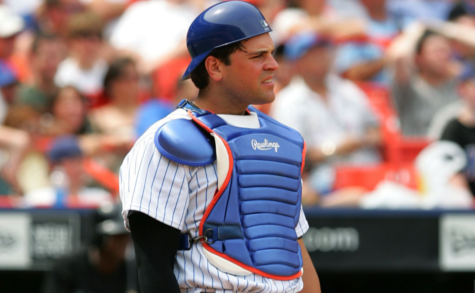
Piazza, on the other hand, panned out phenomenally for the Mets. He hit .348 in 109 games for the Mets in 1998, and although his entrance to the team could not spark a postseason run and saw the Mets take second place in the division, he was a major part of the team’s postseason runs of 1999 and 2000.
Piazza signed a seven-year, $91 million deal with the Mets in the offseason of 1998, cementing him as the team’s catcher for the foreseeable future.
In 1999, a year in which the Mets won 97 games to take the NL Wild Card and ultimately make it to the NLCS, Piazza slashed .303/.361/.575, smashing 40 home runs and knocking in 124 RBI in his first full season with the team.
In 2000, the Mets took the NL Wild Card again, and this time rode it all the way to an NL pennant. That year, Piazza raised his average to .324, and his OPS sat at an astounding 1.024. In fact, in his first four full seasons with the Mets from 1999-2002, his OPS never fell below .900, and his WRC+ was always above 130.
Out of all Piazza’s incredible moments, none were more important than his home run on Sept. 21, 2001, 10 days after the 9/11 attacks. In the first sporting event in New York since the tragedy, Piazza hit a two-run homer deep into the center field night sky in the eighth inning with his team down by one, sending Shea Stadium into a frenzy.
Piazza would go on to have his number retired by the Mets, and was inducted into the Hall of Fame in 2016, becoming the second player ever to go in wearing none other than a New York Mets cap.