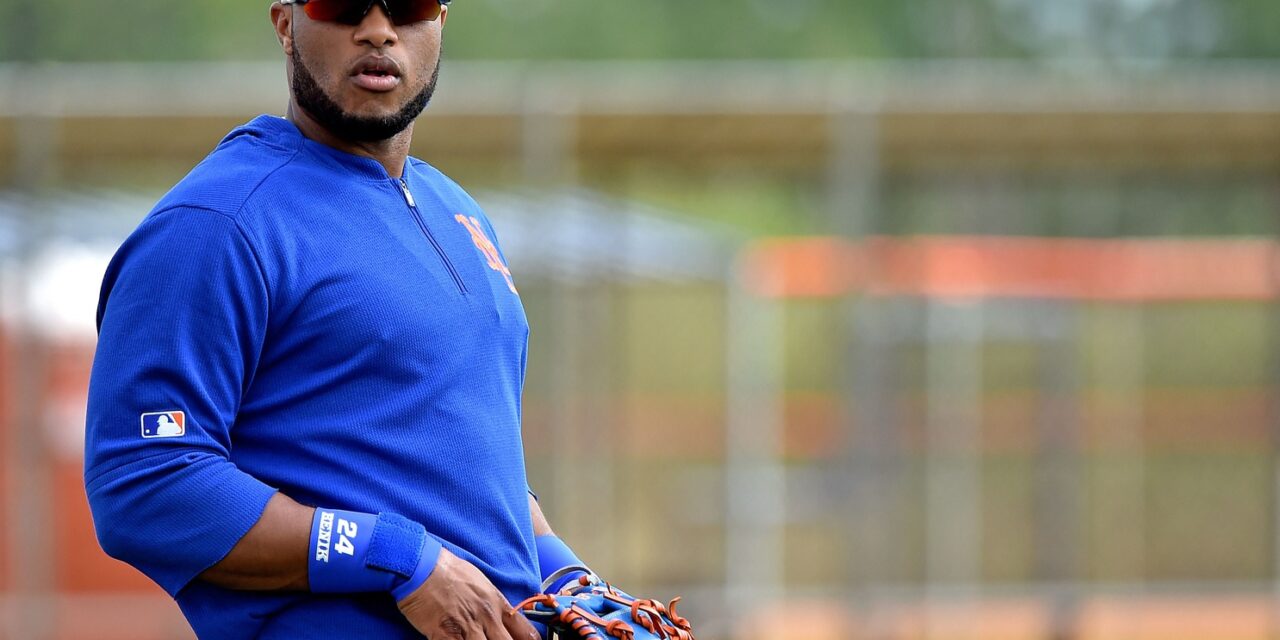
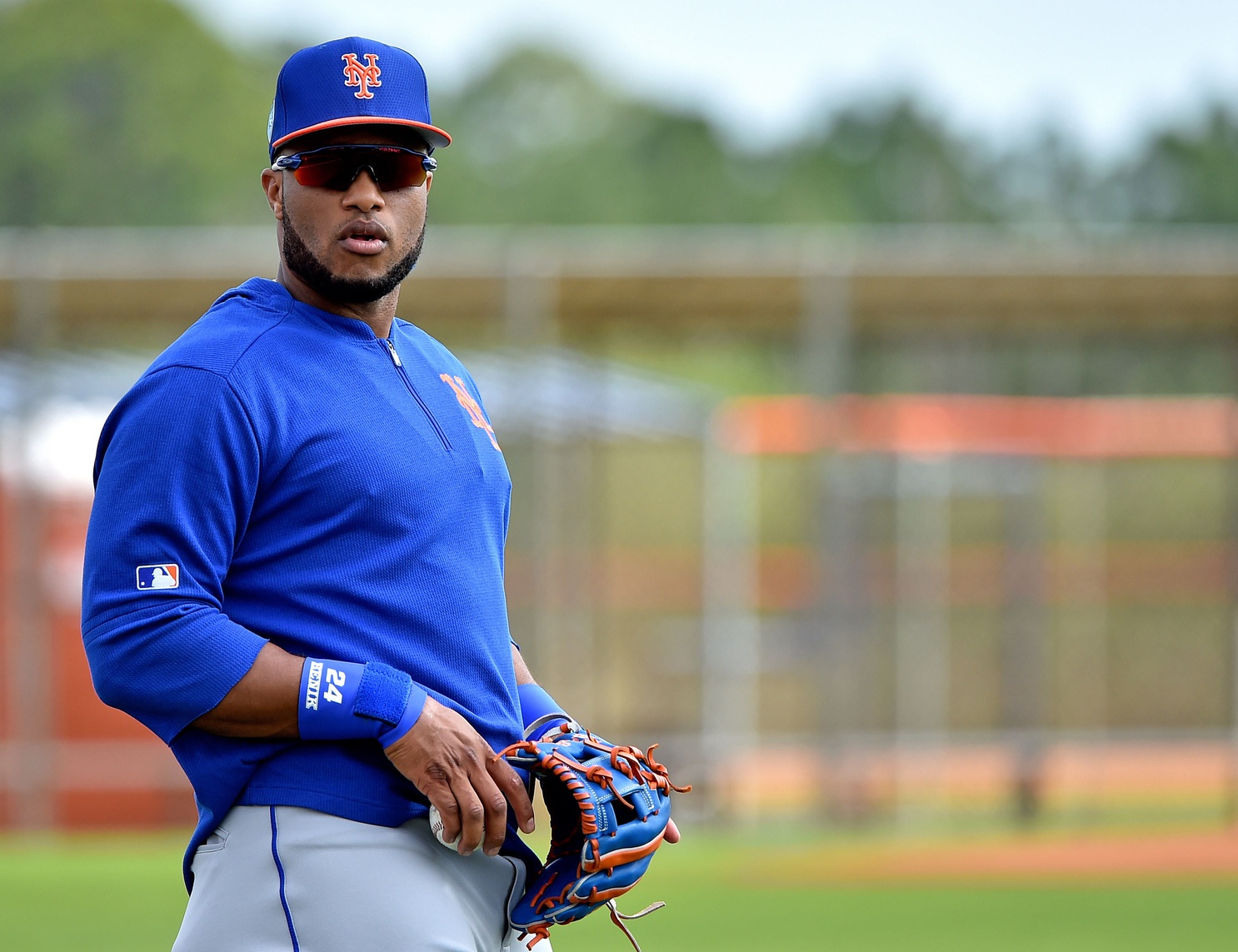
Despite a strong finish to the 2018 season after serving an 80-game suspension for violating Major League Baseball’s performance-enhancing drug guidelines, the New York Mets’ Robinson Cano is expected to suffer a considerable downturn in productivity as per Dan Szymborski’s ZiPS projections via FanGraphs.
After sending two of their top prospects in centerfielder Jarred Kelenic and right-hander Justin Dunn, as well as right-handed prospect Gerson Bautista and major leaguers Jay Bruce and Anthony Swarzak to Seattle for Cano and elite closer Edwin Diaz, the Mets are counting on the veteran second baseman to fulfill his expectations as a foundational cornerstone of the Mets roster — now and in the future.
Cano, 36, is due $24 million per year through the 2023 season. In the trade with the Mariners, Seattle agreed to send the Mets $5 million in 2019 and $3.75 million per year from 2020 through 2023 to offset the cost of an aging player.
By the time Cano will be entering the final year of his deal, the only Mets currently on the major league roster who will still be under contract are Jeff McNeil and Amed Rosario, who will be entering their second and final arbitration-eligible seasons, respectively.
The Mets mortgaged a great deal of their future to add Cano — and Diaz, of course — to new general manager Brodie Van Wagenen’s revamped roster. A sharp decline from the 14-year MLB veteran would not be the best way to start either Cano’s or Van Wagenen’s tenure in Queens, especially considering his price tag.
The Dominican native’s 2018, though marred by his mid-season suspension after testing positive for furosemide, generally used as a masking agent (May 14 through August 14), was right on par with what he’s done over virtually the duration of his career (.304/.355/.493, .362 wOBA, 127 WRC+).
Over 80 games (348 plate appearances), Cano hit .303/.374/.471 with ten homers, 50 RBI, 22 doubles, a .364 wOBA, 136 wRC+, and 2.9 wins above replacement (FanGraphs). After returning on August 14, he slashed .317/.363/.497. Sure, he was much fresher than the rest of the league, but that line is nothing to scoff at.
Apparently, ZiPS doesn’t feel the same way. Their projection system has Cano registering a .272/.329/.434 slash line, .326 wOBA, 110 wRC+, and 2.3 fWAR — considerable dips across the board. His 9.2 percent walk rate in 2018 is expected to drop to 7.2 percent in 2019, more in line with his 6.6 percent career mark.
I, for one, am having a hard time wrapping my head around how ZiPS can come to such a drastic conclusion after Cano’s solid post-suspension showing. After regaining his bearings through the end of August, over the final month of the season Cano was arguably the most offensively productive second baseman in all of baseball.
Over 110 plate appearances in September and October, Cano slashed .343/.391/.539 with a .399 wOBA, 160 wRC+ rating, and .369 BABIP. His 42.1 percent hard-hit rate ranked third-best among MLB second baseman (Adam Frazier, Pittsburgh, 45.1 percent) and his 11.4 percent soft-hit rate was third-least among the same group (Gleyber Torres, Yankees, 7.6 percent).
His 1.3 fWAR over that span was tied for the most wins above replacement by any second baseman in the game with none other than the Mets’ Jeff McNeil.
Despite ZiPS’ low-ball projections on Cano, I truly believe he will replicate if not exceed the 2.9 fWAR he put up last season. Cano, at his best, is still — in my estimation — a four-win player. With the depth the Mets have loaded into the team’s infield, regulated playing time should keep the longtime keystone player fresh and (hopefully) healthy.
The Mets need him to be.